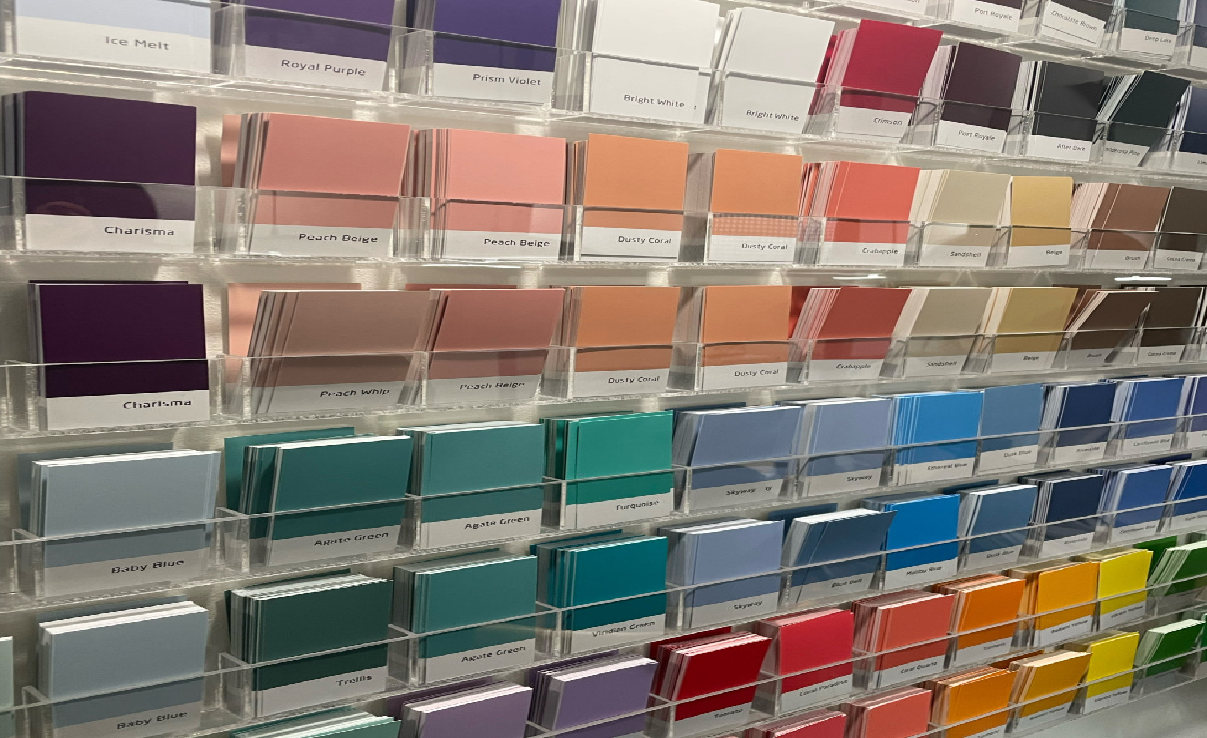
There’s a moment that happens in every personal colour analysis session in Seoul. The consultant drapes a deep burgundy swatch next to your face, then swaps it for a warm coral — and you see it. Not in an abstract, theoretical way. Right there in the mirror, one colour makes your skin look alive, clear, even luminous. The other turns you slightly grey around the eyes and flattens everything out.
That moment is why personal colour analysis (퍼스널 컬러 분석, peo-seu-neol keol-leo bun-seok) has become one of the most-booked tourist experiences in Seoul. Not shopping. Not a spa. An appointment where a trained consultant holds dozens of fabric swatches next to your face under controlled lighting and tells you — with considerable precision — exactly which colours of the visible spectrum your natural colouring is built to wear.
Koreans have been doing this in serious numbers since roughly 2020. Now, visitors from Japan, the US, Australia, and Southeast Asia book sessions weeks in advance specifically to do this in Seoul, because the city has developed a uniquely rigorous, highly systematised version of the service that takes the original Western colour theory and runs it through Korea’s famously meticulous beauty culture.
If you’ve wondered what it involves, whether it’s worth it, or where to book — this guide covers all of it.
Quick Reference: Personal Colour Analysis in Seoul 2026
| What | Details |
|---|---|
| Most popular service | 12-type personal colour analysis (1:1 session) |
| Session duration | 50 min (1:1) – 90 min (group) |
| Price range | ₩70,000 – ₩88,000 (~$51 – $64 USD) |
| Top studio (verified) | COLORIZE (컬러라이즈) — Gangnam & Myeongdong |
| Naver Map (Gangnam) | COLORIZE Gangnam |
| Naver Map (Myeongdong) | COLORIZE Myeongdong |
| What to wear | Plain white or light grey top, no makeup |
| Best time to book | Weekday morning; book at least 1–2 weeks ahead |
| After the session | Head to Olive Young with your colour palette |
What Is Personal Colour Analysis?
Personal colour analysis is the practice of identifying which colours harmonise best with your natural skin undertone, hair colour, and eye colour. The core idea is simple: every person has a dominant undertone (cool or warm) and a natural depth (light or deep), and colours that match those qualities make your complexion look clearer, your eyes brighter, and your overall appearance more put-together. Colours in conflict with your undertone do the opposite.
The system originates with Swiss painter Johannes Itten, who observed in the early 20th century that his students instinctively chose colours that reflected their own natural colouring. American consultant Carole Jackson formalised this into the four-season framework in her 1980 book Color Me Beautiful, dividing all human colouring into four broad types named after the seasons. Japan adopted and refined it in the 1990s. Korea took it further still.
The Four Seasons — and Korea’s 12-Type System
Most Seoul studios work with a 12-subtype expansion of the classic four seasons. You get a primary season and a specific subtype, which gives you a much more precise map of your best colours than the broad four-category original.
🌸 Spring (봄 / Bom) — Warm, Light, Bright
Spring types have warm golden or peachy undertones with a light-to-medium depth. Eyes tend to be clear and warm-toned (golden brown, amber, warm hazel). Hair colour reads golden or honey even if it is naturally dark.
- Best colours: Coral, peach, warm ivory, golden yellow, warm mint, soft apricot
- Avoid: Cool greys, icy blues, cool-toned burgundy
- Korean subtypes: Light Spring (밝은 봄), Warm Spring (따뜻한 봄), Bright Spring (선명한 봄)
☁️ Summer (여름 / Yeoreum) — Cool, Soft, Muted
Summer types have cool pink or beige undertones with a soft, low-contrast quality. Eyes are muted in tone — grey-blue, cool brown, soft green. Hair reads ashy rather than golden even if warm in base.
- Best colours: Dusty rose, lavender, powder blue, sage green, soft mauve, cool grey
- Avoid: Warm oranges, bright yellows, earthy camel
- Korean subtypes: Light Summer (밝은 여름), Muted Summer (뮤트 여름), Cool Summer (쿨 여름)
🍂 Autumn (가을 / Ga-eul) — Warm, Deep, Muted
Autumn types have rich golden or olive undertones with a warm, earthy depth. Eyes are often deep brown or hazel with warm golden flecks. The overall colouring reads rich rather than bright.
- Best colours: Terracotta, burnt orange, olive green, camel, rust, chocolate brown
- Avoid: Icy pastels, cool pinks, bright neons
- Korean subtypes: Muted Autumn (뮤트 가을), Warm Autumn (따뜻한 가을), Deep Autumn (딥 가을)
❄️ Winter (겨울 / Gyeo-eul) — Cool, Clear, High Contrast
Winter types have cool undertones with either a pale or deep complexion and a naturally high contrast between skin and features. The overall impression is crisp and defined.
- Best colours: True white, black, royal blue, fuchsia, emerald green, cool berry
- Avoid: Earthy warm tones, muted oranges, soft camel
- Korean subtypes: Cool Winter (쿨 겨울), Deep Winter (딥 겨울), Bright Winter (선명한 겨울)
You may have heard Koreans use the shorthand 쿨톤 (kool-ton) for cool-toned types and 웜톤 (wom-ton) for warm-toned types. These are the two umbrella categories that Summer and Winter (cool) and Spring and Autumn (warm) fall into, and they’re the first thing any Korean beauty counter consultant will try to assess.
Why Is This So Big in Korea?
Personal colour analysis fits naturally into how Korean beauty culture already thinks about skin and self-presentation. The K-beauty mindset is built on detailed self-analysis — understanding your specific skin type, identifying your undertone for foundation matching, layering products precisely. Personal colour analysis is that same instinct extended from skincare into colour, clothing, and makeup together.
K-pop also played a significant role. Idol stylists began discussing members’ personal colour types publicly on YouTube from around 2018 onward. Fans analysed idols’ looks through the colour-type lens, and vocabulary like 쿨톤/웜톤 went from specialist to everyday within a few years. By 2021, no serious Korean beauty conversation was complete without it.
What made Seoul especially good at delivering this service is the city’s beauty industry infrastructure: professional training programmes for consultants, documentation standards that produce detailed take-home reports, and the same systematic approach to aesthetic services that makes Korean skincare clinics among the most technically advanced in the world. A personal colour session in Seoul is more rigorous — and the deliverable you take home more thorough — than the equivalent service in most other markets.
Where to Go: COLORIZE (컬러라이즈)
Among Seoul’s well-established personal colour studios, COLORIZE stands out for a combination of professional rigour, consistent reputation among both Korean clients and international visitors, and genuine accessibility for non-Korean speakers.
The studio has two Seoul locations: a flagship in Gangnam (Seocho-gu) and a second location in Myeongdong. Both are active and bookable as of 2026.
COLORIZE Gangnam (Main Studio)
Address: 서전빌딩 4층 & 9층, 사임당로 173, 서초구, 서울 — Seojeon Building 4F & 9F, 173 Saimdang-ro, Seocho-gu, Seoul
Getting there: Gangnam Station (Line 2 / Sinbundang Line), Exit 5 — approximately 400 metres walk. The ground floor of the Seojeon Building has a sandwich shop as a landmark.
Hours: 10:00 AM – 10:00 PM daily (lunch break 1:00 PM – 2:00 PM)
Phone: +82 2-587-5205
Website: colorize.co.kr
Naver Map: View COLORIZE Gangnam on Naver Map
COLORIZE Myeongdong
Address: 서울 중구 퇴계로 145 1층 — 1F, 145 Toegye-ro, Jung-gu, Seoul
Getting there: Myeongdong Station (Line 4) or Chungmuro Station (Lines 3 & 4) — both within easy walking distance.
Naver Map: View COLORIZE Myeongdong on Naver Map
Services and Pricing at COLORIZE
| Service | Price |
|---|---|
| Private 1:1 colour analysis (50 min) | ₩88,000 (~$64 USD) |
| Group session (1:2, per person, ~90 min) | ₩70,000 (~$51 USD) |
The standard 1:1 session runs approximately 50 minutes and includes the full draping process, seasonal subtype verdict, printed colour palette fan to take home, and makeup and shopping recommendations matched to your type. The physical take-home palette — a small booklet of colour swatches representing your best hues across clothing, makeup, and hair — is the most practical tool you’ll get from the session.
COLORIZE is frequently featured on Korean beauty blogs, international travel guides for Korea, and booking platforms including KKday. It has a strong track record with international visitors and its booking process is accessible to English speakers through its website.
What Happens During a Session
If this is your first time, here’s what to expect across a typical 1:1 session.
Before you arrive: You’ll be asked to come bare-faced — no foundation, no blush, no coloured eyeshadow. Most studios will provide a neutral draping cape to wear over your clothes. If you forget, wearing a white or light grey top minimises colour reflection from your clothing onto your face during the assessment.
Initial assessment: Your consultant will visually evaluate your skin’s natural undertone, depth (light to deep), and clarity (bright or muted). Most studios take reference photographs at the beginning so you can compare before and after.
Draping: The heart of the session. The consultant works through 60–100+ colour swatches, holding each against your face and neck in controlled lighting. You’ll watch in a mirror as the swatches cycle through — some will make your skin look clear and rested; others will deepen shadows under your eyes or make your complexion look ashy. The differences are often immediately obvious, which makes the session genuinely engaging rather than passive.
Verdict: Your primary season and specific subtype are announced and explained. A good consultant will tell you not just what type you are, but why — pointing to the specific visual evidence from the draping that led to the conclusion.
Deliverables: You’ll receive your colour palette fan (a printed swatch booklet of your best hues), makeup recommendations in specific colour families, foundation undertone guidance, and hair colour direction. Many studios also provide a PDF version by email.
After the Session: Applying Your Results in Seoul
This is where a Seoul personal colour analysis pays dividends that an equivalent session elsewhere might not: you are in the world’s most concentrated K-beauty retail environment, palette in hand, with access to products your consultant has likely already referenced.
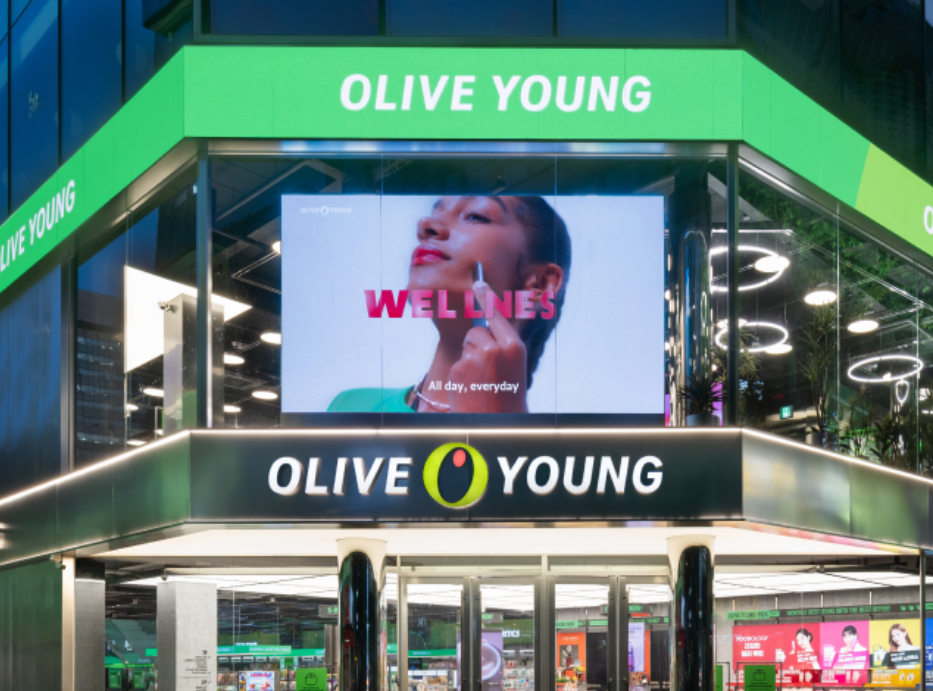
Olive Young (올리브영): Take your palette directly to any Olive Young location. The Myeongdong flagship (53 Myeongdong-gil) and the Seongsu N store are best for selection. Staff at major locations are experienced with personal colour-guided shopping and can help you match your palette to specific products. Ask at the makeup counter: “퍼스널 컬러로 맞는 립 추천해 주세요?” (“Can you recommend a lip colour for my personal colour type?”)
Department store cosmetics counters: Lotte Department Store (Myeongdong) and Shinsegae (Myeongdong) both have extensive luxury brand cosmetics floors. Counters for brands like MAC, NARS, and Armani Beauty can match foundation undertones to your season with precision once you know your type.
What to buy: For Spring and Autumn (warm) types, look for foundations with golden or neutral undertones. For Summer and Winter (cool) types, look for pink-neutral to cool foundations. Your palette fan will specify the exact lipstick and eyeshadow families worth seeking out — bring it into every cosmetics store you visit.
Tips for Tourists
Book at least one to two weeks ahead. Popular studios fill up quickly on weekends, and same-day walk-ins at reputable studios are rarely possible. Book via the studio’s website or through KKday and Klook for English-language booking.
Language is less of a barrier than you’d expect. The draping process is highly visual — you can see what the consultant is seeing in the mirror. Translation apps (Papago is better than Google Translate for Korean) are useful for the verbal portions. Search specifically for studios listing “영어 가능” (English available) if you want a fully English session.
Avoid hair dye before the appointment if possible. Consultants read your natural colouring, and freshly dyed hair can complicate the analysis. Natural or grown-out roots give the most accurate result.
Weekday mornings are better. Saturday afternoons are the busiest; weekday sessions tend to run more relaxed and allow more time for questions.
Ask for the physical palette. Some studios include it automatically; some charge a small additional fee (₩10,000–₩20,000). It is the most useful thing you’ll take home — the digital version is good, but the physical swatch fan is what you’ll actually use in stores.
Your type is a tool, not a verdict. Your seasonal palette identifies your best colours and your worst — but it’s a framework, not a rule. The most practical use is avoiding your confirmed worst colours and understanding why certain shades photograph better on you.
Frequently Asked Questions
Is personal colour analysis accurate for all ethnicities and skin tones? Yes. The season system is based on undertone and contrast, not surface skin colour — it works across the full range of human complexions. Korean studios have extensive experience with a wide diversity of clients including Asian, Southeast Asian, East Asian, Middle Eastern, and Western European colouring.
Can I do personal colour analysis if I’ve coloured my hair? It’s better to go with natural or grown-out hair. Consultants can work with coloured hair by focusing primarily on skin undertone and eye colour, but grown-out roots give a more accurate result. Let your consultant know your natural hair colour if your current colour is far from natural.
What if I’m told a season I don’t like? Your season describes which colours flatter you, not which colours you must wear. Knowing your type just means you understand which pieces of your wardrobe to lean into and which to be careful with. Plenty of people love colours outside their palette — they just use that knowledge for foundation and face-adjacent colours, where undertone mismatch is most visible.
How long does the result stay relevant? Your seasonal type is based on your natural colouring, which changes slowly over time — typically only significantly with major life changes like greying hair or post-pregnancy complexion shifts. Most people find their result remains accurate for five to ten or more years.
Are there English-speaking consultants in Seoul? Yes, though not universally. COLORIZE and several other major studios can accommodate English speakers; booking platforms like KKday indicate English session availability explicitly. Even without English, the visual nature of the draping means most tourists navigate sessions successfully with a translation app and a bit of patience.
How is this different from getting a skin tone consultation at a makeup counter? A makeup counter consultation focuses on foundation matching — identifying your surface tone and undertone for one specific product. A personal colour analysis covers the full spectrum of how colour interacts with your colouring across all contexts: clothing, hair, makeup, accessories. The two are complementary but different in scope.
Plan Your Visit
Personal colour analysis is the kind of experience that sounds a little abstract until you’re in the session — and then makes immediate, visual sense. For many visitors, it becomes the thing they recommend most emphatically to anyone planning a Seoul trip. It changes how you shop, how you think about what’s in your wardrobe, and — if you’re the type who photographs well in some outfits and inexplicably flat in others — it gives you the framework to understand why.
Book your session, come bare-faced, and bring your colour fan to Olive Young afterward. In that order.
For more on where to use your new palette, see our Seoul K-Beauty Shopping Guide 2026.
COLORIZE Gangnam: View on Naver Map — COLORIZE Myeongdong: View on Naver Map