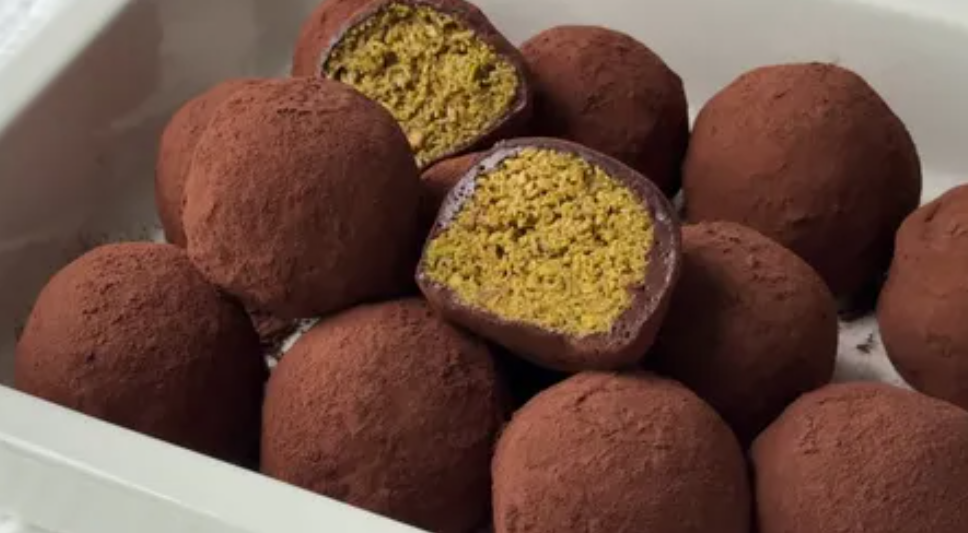
Korean dessert trends move fast, but even by local standards, the Dubai Chewy Cookie’s fall from grace was abrupt. By March 2026, cafes that had been selling the pistachio-and-kataifi cookie for ₩8,000 a piece were marking it down to ₩2,000 — and it still wasn’t moving. Customers had already migrated to something new: 버터떡 (beoteo-tteok), or “butter tteok,” a small, golden disc with a glassy, caramelised crust that cracks under a knife to reveal a soft, pull-apart rice cake centre. By June 2026 it has cafes and bakeries from Gangnam to Seongsu running out of stock before lunch.
This guide explains where butter tteok came from, why it’s spreading so quickly, and which Seoul cafes and bakeries are worth seeking out if you want to try the trend for yourself.
Key Facts
| Key Facts | Details |
|---|---|
| Korean name | 버터떡 (beoteo-tteok), also called 상하이 버터떡 (Shanghai butter tteok) |
| What it is | A pan-seared rice cake (떡) with a crisp, caramelised sugar shell and a soft, mochi-like glutinous centre, finished with butter |
| Origin | Chinese dessert 황유니엔가오 / huangyou niangao (黄油年糕), literally “butter year-cake” — a Chinese New Year rice cake from near Shanghai, popularised in Korea via a viral Shanghai-travel post |
| Texture | 겉바속쫀 (geot-ba-sok-jjon) — crisp/caramelised outside, dense and chewy inside |
| Price range | ₩1,500–2,000 per piece at independent cafes; roughly ₩7,500–8,800 for a 5-piece box at trend bakeries; ₩2,500 (Ediya Coffee); ~₩1,900 per piece (Passion5, 5-pack) |
| Where it started in Korea | 이웃집통통이 (Yiutjip/Iutjip Tongtongi), Apgujeong-Rodeo — credited as the first Korean shop to sell it |
| Where it’s strongest | Seongsu-dong, Sinsa/Garosu-gil, Apgujeong, Gangnam, Seocho, Mapo |
| What it replaced | The Dubai Chewy Cookie (두쫀쿠) and, briefly, bomdong bibimbap |
Where Butter Tteok Came From
Butter tteok traces back to 황유니엔가오 (黄油年糕) / huangyou niangao — literally “butter year-cake” — a Chinese New Year rice cake traditionally eaten around Lunar New Year, reworked with a heavy hand of butter and pan-toasted until the surface caramelises. The bakery most associated with popularising the product, Luxiehe (泸溪河), is widely cited in Korean coverage as a “Shanghai” brand, though several Korean food writers tracking the trend have pointed out the dessert most likely originated with a bakery in Nantong, in Jiangsu province near Shanghai, rather than the city itself. The “Shanghai butter tteok” branding stuck anyway — it sounds better on a menu board.
The trend’s spark in Korea was specific: on January 14, 2026, a user on X (formerly Twitter) posted photos from a trip to Shanghai showing the dessert, and a quote-post from a friend noting that a Korean bakery was already selling something similar turned a travel photo into the start of a domestic trend. It stayed a minor curiosity for weeks, showing up mostly in short-form video on Korean social media. The real inflection point came on March 7, just as the previous food-of-the-moment — bomdong bibimbap, built around fleeting spring cabbage — began losing steam as the season moved on. Search interest in 버터떡 climbed sharply from that point and hit a Google Trends score of 98 on March 12. By mid-2026, it had settled in as the default “what’s trending in Korean dessert cafes right now” answer — the role the Dubai Chewy Cookie held for most of 2025.
이웃집통통이 (Yiutjip Tongtongi), an Apgujeong-Rodeo dessert shop that has built a reputation since 2017 for chasing new dessert trends early, is widely credited as the first Korean shop to release butter tteok — and its version is notable for being entirely flour-free, making it a gluten-free option that competitors don’t always match.
What Butter Tteok Actually Tastes Like
The appeal is almost entirely textural. Korean reviewers describe it with the phrase 겉바속쫀 (geot-ba-sok-jjon) — crisp on the outside, chewy on the inside — the same quality Koreans prize in everything from fried chicken skin to mochi.
The base is a dense, glutinous rice cake, pan-seared or oven-toasted in butter until the surface develops a caramelised, faintly crackling shell. Inside, it stays soft and stretchy — closer to mochi than to bread. Many versions finish the top with a coarse sugar (cafes often specify jaramae sugar, a demerara-style raw sugar) for crunch, and a pinch of fleur de sel to push the flavour toward sweet-and-salty rather than straightforwardly sweet. Shape varies by shop — round discs, madeleine-shaped shells, even heart shapes — but the texture contrast is the constant every version is chasing.
Compared to the Dubai Chewy Cookie it replaced, butter tteok is a simpler product: rice cake, butter, sugar, salt. No pistachio paste to source, no kataifi to import. That simplicity is a big part of why it spread through Korean cafes as fast as it did — any kitchen with a stovetop and butter could start selling it within days of seeing it go viral, with none of the supply-chain friction that slowed Dubai cookie production.
How the Trend Took Over Korean Cafes
Phase 1 — Quiet start (February 2026). A handful of independent dessert cafes, mostly in Apgujeong and Seongsu-dong, began selling Shanghai-style butter tteok as a niche item alongside their existing menus.
Phase 2 — Explosion (March 2026). As bomdong bibimbap’s seasonal window closed, short-form video of butter tteok being torn apart — that crackling shell giving way to a stretchy pull — filled the gap. Search interest spiked through March, and cafes that had quietly stocked it found themselves with lines out the door. TikTok and Instagram Reels filled with comparison videos, “butter tteok tour” posts mapping out which Gangnam shops had the best version, and gift-box content aimed at spring gifting.
Phase 3 — Mass market entry (spring 2026). Larger chains moved in fast, faster than the Dubai Chewy Cookie’s roughly year-long path from indie cafes to convenience stores. Ediya Coffee launched a “condensed-milk butter chewy mochi” at ₩2,500, and bakery chain Passion5 introduced its own butter tteok in five-packs at roughly ₩1,900 per piece. Online grocers including SSG.com now carry frozen multi-packs for home reheating.
Phase 4 — Variation. As with every Korean dessert trend that reaches saturation, differentiation followed: madeleine-mould versions, heart-shaped versions sized for one bite, condensed-milk drizzles, and salted versions leaning harder into the sweet-salty contrast.
Why It’s Spreading So Fast
Butter tteok has the same built-for-video appeal as Korea’s last few viral desserts: the moment a knife or hand breaks the shell to reveal the stretchy interior is a clean, satisfying cross-section shot, not unlike the cheese-pull moment that made choco baguette and various Korean BBQ videos travel so well online.
It also fits neatly into Korea’s existing rice-cake culture. Tteok is already a familiar, everyday food — sold at traditional markets, given as gifts, eaten at holidays — so butter tteok doesn’t ask Korean consumers to adopt something foreign from scratch. It reads as a foreign twist on a format people already trust, which lowers the barrier to trying it compared to something like Dubai chocolate.
Timing mattered too, on two fronts: domestically, butter tteok arrived just as the chewy-cookie wave was starting to feel dated, giving cafes and dessert-focused creators a “next trend” to claim. And because the format (caramelised glutinous rice cake) is something independent shops can riff on with their own shapes, sugars, and toppings, it has produced a wave of “comparison” and “ranking” content that keeps the trend circulating well past its original viral post.
The Cookie It Replaced
The clearest evidence of the handover is what happened to unsold Dubai Chewy Cookie stock. Korean food media reported cafes slashing ₩8,000 cookies to ₩2,000 in March 2026 just to clear inventory — and still struggling to sell them, because customer attention had already moved to butter tteok. It’s a near-perfect illustration of how compressed the Korean dessert trend cycle has become: the Dubai cookie itself only displaced the previous wave (Dubai chocolate bars, then tanghulu) a year or so earlier. Read more on that cycle in our Dubai Chewy Cookie guide and our piece on the seasonal-eating trend butter tteok effectively ended, 제철코어 (seasonal-core).
Public Response in Korea
Reaction has been positive but not uncomplicated. The texture contrast is the most consistently praised element — reviewers on Naver Map and Korean food forums repeatedly single out the crisp-shell-to-chewy-interior pull as genuinely satisfying, not just photogenic. The simplicity of the ingredient list also gets credit: unlike the Dubai cookie, there’s no debate about “authentic” sourcing, since butter, rice cake, and sugar are universally available.
The criticism is familiar Korean-dessert-trend territory. Some reviewers note that mass-market versions from chains taste noticeably flatter than independent versions, where the butter-to-rice-cake ratio is more generous. There’s also early fatigue commentary — given how fast the Dubai cookie was discarded, some commenters are already speculating about how long butter tteok itself has left before the next thing arrives.
Where to Try Butter Tteok in Seoul
1. 이웃집통통이 (Yiutjip/Iutjip Tongtongi) — Apgujeong-Rodeo, Gangnam
Best for: the original, and a gluten-free version
Credited as the first shop in Korea to put butter tteok on the menu. It has been chasing new dessert formats since 2017, and its butter tteok is made entirely without wheat flour, leaning on glutinous rice for a crisp shell and a genuinely mochi-soft centre with a strong, buttery aroma. There’s a second location in Mangwon-dong.
- Address: 19 Seolleung-ro 161-gil, 1F, Gangnam-gu, Seoul (서울 강남구 선릉로161길 19 1층)
- Hours: Daily 10:00–21:30
- Price: 5-piece box, ₩8,800
- Note: Also sold nationwide through the resale/trading platform KREAM, for travelers who can’t make it to Gangnam in person.
2. 새들러하우스 (Saddler House/Haus) — Garosu-gil, Sinsa, Gangnam
Best for: an intensely buttery version with the longest queues
Already a destination for its Dubai Chewy Cookie and viral “mini kimbap” cookie, Saddler House has become a serial trend-chaser — and its butter tteok, baked fresh in plain and chocolate flavours roughly every 30 minutes, is currently its most in-demand item. It’s made with 100% butter, giving it a noticeably richer, more pronounced butter flavour than most competitors.
- Address: 10 Dosan-daero 17-gil, B1, Gangnam-gu, Seoul (서울 강남구 도산대로17길 10 B1)
- Hours: Daily 09:30–18:30
- Note: Waiting time is capped at 2 hours once a queue forms; valet parking is available.
3. 브레드사우르스 (Bread Sourus) — Seocho-gu
Best for: a Gangnam-adjacent option without the Garosu-gil crowds
A Seocho shop riding the same wave, with a 5-piece butter tteok box at a similar price point to its Gangnam neighbours. Useful if you want to try the trend without the longer waits closer to Garosu-gil.
- Address: 12 Gangnam-daero 91-gil, B1, Seocho-gu, Seoul (서울 서초구 강남대로91길 12 B1)
- Price: 5-piece box, ₩7,500
4. 온기 (Ongi) — Seocho-gu
Best for: a sweet-and-salty twist
Already known locally for chewy cookies and scones, Ongi’s butter tteok uses coarse jaramae sugar for extra crunch on the shell and finishes each piece with a pinch of fleur de sel, giving it a sweet-salty balance that stands out from the straight-sweet versions elsewhere on this list.
- Address: 77 Dongsan-ro, 1F Cheonghak Building, Seocho-gu, Seoul (서울 서초구 동산로 77 청학빌딩 1층)
5. 오우드 (Oude/Aude) — Seongsu-dong
Best for: Seongsu-dong’s bakery-cafe scene, and a distinctive madeleine shape
Bakes its butter tteok in a madeleine mould rather than the usual flat disc, giving it a cuter, shell-ribbed shape with more surface area for caramelisation while keeping the same moist, chewy centre. Seongsu-dong is one of Seoul’s most active neighbourhoods for new bakery trends — read more in our Seongsu-dong guide.
- Address: 36 Seongsuiro 24-gil, 2F, Seongdong-gu, Seoul (서울 성동구 성수이로24길 36 2층)
- Hours: Mon–Fri 08:00–21:00; Sat–Sun 09:00–21:00
Also worth knowing
늘해피 (Neul Happy) — Gangnam (서울 강남구 논현로26길 42, 1층). Open Tuesday–Sunday 10:00–22:00, closed Mondays. A reliable Gangnam stop that’s stayed in rotation since the early phase of the trend.
카페 이오이 (Café Eoi) — near Daeheung Station, Mapo. Heart-shaped butter tteok at roughly ₩1,500 a piece — the most affordable option on this list, and a good low-commitment way to try the trend.
Tips for Trying the Trend
- Go early or expect to wait. Saddler House bakes in small 30-minute batches and regularly builds a queue; Gangnam and Garosu-gil spots in particular tend to sell out well before evening.
- Check Naver Map before you go. Prices, flavours in stock, and queue rules (some shops cap how long you can sit after waiting) change quickly while a shop is riding a viral moment — and Korean dessert cafes rotate menus aggressively once a trend item’s queue dies down. Search the shop’s Korean name directly on Naver Map for the latest information.
- It travels well as a gift. Because the format originated as a Lunar New Year treat in China, several Seoul shops sell it in gift-box packaging — a good pick if you want a Korean-trend souvenir that isn’t a snack-aisle item everyone else is also bringing home.
- Don’t expect every version to taste the same. Butter content, sugar type, and shape vary a lot from shop to shop — Saddler House leans heavily buttery, Ongi adds a salted-caramel edge, and Oude changes the shape entirely. It’s worth comparing more than one if you’re in the area.
For more on Korea’s current dessert trend cycle, see our Dubai Chewy Cookie guide and Choco Baguette guide. If you’re building out a Seoul cafe-and-bakery itinerary, our Seoul cafe culture guide is a good next stop, and for context on Seongsu-dong as a trend incubator, our Seongsu-dong guide.
Korean dessert trends rarely last as long as outsiders expect, and butter tteok will eventually give way to whatever comes next — the Dubai cookie’s own discounted, unsold stock is proof of how quickly that can happen. For now, though, it’s the order to know in Seoul: simple, cheap to make, genuinely satisfying to eat, and everywhere from independent Seongsu-dong bakeries to the menu board at your nearest Ediya.
Frequently Asked Questions
What is butter tteok (버터떡)?
Butter tteok is a Korean dessert trend based on a Chinese rice cake, huangyou niangao — pan-seared glutinous rice cake with a crisp, caramelised sugar shell and a soft, chewy, mochi-like centre, usually finished with a strong butter flavour. It went viral on Korean social media in 2026 after a traveler’s post about a similar Shanghai-area dessert spread on X (Twitter).
Is butter tteok the same as the Dubai Chewy Cookie?
No. They’re different desserts, but butter tteok is the trend that directly replaced the Dubai Chewy Cookie in Korean cafes during 2026. The Dubai cookie is a chocolate-coated cookie filled with pistachio cream and kataifi pastry; butter tteok is a simpler rice cake with no nuts or imported pastry involved.
Where did the butter tteok trend start in Korea?
The viral spark was a January 14, 2026 X post about a Shanghai trip, but 이웃집통통이 (Yiutjip Tongtongi) in Apgujeong-Rodeo is credited as the first Korean shop to actually put butter tteok on its menu, helping turn the online moment into an in-person trend.
Where can I buy or try butter tteok in Korea?
Independent dessert cafes and bakeries in Seongsu-dong, Sinsa/Garosu-gil, Apgujeong, Gangnam, Seocho, and Mapo carry the most distinctive versions — including 이웃집통통이, 새들러하우스, 브레드사우르스, 온기, and 오우드. Chains including Ediya Coffee and bakery brand Passion5 now sell their own versions nationwide, and frozen multi-packs are available through online grocers like SSG.com.
How much does butter tteok cost in Korea?
Independent cafes typically charge ₩1,500–2,000 per piece; trend bakeries sell 5-piece boxes for roughly ₩7,500–8,800. Ediya Coffee’s version runs ₩2,500, and Passion5 sells a five-pack at roughly ₩1,900 per piece. Prices and flavours vary by shop and change often, so it’s worth checking Naver Map or the shop’s Instagram before visiting.
When did butter tteok become popular in Korea?
It first appeared on Korean social media in mid-January 2026 but stayed niche until around March 7, when search interest spiked sharply. It hit a Google Trends score of 98 on March 12, 2026, and has remained the dominant Korean dessert trend through mid-2026.
Is butter tteok still popular in 2026?
Yes, as of mid-2026 it remains the default trending order at Korean dessert cafes and bakeries, though Korean food trends move quickly and shops already speculate about what will replace it next.
Is butter tteok gluten-free?
Some versions are. 이웃집통통이’s original is made without wheat flour, relying on glutinous rice flour instead, which makes it suitable for gluten-free diets — though it’s worth confirming directly with each shop, since recipes vary.