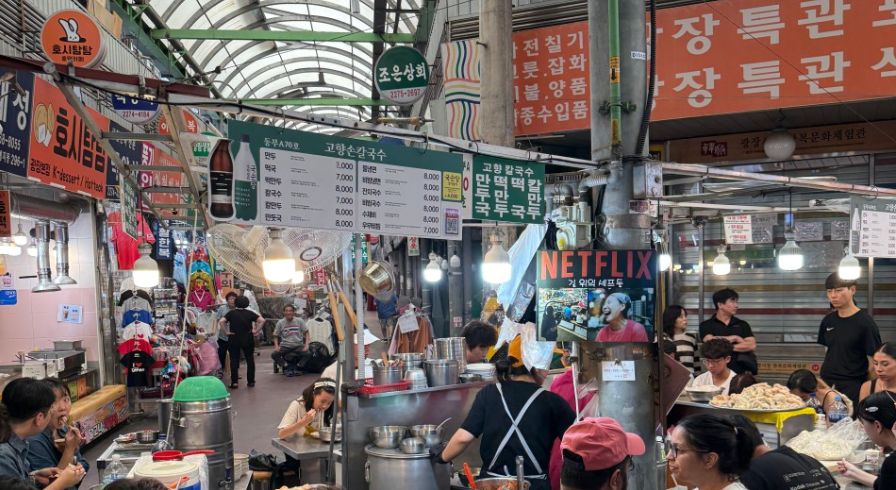
Seoul has extraordinary food. But Korea’s most interesting eating is elsewhere.
The dishes that define regional Korean cooking are tied to specific places in ways that resist transplantation — not because Seoul restaurants don’t try, but because the ingredients, the preparation traditions, and the competitive local market pressure that keeps quality high are all somewhere else. The best bowl of Andong jjimdak in Seoul is a pale approximation of what the original restaurant serves two blocks from Andong’s old market. The chungmu gimbap in Tongyeong costs ₩4,000 for a portion that a Seoul restaurant would charge ₩12,000 for, and it tastes better.
This guide is organised by city and covers the dishes worth making a journey for — with enough practical detail to actually find and eat them.
| City | Dish | Why you can’t replicate it in Seoul |
|---|---|---|
| Andong | Jjimdak, heotjesabap | Original restaurants, 60-year recipe competition |
| Sokcho | Abai sundae, dakgangjeong | Hamgyeong Province refugee recipe, specific fish cake |
| Chuncheon | Dakgalbi | 50+ restaurant strip, the flat-iron version |
| Gangneung | Chodang sundubu | East Sea seawater sets the tofu differently |
| Tongyeong | Chungmu gimbap, oysters | Oysters 30 min from boat to table |
| Gyeongju | Hwangnam-ppang, ssambap | 1939 original bakery, local grain supply chains |
| Jeonju | Bibimbap, kongnamul gukbap | The sourcing is the dish |
| Yeosu | Dolsan gat-kimchi, hajangguk | Local mustard leaf cultivar, specific brine |
| Mokpo | Hongeo-samhap | Fermented skate only makes sense here |
| Pohang | Snow crab (daege) | East Sea cold-water catch, same-day freshness |
Andong (안동)
Andong is Korea’s Confucian heartland — a city that preserved aristocratic yangban culture through centuries when the rest of the country modernised. Its food reflects that conservative tradition: deeply seasoned, ingredient-focused, and contemptuous of shortcuts.
Andong Jjimdak (안동찜닭)

Braised chicken with glass noodles, potatoes, chilli, and a soy-based sauce — and a dish whose origin story is genuinely interesting. In the early 1980s, fried chicken began to eat into Andong’s traditional chicken market. The market vendors responded by developing a new braised preparation that could compete on taste rather than novelty. The result — jjimdak — became one of the most replicated Korean dishes of the last four decades. The original cluster of restaurants in Andong’s Old Market Chicken Alley (안동구시장 찜닭골목) still operates, with over twenty restaurants competing on variations of the same recipe. The difference between an Andong original and a Seoul copy is notable: the broth is darker, the noodles are wider, and the heat is built rather than immediate.
Go early — by 12:30 PM on weekends the queue extends into the alley. A full portion (대) feeds two people and costs around ₩25,000–30,000. → Andong Old Market
Heotjesabap (헛제삿밥)

Literally “fake ancestral rite food” — a full jesa (ritual sacrifice) meal spread served as a restaurant dish, without the ritual. In Andong, ancestral rites were major social events, and the food prepared for them — steamed rice, clear beef broth, grilled fish, seasoned vegetables, sikhye (sweet rice punch) — was considered the finest cooking in the city. Heotjesabap takes this repertoire and serves it in a restaurant setting, arranged on a low table the way it would be offered to ancestors. It is quiet, deeply considered food — a meal that rewards patience and attention over heat and intensity. Several restaurants near the Andong Hahoe Village area specialise in it; lunch sets run from ₩18,000–25,000 per person.
Getting to Andong
KTX to Andong Station from Seoul approximately 2 hours (₩35,700). The Old Market Chicken Alley is a 10-minute walk from the station.
Sokcho (속초)
Sokcho’s food identity was shaped by the Korean War. When the peninsula was divided, tens of thousands of Hamgyeong Province refugees — from what is now North Korea — settled on the East Sea coast, bringing the food of their home province with them. That food, adapted to Sokcho’s abundant East Sea seafood, became a distinct regional cuisine found nowhere else in the south.
Abai Sundae (아바이순대)
Standard Korean sundae is a blood sausage made with glass noodles, vegetables, and pig blood stuffed into pork intestine. Abai sundae, developed by the Hamgyeong refugees in Sokcho’s Abai Village (아바이마을), uses squid instead of pork intestine as the casing, stuffed with glutinous rice, vegetables, and ojingeo (squid) offcuts. The result is firmer, more oceanic, and more particular — a dish that doesn’t exist anywhere else in South Korea in this form. It’s eaten with gejang (fermented crab) brine and a light doenjang sauce, cut into thick rounds at the stall.
The stalls in Abai Village operate from morning until the stock runs out — usually early afternoon. Budget ₩8,000–12,000 for a full portion. Getting to Abai Village requires crossing the Cheongchoho Lagoon on a small hand-pulled cable ferry (buncheong bae), which is as much of an experience as the sundae itself. → Abai Village
Sokcho Dakgangjeong (속초 닭강정)
Fried chicken glazed in a sweet-spicy-tangy sauce, served in paper cups — an Sokcho street food so specific that there are now several restaurants in Seoul that describe themselves as “Sokcho-style,” which tells you something about the original’s reputation. The Sokcho version uses smaller, more intensely fried pieces than the Seoul chains, with a glaze that is less sweet and more acidic. The original cluster of shops is near Sokcho Central Market (속초중앙시장), which also has excellent fresh squid, grilled on the spot. → Sokcho Central Market
Getting to Sokcho
Express bus from Seoul’s East Seoul Terminal or Express Bus Terminal, approximately 2.5–3 hours (from ₩15,600). No KTX yet, but the road trip through Seoraksan’s foothills is worthwhile.
Chuncheon (춘천)
Gangwon-do’s provincial capital has a single food identity it wears without apology: dakgalbi. And it wears it well.
Chuncheon Dakgalbi (춘천 닭갈비)
Marinated chicken thigh, sweet potato, cabbage, and tteok (rice cake), stir-fried on a flat iron griddle in a gochujang-based sauce — and finished, if you want, by pushing the remaining sauce to the edge of the pan and frying rice in the centre until it crisps. The dish was invented in Chuncheon in the 1960s as a cheap alternative to pork ribs; today, Myeongdong Dakgalbi Street (명동닭갈비골목) has over fifty restaurants on a single block, all competing on the same basic dish.
The Chuncheon version has a cleaner spice and a more pronounced sweetness than Seoul imitations — partly the sauce ratio, partly the fact that the flat-iron griddle (철판) caramelises the edges properly at scale. Order the cheoljpan (철판) version. Budget ₩13,000–16,000 per person; the fried rice finish is an extra ₩2,000–3,000.
Getting to Chuncheon: ITX-Cheongchun from Seoul’s Yongsan or Cheongnyangni Station, approximately 1 hour 10 minutes (₩8,200). → Myeongdong Dakgalbi Street
Gangneung (강릉)
The largest city on Gangwon-do’s East Sea coast has two things worth making a trip for: the softest tofu in Korea and, unexpectedly, some of the country’s best specialty coffee.
Chodang Sundubu (초당순두부)
The tofu-makers of Chodang Village (초당마을) have, for several centuries, set their soy milk with seawater drawn directly from the East Sea rather than with nigari or brine. The specific mineral composition of the East Sea water at this location produces a tofu (sundubu, unpressed) that is barely set — close to silken, faintly mineral, and almost sweet. It is served in a stone bowl in a light anchovy broth, eaten with a small amount of soy and a dish of kimchi, and at its best in winter when the sea is coldest and the minerals most concentrated.
The sundubu restaurants of Chodang Village are clustered together within a few minutes’ walk of each other. All are on the same product; quality is consistently high. Budget ₩8,000–12,000 for a full set meal. → Chodang Village
Gangneung Coffee Street (강릉 커피거리)
This requires a separate mention: Gangneung has a specialty coffee culture out of all proportion to its size, centred on the café cluster along Anmok Beach (안목해변) — a strip of independent roasters and cafés with direct East Sea views that began in the 1980s with vending machines and evolved into one of the most serious coffee destinations in Korea. The annual Gangneung Coffee Festival (강릉커피축제) in October is the largest coffee event in the country. If you’re already in Gangneung for the sundubu, the beach coffee strip is 10 minutes by taxi. → Anmok Coffee Street
Getting to Gangneung: KTX from Seoul Station, approximately 2 hours (₩27,600).
Tongyeong (통영)
Tongyeong sits on Korea’s southern coast amid a labyrinth of islands and sheltered bays — the conditions that make it the country’s oyster capital and one of its most compelling food destinations. For a complete city guide, see our Tongyeong travel guide (coming soon).
Chungmu Gimbap (충무김밥)
Korea’s most distinctive regional gimbap: small, finger-width rice rolls with no filling inside (plain rice, seasoned with sesame and salt), served alongside kkakdugi (radish kimchi) and ojingeo-muchim (spicy squid). It originated in the old Chungmu area of Tongyeong, where fishermen’s wives would pack it for sea trips — no filling meant no spoilage. The combination — mild roll, sour radish, spicy squid — is quietly addictive. At Tongyeong’s waterfront stalls it costs ₩4,000–5,000 for a portion. Seoul “Chungmu gimbap” restaurants charge three times this for a lesser version.
Tongyeong Oysters (통영 굴)
Tongyeong produces approximately 80 percent of Korea’s total oyster output, and the sheltered bays here — warm, phytoplankton-rich, cleanly tidal — are exceptional growing conditions. Eating oysters at Tongyeong’s Seafood Market (통영 수산시장) from October to March means eating them within hours of harvest, which is a meaningfully different experience from anywhere else. The gul-hoe (raw, freshly shucked with chojang) are extraordinary; the gul-jeon (oyster pancake) from the market stalls is one of the better-value meals in the country at ₩7,000–9,000 per serve. → Tongyeong Seafood Market
Getting to Tongyeong: Bus from Busan’s Seobu Intercity Terminal, approximately 2 hours (₩10,000–12,000). Bus from Seoul’s Nambu Terminal, approximately 4 hours.
Gyeongju (경주)
Gyeongju’s food culture is quieter than its archaeology — which is part of the appeal. For a full city guide including restaurant recommendations, see our Gyeongju Travel Guide.
Hwangnam-ppang (황남빵)
A small red bean pastry with a soft wheat dough, made by the same family in the same location since 1939. The filling is less sweet than most Korean red bean preparations — closer to the Japanese anko tradition, with a slight saltiness. At Hwangnam Bakery (황남빵 본점), they sell warm from the oven in boxes of ten (₩11,000). The queue moves fast. Across the street, Choi’s Hwangnam-ppang (최씨황남빵) produces a rival version that some Gyeongju locals prefer. Both are worth trying; the rivalry is a Gyeongju institution. → Hwangnam Bakery
Gyeongju Ssambap (경주 쌈밥)
A full ssambap set — fresh vegetable wraps (perilla, lettuce, chrysanthemum leaf, cabbage), rice, doenjang paste, and a selection of seasonal side dishes — at ₩12,000–15,000 per person is among the best-value full meals in Korea. Gyeongju’s ssambap restaurants have a strong local supply chain for the vegetables, and the quality of the fermented pastes and side dishes reflects a city where food traditions have been stable for a long time. Several good restaurants cluster in the streets between Hwangridan-gil and the Gyeongju National Museum.
Yeosu (여수)
Yeosu is a harbour city on Korea’s southern coast, famed for its night views and for a food culture built around the deep waters of the South Sea.
Dolsan Gat-Kimchi (돌산 갓김치)
Dolsan Island (돌산도), connected to Yeosu by bridge, produces a cultivar of gat (갓, Korean mustard leaf) found nowhere else in Korea. The island’s specific soil and coastal microclimate produce leaves that are thinner, more peppery, and more aromatic than mainland mustard varieties. Fermented as kimchi with salted anchovy, garlic, and red pepper, Dolsan gat-kimchi has a sharpness and depth that makes it immediately distinguishable from the generic kimchi served elsewhere. It is sold at every market in Yeosu and is the correct thing to bring home as a food souvenir.
Hajangguk (해장국 / 서대회무침)
Yeosu’s signature breakfast is hajangguk — a hangover soup built around seodalchae (서대, a local flatfish) and clear pork bone broth, seasoned with doenjang and eaten with rice and seodalchae-hoe muchim (raw flatfish salad). It is intensely local: the specific flatfish only appears at scale in Yeosu’s markets, and the soup style reflects the fishing port tradition of a restorative early morning meal after a night at sea. The stalls around Yeosu Jungang Market (여수중앙시장) serve it from 6 AM. → Yeosu Jungang Market
Getting to Yeosu: KTX from Seoul to Yeosu-Expo Station, approximately 3 hours (₩45,000).
Mokpo (목포)
Mokpo’s food reputation rests on a single dish that is genuinely challenging and genuinely worth it.
Hongeo-samhap (홍어삼합)
Fermented skate (hongeo, 홍어) — buried for weeks until ammonia develops from cartilage fermentation — served with bossam pork and aged kimchi in a single bite. The combination is deliberate: the kimchi’s acidity and the pork’s fat soften the skate’s intensity into something more complex than confrontational. This is one of the most regionally specific eating experiences in Korea; hongeo is available in Seoul but the quality and the cultural context exist only in Mokpo and the South Jeolla coast. The Mokpo Seafood Market (목포 수산시장) and surrounding restaurant streets near the old port are where to find it; expect to pay ₩30,000–50,000 for a full set. → Mokpo Seafood Market
Getting to Mokpo: KTX from Seoul to Mokpo Station, approximately 2 hours 30 minutes (₩44,200).
Pohang (포항)
Pohang sits on the East Sea coast in North Gyeongsang and is the gateway for Korea’s most celebrated cold-water seafood.
Daege — East Sea Snow Crab (대게)
Snow crab from the East Sea coast — particularly from Guryongpo Port (구룡포항) in Pohang — has been documented in Korean records for over a thousand years. The cold, sandy, deep-water sea floor off this coast produces crabs with thin shells, dense leg meat, and a clean sweetness that warm-water crabs don’t replicate. Season runs December to May. The protocol is simple: steamed whole, legs cracked at the table, plain or with a thin vinegar dipping sauce.
Guryongpo’s port market sells live crab direct from the boats; eating here in February or March, when the catch is at its peak, is one of Korea’s most compelling seafood experiences. Budget ₩40,000–80,000 per crab depending on size and season. → Guryongpo Port Market
Getting to Pohang: KTX to Pohang Station from Seoul, approximately 2 hours 10 minutes (₩42,600). Guryongpo is 30 minutes by bus or taxi from the station.
A Note on Eating Regionally
The food in this guide costs less than its Seoul equivalent in almost every case. It is also fresher, more contextually appropriate, and often cooked by people whose families have made the same dish for multiple generations. The pattern holds across the country: regional Korean food rewards leaving Seoul, and the effort required to leave Seoul — by KTX, by bus, by the occasional intercity taxi — is consistently proportionate to what’s waiting at the other end.
For the produce that underlies much of this cooking — the oysters that make Tongyeong’s gimbap extraordinary, the mustard leaf specific to Dolsan Island — see our Korea Regional Produce Guide. For the markets where these dishes are most likely to be found at their best, see our Korea Traditional Markets Guide.
Frequently Asked Questions
What is the best regional food city in Korea outside Seoul? Jeonju is the most celebrated — it holds a UNESCO Creative City of Gastronomy designation and has a food culture built around rice, fermented ingredients, and extraordinarily generous side dishes. But Tongyeong (for seafood), Andong (for traditional Confucian-era cooking), and Sokcho (for East Sea and North Korean-influenced dishes) each offer something genuinely different. The answer depends on the style of food you’re most interested in.
Can I find regional Korean food in Seoul? Seoul has restaurants representing most regional dishes, but the quality gap is real in specific cases: Jeonju bibimbap sourced from Jeonju’s local rice and sprout varieties, Tongyeong oysters within hours of the boat, and Andong jjimdak from the original alley restaurants all involve local supply chains and competitive local markets that Seoul restaurants can’t replicate. For most dishes, it’s worth travelling for.
What is the easiest regional food destination as a day trip from Seoul? Chuncheon is the closest (just over an hour by ITX train) for dakgalbi. Jeonju is under 2 hours by KTX for the best bibimbap in Korea. Gyeongju can be reached in 2 hours from Seoul; combine it with a Busan night if your schedule allows.
What Korean regional food is best in winter? Winter is peak season for oysters (Tongyeong, October–March), snow crab (Pohang/Yeongdeok, December–May), Beolgyo cockles (November–February), Hallabong citrus (Jeju, January–February), and Chodang sundubu in Gangneung (coldest water = best setting). Winter is arguably the best season for food travel in Korea outside of Seoul.
Which regional foods are most unusual for first-time visitors? Hongeo-samhap (fermented skate, Mokpo) is the most confrontational but the most memorable. Abai sundae (squid casing stuffed with glutinous rice, Sokcho) is unusual by any standard. Heotjesabap (Andong) — the full ancestral rite food set — is subtle rather than confrontational but unlike anything else in Korean restaurant food.