Korea is a small country with an outsized variety of landscapes — volcanic island, mudflat coast, mountain interior, wide river plain, cold eastern sea — and that variety shows up directly in the food. The rice that grows in the inland basin of Icheon tastes different from the rice grown anywhere else in Korea. The oysters from Tongyeong account for the majority of the country’s entire output. The pigs raised on Jeju Island were declared a national natural monument. The ginseng from Geumsan accounts for 70 percent of Korea’s total production.
Regional produce (지역 특산물, jiyeok teugsanmul) is not a marketing concept in Korea — it is deeply embedded in how the country eats and how regions identify themselves. Knowing what each place is known for makes a food trip across Korea significantly more rewarding. This guide covers the major provinces and cities from Gyeonggi in the north to Jeju in the south, with a focus on the specific produce, seafood, and ingredients that define each place.
| Region | Key Produce | Best Season |
|---|---|---|
| Gyeonggi | Icheon rice, Suwon wanggalbi | October–November (new-crop rice) |
| Gangwon | Hoengseong hanwoo, Chodang sundubu | Year-round (beef); winter (tofu) |
| North Chungcheong | Chungju apples, Goesan olgaengi | September–November (apples) |
| South Chungcheong | Geumsan ginseng, Taean blue crab | October–November (crab) |
| North Jeolla | Jeonju bibimbap, Gochang laver | November–February (laver) |
| South Jeolla | Wando abalone, Beolgyo cockles | November–February (cockles) |
| North Gyeongsang | Yeongdeok snow crab, Andong mackerel | December–May (crab) |
| South Gyeongsang | Tongyeong oysters, Namhae garlic | October–March (oysters) |
| Busan | Gijang seaweed, raw fish | February–April (seaweed) |
| Jeju | Black pork, hallabong citrus | January–February (hallabong) |
Gyeonggi Province (경기도)
Gyeonggi wraps around Seoul and contains Korea’s most densely farmed flatlands. Its proximity to the capital has historically made it the source of the country’s most prized rice — the original royal tribute grain.
Icheon Rice (이천쌀)
Few agricultural products in Korea carry the prestige of Icheon rice. For centuries, this was the rice served to the royal court — the brand name Imgeunim-pyo (임금님표, meaning “the King’s label”) still appears on packaging today. The conditions here are specific: an inland basin with high diurnal temperature variation, granite-derived clay-loam soil, and clear mountain water from the surrounding Gyeonggi highlands. The combination produces rice with lower protein and fat content than other Korean varieties and higher levels of flavour-contributing amino acids — the result is rice that is distinctly sticky, fragrant, and slightly sweet.
The peak season for new-crop Icheon rice (햅쌀, haepssal) runs October through November. If you’re in Icheon during this window, the annual Icheon Rice Cultural Festival (이천쌀문화축제) is the main event — held at Seolbong Park in late October, it includes rice cooking demonstrations, traditional village market stalls, and the chance to buy freshly milled rice directly from local producers.
KTX to Icheon Station, then bus to Seolbong Park
ricefestival.or.kr
Suwon Wanggalbi (수원 왕갈비)
Galbi — grilled short ribs — is eaten across Korea, but Suwon’s version is a different proposition. Wanggalbi (왕갈비, “king rib”) uses thick cuts of beef short rib, often 15–20 cm long, marinated in a soy-pear-sesame base and grilled over charcoal. The size is not theatrical — the longer bone allows the marinating to penetrate differently and the grilling time to develop more even caramelisation. The concentration of galbi restaurants around Suwon’s Jidong area has made this one of Korea’s best-known beef destinations, drawing visitors from Seoul on weekends throughout the year.
Gangwon Province (강원도)
Gangwon straddles the Taebaek Mountains and the East Sea. The western interior is cold, high, and ideal for cattle; the eastern coast delivers seafood from the deep, cold East Sea; and the valleys between support a food culture built around mountain vegetables and buckwheat.
Hoengseong Hanwoo (횡성한우)
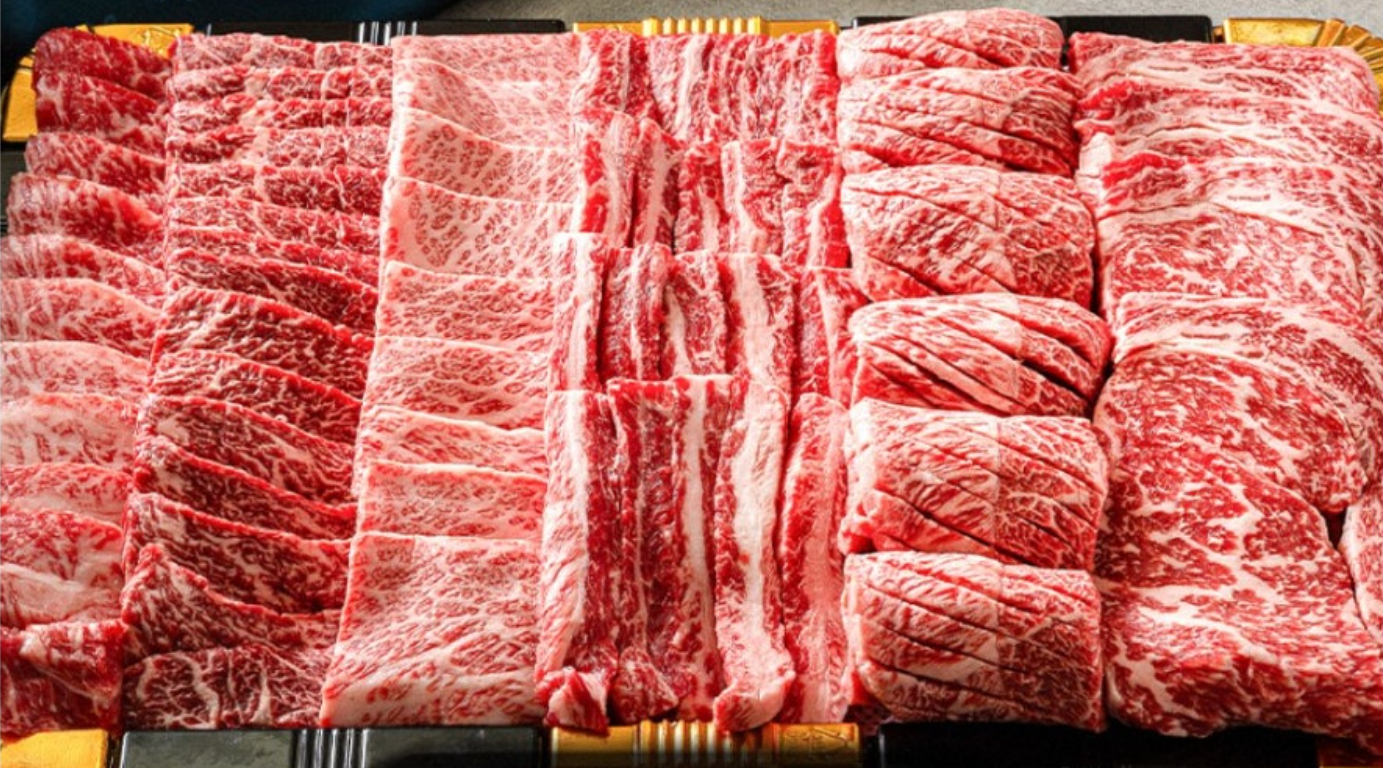
Hoengseong is Korea’s most celebrated hanwoo (Korean native cattle) producing region. The beef has GI (geographical indication) protection, and the cattle here are raised under a specific regime: mountain spring water, clean air without industrial pollution, a diet of local rice straw and grass, and strict breeding lines that have never been crossed with foreign breeds. The resulting meat is known for high levels of unsaturated fat (giving it a clean, non-greasy finish), abundant glutamic acid (flavour), and a marbling pattern that holds up under heat without turning dry.
The Hoengseong Hanwoo Festival (횡성한우축제) takes place in October and is the largest beef-focused festival in Korea — expect live cattle auctions, competitive barbecue events, and deeply discounted cuts sold directly from local farms. Outside of festival season, the hanwoo restaurants clustered near Hoengseong town centre offer year-round access to the beef at prices significantly below Seoul.
happyhanwoofestival.com
Gangneung Chodang Sundubu (강릉 초당순두부)
Chodang is a neighbourhood in Gangneung where, for several centuries, tofu has been made using seawater from the East Sea rather than the brine or coagulant used elsewhere. The seawater sets the soy milk gently, producing a tofu (sundubu, 순두부) that is unpressed, almost custard-soft, and faintly mineral. It is served in a light kelp broth with a small amount of seasoning, in a stone bowl that keeps it warm. This is one of the most regionally specific foods in Korea — the taste is genuinely tied to the specific mineral composition of the East Sea water at this location.
The sundubu restaurants of Chodang village are a short walk from each other and all operate on essentially the same product, but the quality is uniformly high. Gangneung makes for a natural day trip or overnight from Seoul (KTX to Gangneung Station, approximately 2 hours).
Chuncheon Dakgalbi (춘천 닭갈비)
Chuncheon’s famous stir-fry is made from chicken thigh marinated in gochujang sauce, cooked on a flat iron grill with sweet potato, cabbage, and scallions — a dish that originated here in the 1960s as an affordable alternative to pork. Myeongdong Dakgalbi Street in central Chuncheon has roughly fifty restaurants all serving variations on the same dish. The version to know is cheoljpan dakgalbi (철판 닭갈비), stir-fried on a flat griddle rather than the original grill, with the option to finish by frying rice in the remaining sauce. Chuncheon is 1 hour from Seoul by ITX train.
North Chungcheong Province (충청북도)
The only landlocked province in Korea, North Chungcheong compensates with mountain vegetables, freshwater fish, and a food culture that prizes foraged and fermented ingredients over the coastal seafood more associated with southern cooking.
Goesan Olgaengi Gukbap (괴산 올갱이 국밥)
Olgaengi (올갱이) is the local name for the marsh snail (daesugui), found in the clean mountain streams of the Dalcheon River basin near Goesan. The snails are boiled until the meat pulls from the shell, then returned to a broth with tofu, garlic, and doenjang, and served with rice. It is intensely earthy — this is a mountain province dish, not a refined restaurant preparation. Goesan’s markets and roadside restaurants along Route 19 through the province are the places to try it.
Chungju Apple (충주사과)
The inland plateau of North Chungcheong, at elevation, experiences strong diurnal temperature variation — hot days and cold nights — which concentrates sugar in fruit skins and produces apples of exceptional sweetness and crunch. Chungju apples (충주사과) are harvested from September to November and are widely regarded as among the best in Korea. The region’s apple orchards are visible from the roads around Chungju and Suanbo — many offer pick-your-own experiences in autumn.
South Chungcheong Province (충청남도)
South Chungcheong faces the Yellow Sea to the west, with tidal mudflats that generate some of Korea’s finest shellfish and fermented seafood. Inland, it is Geumsan that defines the province’s agricultural identity.
Geumsan Ginseng (금산인삼)
Geumsan (금산) is responsible for approximately 70 percent of South Korea’s entire ginseng (인삼, insam) production — a statistic that understates the concentration. The soil here is loamy and well-drained, the mountain air is humid, and the land has been dedicated to ginseng cultivation for over 1,500 years, establishing the microbial and mineral conditions that the plant requires. Geumsan ginseng is larger, more densely branched, and higher in ginsenosides (the bioactive compounds) than ginseng grown in most other regions.
The Geumsan Ginseng and Medicinal Herb Market (금산인삼약초시장) operates year-round and is one of the largest traditional markets in Korea by volume. The full ginseng range is here — fresh white ginseng, dried red ginseng, ginseng extract, ginseng candy, and the complete range of medicinal herbs. The annual Geumsan Ginseng Festival in October is the largest ginseng-specific festival in Asia, drawing buyers from across the continent.
Geumsan-eup, Geumsan-gun, South Chungcheong
Bus from Daejeon (Yuseong Terminal), approximately 1 hour
geumsan.go.kr
Taean Blue Crab and Ganjang Gejang (태안 꽃게 / 간장게장)
The tidal flats and cold coastal waters of Taean, on the western tip of South Chungcheong, make it Korea’s second-largest blue crab (꽃게, kkotge) producing area after Incheon. The crabs caught here are notably large, with thick shells and dense, sweet crab meat. But the product Taean is most famous for nationally is ganjang gejang — raw blue crab marinated in soy sauce and fermented. Called “the rice thief” (밥도둑) in Korea for its addictive quality, a good ganjang gejang should be briny, slightly sweet, with roe that has cured into a jammy, intensely savoury paste.
Taean’s version benefits from the region’s high-quality sea salt, produced on the local mudflats, which is used in both the initial salting and the soy marinade. Autumn — October and November — is the prime season, when blue crabs are fattest after summer feeding. The annual Taean Jumbo Shrimp Festival (태안대하축제) in October also showcases the region’s daeha (대하) prawns, which reach up to 30 cm in length.
North Jeolla Province (전라북도)
The fertile Honam Plain makes North Jeolla one of Korea’s most productive agricultural regions. The food here is elaborate, ingredient-rich, and historically tied to the court cuisine traditions of Jeonju. If you’re planning a visit, our Jeonju Hanok Village guide covers the full picture.
Jeonju Bibimbap Ingredients (전주비빔밥)
Jeonju bibimbap is sometimes described as Korea’s most representative dish, but what makes it specific is the sourcing: the rice is cooked in beef bone broth, the kongnamul (soybean sprouts) come from the Jeonju variety — which is squat, not long, and intensely flavoured — and the number of side ingredients (30 in the full traditional version) reflects the region’s agricultural abundance. The garnished raw beef (yukhoe), the paper-thin dried seaweed, the fermented soybean paste (doenjang) — each comes from a specific local producer or style.
This isn’t a dish to eat in Seoul. It needs to be eaten in Jeonju, ideally at one of the restaurants inside the Jeonju Hanok Village (전주한옥마을) where the traditional version is still made according to local standards.
Gochang Laver (고창 김)
Gochang, on the western coast of North Jeolla, sits adjacent to some of the most biodiverse tidal mudflats in Korea. The gim (김, dried laver/seaweed) cultivated here is treated as a premium product nationally — its dark colour, clean ocean flavour, and paper-thin texture distinguish it from the mass-produced sheets sold in supermarkets. The local mudflat ecosystem, which includes UNESCO-listed wetlands, supports the seaweed with nutrients that farmed coastal varieties elsewhere cannot replicate. Gochang gim is sold throughout Korea but is cheapest and freshest at local markets in the town centre during the November–February harvest season.
South Jeolla Province (전라남도)
South Jeolla is, by any measure, Korea’s culinary heartland. The combination of deep coastal waters, sheltered southern bays, tidal mudflats, fertile inland valleys, and a food culture that prizes fermentation and seasoning density produces a region where almost everything is eaten in quantity and with particular care.
Wando Abalone (완도전복)
Wando Island (완도) in South Jeolla accounts for approximately 70 percent of South Korea’s entire farmed abalone (전복, jeonbok) output. The waters around the island are cold, clean, and rich in the seaweed — dasima (kelp) and miyeok (wakame) — that abalone eat. The animals grow slowly and the meat is dense, chewy, and carries a distinct mineral sweetness. Wando abalone is prized alive: grilled on the shell over charcoal (lightly charred, creamy inside), served raw as hoe (회) in thin slices with soy and wasabi, or cooked into jeonbokjuk (전복죽) — the rice porridge that turns jade-green from the abalone’s liver and is eaten throughout Korea as a recovery food and luxury dish.
wando.go.kr
Beolgyo Cockles (벌교 꼬막)
Beolgyo (벌교), a small port town in South Jeolla, is inseparable from its kkotmak (꼬막) — blood cockles. These small, ridged clams live in the anaerobic mud of Beolgyo’s tidal flats, filtering the nutrient-dense water and developing a distinctive metallic, savoury taste from their haemoglobin-rich blood. They are seasonal: winter, from November to February, is when the meat is fattest and sweetest. They are eaten boiled — briefly, just until the shells crack — and served cold with a soy-sesame dressing, or raw as yangnyeom kkotmak (seasoned with gochujang, garlic, sesame, and scallion).
Beolgyo’s kkotmak restaurants are concentrated near the town’s traditional market and along the port road. The dish was immortalised in Jo Jeong-rae’s novel Taebaek Mountains (태백산맥), which is set in Beolgyo — the town leans into this literary connection.
Mokpo Fermented Skate (목포 홍어)
Hongeo (홍어) — fermented skate — is the most confrontational food in South Jeolla’s repertoire, and possibly in all of Korean cuisine. Skate is caught in the Yellow Sea, then buried in rice straw and left to ferment for two weeks to several months. The flesh develops a sharp ammonia smell from the natural fermentation of the fish’s cartilage. The traditional serving is hongeo-samhap (홍어삼합) — fermented skate, bossam pork, and aged kimchi eaten together in one bite, the acidity of the kimchi and the richness of the pork softening the skate’s intensity. Mokpo is the epicentre of hongeo culture; the markets here sell it at every stage of fermentation, and the local pride in the dish is absolute.
North Gyeongsang Province (경상북도)
Long coastline on the East Sea, highland interior, and some of Korea’s most historically significant cities give North Gyeongsang a range that runs from luxury seafood to deeply traditional preserved foods.
Yeongdeok Snow Crab (영덕대게)
Daege (대게, snow crab) from Yeongdeok (영덕) on the East Sea coast is Korea’s most prized shellfish, and has been since at least the Goryeo dynasty — over a thousand years of documented harvesting. The crabs live in the sandy, mud-free sea floor off Yeongdeok’s coast, which produces animals with thin shells, generous leg meat, and a clean, sweet flavour free of the muddy undertone found in crabs from murkier waters. They are fished from December to May. The correct preparation is simple: steamed whole, legs cracked open at the table, the meat eaten plain or dipped in a thin vinegar sauce. The sweet, fresh-sea taste needs nothing else.
The annual Yeongdeok Snow Crab Festival (영덕대게축제) in March celebrates the peak of the season at Ganggu Port, where the crab boats dock. Eating daege bought directly from the boats at Ganggu is the standard for freshness.
Bus from Pohang (approximately 1 hour)
yd.go.kr
Andong Salted Mackerel (안동 간고등어)
Inland Andong (안동), Korea’s cradle of Confucian tradition, is an unlikely setting for a celebrated fish dish — but gan-godeungeo (간고등어, salt-cured mackerel) has been associated with the city for centuries. The mackerel, caught on the East Sea coast, was historically salted at the port and carried inland to Andong along a mountain route — the salting was a preservation necessity, and the curing process that occurred during the journey developed a texture and flavour profile that became prized in its own right. The flesh is firmer than fresh mackerel, more intensely savoury, and grills to a crackling crust. Andong’s markets, particularly the Andong Traditional Market (안동구시장), still sell the fish the traditional way.
South Gyeongsang Province (경상남도)
South Gyeongsang faces the Korea Strait — warm, island-dotted, and exceptionally productive for shellfish, particularly oysters. The coastline here hosts Korea’s most important aquaculture operations.
Tongyeong Oysters (통영 굴)
Tongyeong (통영) produces approximately 80 percent of South Korea’s oysters and is one of the largest oyster-producing areas in Asia. The sheltered bays of the South Sea, with their warm, phytoplankton-rich waters and clean tidal flow, are exceptional growing conditions. The Pacific oysters farmed here are grown on suspended rope systems and harvested in autumn and winter — October through March — when cold water temperatures cause the animals to accumulate glycogen, producing their sweet, creamy, intensely oceanic flavour.
The range of preparations is wide: freshly shucked with chojang (vinegar-chilli dipping sauce), in gul-jeon (oyster pancake), in gul-gukbap (oyster rice soup), or steamed on the half shell. The street stalls and seafood restaurants along Tongyeong’s waterfront operate through the entire oyster season. The Tongyeong Oyster Festival (통영굴축제) in January and February is the easiest time to eat very large quantities at very low prices.
Bus from Busan (approximately 2 hours)
tongyeong.go.kr
Namhae Garlic (남해 마늘)
Namhae (남해) Island, connected to the mainland by bridge, is Korea’s foremost garlic producing area. The combination of mild coastal climate, salt air, and volcanic soil produces garlic cloves that are larger, more aromatic, and less sharp than inland-grown varieties. Namhae maaneul (남해마늘) is used across Korean cooking and is sold raw, as jangajji (soy-pickled garlic), or as black garlic — slowly fermented at low heat until the cloves turn black and develop a molasses-like sweetness. The black garlic from Namhae has become increasingly prominent as a health food export; at the island’s own markets it is sold cheap and in bulk.
Busan (부산)
Korea’s second city and its largest port has a seafood culture shaped by the East Sea to the east and the Korea Strait to the south, and a food identity built around raw fish, seaweed, and the distinctly Busan appetite for intensity. For a complete guide to the city, see our Busan complete guide.
Gijang Seaweed (기장미역)
Gijang miyeok (기장미역) — seaweed from the Gijang district north of Busan — is considered the finest miyeok (wakame) in Korea. The seaweed grows in the cold, rough East Sea waters off the Gijang coast, producing a thicker, darker, more flavourful leaf than the farmed miyeok from warmer, calmer waters. It is the seaweed used in miyeok-guk (seaweed soup) — a dish eaten on birthdays and by postpartum mothers throughout Korea — when quality is the priority. Gijang’s seaweed is sold fresh in the narrow season (February–April) and dried year-round, with the local Gijang Market being the best place to buy it directly from the fishing families that harvest it.
Busan Raw Fish (부산 회)
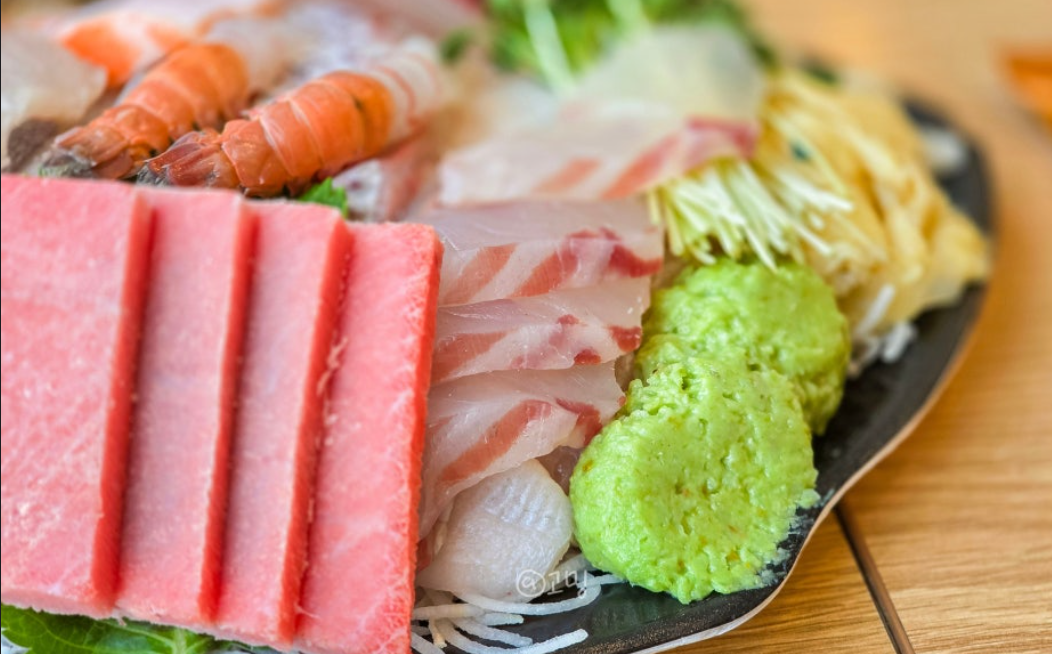
Busan’s seafood culture is anchored in hoe (회) — raw fish, Korean-style: thick-cut slices of fresh catch, eaten with ssamjang, garlic, sliced chilli, and wrapped in perilla leaf, accompanied by maeuntang (매운탕, spicy fish stew) made from the same catch’s bones and offcuts. The most celebrated hoe destination in Busan is Jagalchi Market (자갈치시장) on the waterfront — Korea’s largest seafood market, open from early morning, where the fish is bought live from tank and often prepared in the restaurants upstairs within minutes. Turbot (광어, gwang-eo), sea bream (도미), and large surf clam (키조개) are the premium cuts; the market delivers them at prices that reflect catching proximity rather than Seoul markups.
52 Jagalchi-haean-ro, Jung-gu, Busan
Jagalchi Station, Line 1, Exit 10
jagalchimarket.busan.kr
Jeju Island (제주도)
Jeju is a volcanic island off Korea’s southern coast with an ecology and food culture that has no parallel on the mainland. The combination of volcanic soil, subtropical climate, cold surrounding ocean, and the island’s isolation over centuries has produced a set of ingredients found nowhere else. Our Jeju Island guide covers the full itinerary.
Jeju Black Pork (제주 흑돼지)
The black pig (흑돼지, heukdwaeji) native to Jeju Island was designated a Natural Monument of Korea in 2015 — the first livestock animal to receive this status. Records of black pigs on Jeju date to the 3rd century, and the breed adapted over millennia to the island’s volcanic terrain and subtropical climate, developing a genetic profile distinct from mainland pig breeds. The meat is darker, more richly marbled, and has a firmer texture than standard white pork — the fat renders slowly on the grill, and the cooked meat has a pronounced sweetness and depth that makes it immediately identifiable.
The protocol for eating it: charcoal grill, no marinade, cut into thick slices and wrapped in perilla with raw garlic, salt, and ssamjang. The dedicated Black Pork Street (흑돼지거리) in Jeju City’s Domi-dong neighbourhood is a row of restaurants all specialising exclusively in the breed — the area’s competitive concentration keeps quality high. Expect to pay a significant premium over mainland pork; it is worth it.
visitjeju.net
Hallabong and Jeju Citrus (한라봉 / 감귤)
Jeju’s subtropical climate, volcanic gotjawal soil, and year-round mild temperatures make it the only place in Korea where citrus grows commercially. The gamgyul (감귤, mandarin tangerine) is the island’s signature fruit — harvested November through January — with a thin skin, deep sweetness, and the specific mineral quality of Jeju soil. But the more prized variety is the Hallabong (한라봉), a mandarin-orange hybrid distinguished by its bulging crown and exceptional juice content. Harvested January through February, it is sweeter and more complex than the standard gamgyul and is widely regarded as the finest citrus produced in Korea.
Jeju’s citrus range has expanded significantly: cheonhyehyang (천혜향, mandarin-orange hybrid with lower acidity), red-hyang (레드향, sweeter and darker), and tangor varieties are all grown on the island. The best way to experience them is at a tangerine-picking farm (감귤따기 체험) on the outskirts of Seogwipo — most farms are open from November to February, entry is ₩10,000, and visitors can eat freely while picking.
Jeju Abalone (제주 전복)
The abalone farmed and harvested around Jeju’s coastline — particularly by the island’s haenyeo (해녀, female free-divers) — has a cultural significance well beyond its culinary standing. Haenyeo have been diving for abalone, conch, and sea cucumber off Jeju for over a thousand years, and the practice was inscribed on UNESCO’s Intangible Cultural Heritage list in 2016. The abalone they harvest is wild or semi-wild, growing on the rocky sea floor rather than in farmed cages — the result is a smaller, more muscular animal than the farmed Wando variety, with a more intense oceanic flavour.
Jeonbokjuk (전복죽) made with Jeju abalone and sesame oil is the most historically significant dish on the island — it was presented as tribute to the Joseon court. The best versions are served in the haenyeo villages on the east coast, where the porridge is made from abalone caught the same morning.
A Note on Seasonality in Korea
Much of what is listed above is seasonal — the cockles only fatten in winter, the Hallabong only ships in January, the snow crab season closes in May. Korean regional produce follows the jeongwol (정월, the lunar calendar) as much as the solar calendar, and the traditional concept of jeongcheol (정절) — eating what belongs to the current season — governs how much of the country still thinks about food.
Travelling to a region during its peak produce season delivers a fundamentally different experience from visiting at other times of year. An oyster in Tongyeong in February and one in August are not the same thing. A cockle in Beolgyo in January is not the same as one in July. This is a food country that rewards attention to timing.
For a deeper look at seasonal eating culture, see our feature on 제철코어 (Seasonal-core): Korea’s Hottest Food Trend.
A comprehensive regional produce map and sourcing guide is available from the Rural Development Administration (농촌진흥청) and the Korea Agro-Fisheries & Food Trade Corporation (aT).
Frequently Asked Questions: Korea Regional Food
What is the most famous regional food in Korea?
Several regions claim iconic dishes: Jeonju (bibimbap), Tongyeong (oysters), Jeju (black pork and abalone), and Yeongdeok (snow crab) are among the most recognised. For rice, Icheon holds the highest national prestige; for beef, Hoengseong hanwoo is the GI-protected standard. The answer depends on the category — Korea has exceptional regional specialties in almost every food type.
When is the best time to visit Korea for regional food?
Autumn (October–November) is the peak season for the widest range of produce: Icheon new-crop rice, Hoengseong hanwoo festivals, Geumsan ginseng festivals, Taean blue crab, and the beginning of the oyster and cockle seasons. Winter (December–February) is best for oysters, cockles, snow crab, and Hallabong citrus. Spring (March–May) is ideal for Jeju citrus wrap-up, Yeongdeok snow crab (tail end), and Gijang seaweed.
Where can I buy regional Korean produce in Seoul?
Gyeongdong Market (경동시장) in Jegi-dong has a wide range of dried regional goods — ginseng, dried anchovies, kelp, mushrooms — at wholesale prices. Garak Market (가락시장) is Seoul’s main wholesale hub for fresh produce and seafood from across the country. Our Korea traditional markets guide covers both in detail.
What is hanwoo and why is it more expensive than regular beef?
Hanwoo (한우) is the native Korean cattle breed, raised under strict protocols without crossbreeding with foreign breeds. The meat is known for unsaturated fat marbling, high glutamic acid content, and a clean finish. Premium producing regions like Hoengseong have GI protection. In 2026, hanwoo remains significantly more expensive than imported beef in Korea — a quality indicator rather than a marketing claim.
Is regional Korean food available in Seoul restaurants?
Yes, but quality varies. The best approach is to eat regional dishes in their home regions — Jeonju bibimbap in Jeonju, Tongyeong oysters in Tongyeong. Seoul restaurants often offer good versions of famous regional dishes, but they typically source ingredients from the same regions at a transport cost, and the connection to the local producer is less direct.
What regional produce does Jeju Island specialise in?
Jeju’s most celebrated produce includes Jeju black pork (흑돼지, a GI-protected native breed), abalone harvested by haenyeo free-divers, hallabong and gamgyul citrus (harvested December–February), and green tea from the Osulloc estates near Seogwipo. The island’s volcanic soil and subtropical climate produce flavour profiles not replicated on the Korean mainland.