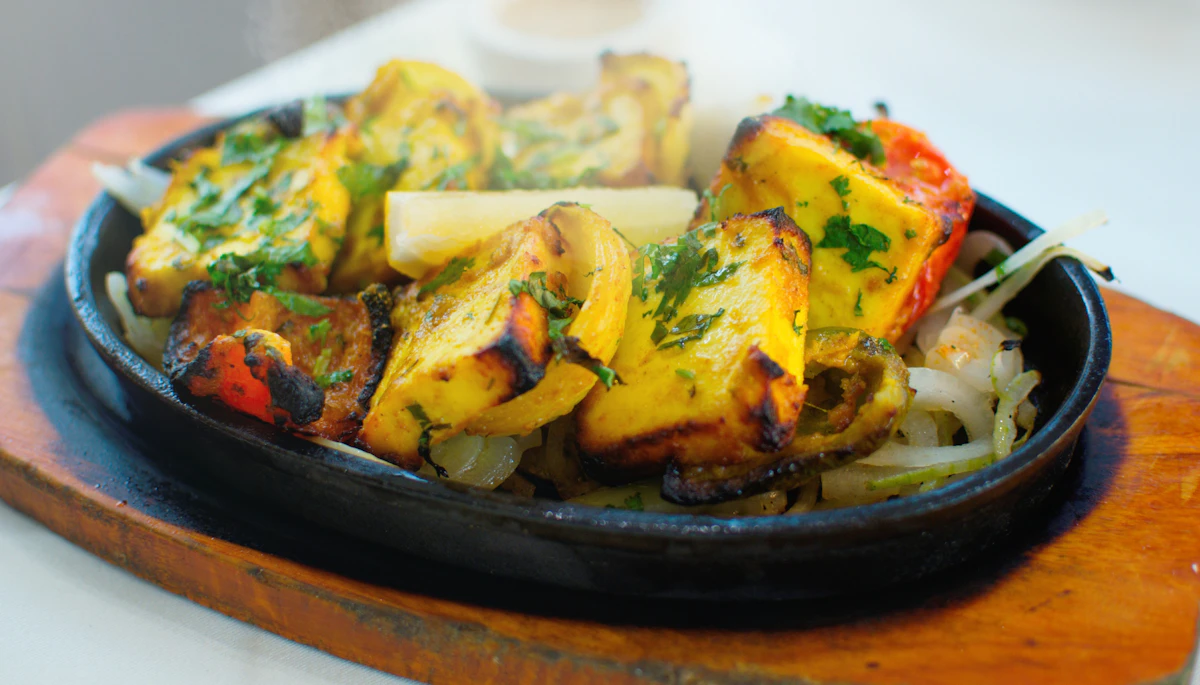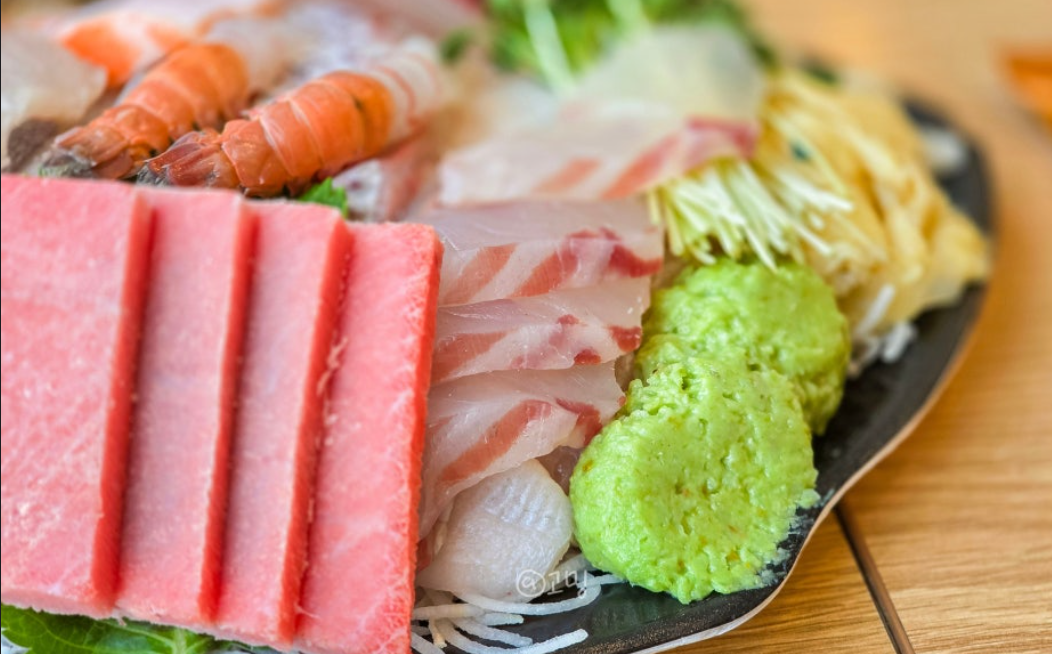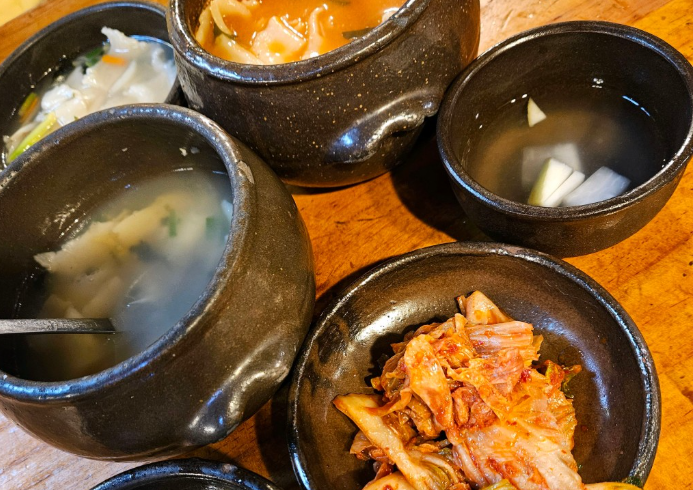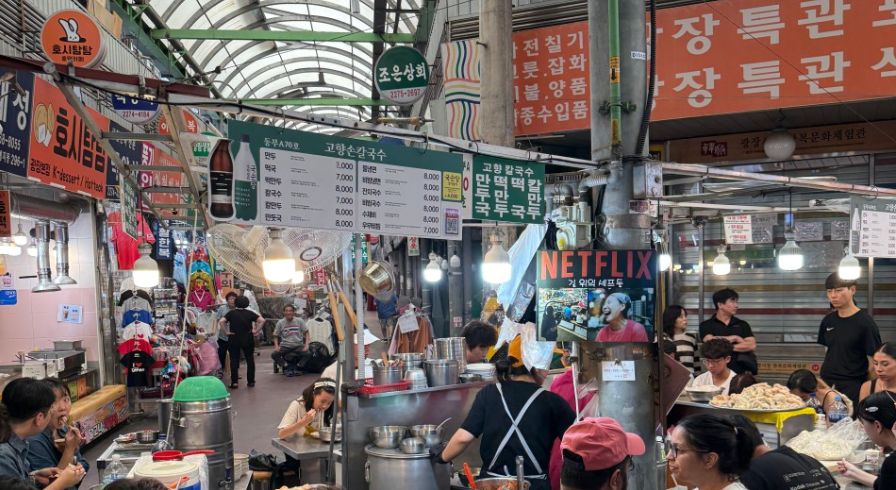
There is a moment, usually early in any first trip to Korea, when you step into a traditional market and understand immediately that this is the real thing. Not a recreation of Korean food culture, not a staged experience — the actual place where the city feeds itself. The air is thick with frying oil and fish brine, vendors are calling out prices in rapid Korean, and somewhere nearby there is a grandmother eating a bowl of noodles she’s had at the same stall for forty years.
Korea’s sijang (시장, traditional markets) — often called jaerae sijang (재래시장, old-style markets) or jeontong sijang (전통시장, traditional markets) — are one of the country’s oldest institutions. Long before convenience stores colonised every Korean street corner and supermarket chains arrived, the market was where daily life happened: where you bought the day’s vegetables, had lunch, ran into neighbours, and kept track of the neighbourhood’s social fabric. Many of the best ones have been operating for over a hundred years.
They are also, increasingly, a battleground between tourism and authenticity. Some of Korea’s most famous markets have become so dominated by visitors that the food has been simplified, the prices have risen sharply, and the locals have quietly moved on. Knowing which markets are still worth your time — and which ones are coasting on reputation — makes an enormous difference to what you actually eat in 2026.
| Market | Location | Best For | Honest Rating |
|---|---|---|---|
| Gwangjang Market | Jongno, Seoul | Bindaetteok, mayak gimbap | Still good (inner stalls only) |
| Mangwon Market | Mapo-gu, Seoul | Local food, fair prices | Excellent |
| Gyeongdong Market | Dongdaemun-gu, Seoul | Dried goods, herbs | Excellent |
| Majang Meat Market | Seongdong-gu, Seoul | Premium beef at wholesale | Excellent |
| Seomun Market | Daegu | Textiles, hotteok, gukbap | Excellent |
| Haeundae Traditional Market | Busan | Milmyeon, ssiathotteok | Excellent |
| Jeju Dongmun Market | Jeju City | Black pork, hallabong | Good |
What Happens Inside a Korean Traditional Market
Before the specifics, it helps to understand what a sijang actually is.
At its core, it’s a covered or semi-covered commercial district built around a daily food economy. The ground floor of a major market will typically have raw produce vendors (vegetables, fruit, grain), meat stalls, banchan (반찬, side dish) vendors selling pre-made kimchi and pickled vegetables, and fishmongers. Further in, you’ll find textiles, kitchen goods, herbal medicine sections, and household items.
But the part that draws most visitors — and most of the market’s energy — is the bunsik (분식) and food stall section. These are small, counter-fronted kitchens, often with just four or five plastic stools, serving lunch to the vendors, delivery workers, and neighbourhood regulars who are the market’s real constituency. The menus are typically short, the food is fast, and the prices reflect the fact that the clientele has no interest in paying tourist prices.
This is what a Korean market does at its best: it feeds people efficiently, cheaply, and with the kind of accumulated expertise that comes from cooking the same dish for thirty years.
The Famous Markets in Korea: Still Worth It, With Caveats
Gwangjang Market (광장시장) — Seoul
Founded in 1911, Gwangjang is the oldest and largest traditional market in Korea. It is also the one that has attracted the most controversy in recent years.
The market’s food alley — a double row of stalls running through the centre of the building — became internationally famous through food documentaries and social media coverage. The result has been dramatic. Tourist foot traffic surged, prices at certain stalls climbed well above what the food justifies, and a viral scandal in late 2025 exposed a street vendor charging foreigners significantly more than the listed price — a video that accumulated over sixteen million views and triggered a formal dispute between the market’s fixed-store owners and street vendor association. The Seoul Metropolitan Government has since introduced a quantitative labelling system requiring menu prices to show portion weights alongside costs, along with mystery shopper monitoring.
The situation at Gwangjang is more complicated than the headlines suggest. The market is large and the offending practices are concentrated among a minority of stalls — particularly those facing the main thoroughfare, visible from the entrance, where tourist foot traffic is highest. Go further in, find a stall where the customer in front of you is clearly a regular, and the experience is different.
What Gwangjang does best: bindaetteok (빈대떡, mung bean pancakes), crisp and dense and eaten with a splash of soy sauce and vinegar; mayak gimbap (마약 김밥, bite-sized rice rolls — the name means “narcotic,” which conveys their addictiveness accurately); and yukhoe (육회, beef tartare with pear and sesame). These are genuinely excellent when you find the right stall.
Getting there: Jongno 5(o)-ga Station (Line 1 or Line 5), Exit 8. → Naver Map
Tongin Market (통인시장) — Seoul
Tongin Market, established in 1941, runs just west of Gyeongbokgung Palace and operates one of Seoul’s most charming gimmicks: the Dosirak Cafe (도시락 카페). For ₩5,000 you receive a set of brass coins — reproductions of the Joseon-era yeopjeon — which you use as currency across the market’s food stalls, picking up small portions of each dish. One coin buys a piece of rolled omelette, another a scoop of japchae (잡채, glass noodles), another a slice of tteok (떡, rice cake). You assemble your own dosirak (도시락, lunch box) from however many dishes you want.
The concept is tourist-friendly by design, but it works because it grants access to the market’s actual food at manageable portion sizes — exactly what you want when you’re trying to eat twelve different things in one sitting. The market itself is small, clean, and unpretentious.
Hours: Market runs Tuesday–Sunday; Dosirak Cafe operates 11am–5pm. → Naver Map
The Overrated Ones in 2026: Honest Verdicts
Myeongdong Street Food
Myeongdong’s outdoor food stalls — once a legitimate reflection of Seoul’s street food culture — have become something else entirely. The vendors have consolidated around a narrow range of dishes with visual appeal: tornado potatoes, skewered strawberries, oversized tteokbokki. Prices run 30–50% higher than equivalent food anywhere else in Seoul. The crowd is almost entirely tourists.
This isn’t the worst thing in the world — some of it is enjoyable enough — but it is not representative of Korean street food, and it is not particularly good value. If your goal is authentic market food, Myeongdong is not where you’ll find it.
Gwangjang (the tourist-facing stalls)
As noted above: the outer ring of Gwangjang’s food alley, particularly the stalls positioned to catch visitors entering from the main Jongno road, has become prone to the practices that drew the 2025 controversy. Pushy table service, unlisted prices revealed only at the bill, and portions calibrated for visual photography rather than actual appetite. The interior stalls are better — but it takes some effort to find them.
The Markets Worth Seeking Out in Seoul
Mangwon Market (망원시장) — Seoul
Mangwon Market is the name that comes up most often when you ask Koreans in their twenties and thirties where they actually eat. Located in Mapo-gu, not far from the Han River parks and the Hongdae neighbourhood, it is long, covered, and resolutely local in orientation. The vendors sell to the neighbourhood. The food prices haven’t adjusted upward for a tourist audience.
The market’s specific draw is homemade donuts — dense, lightly sweet, sold fresh and warm and eaten immediately — alongside the full spectrum of bunsik: tteokbokki, eomuk (어묵, fish cake skewers in hot broth), gimbap, and twigim (튀김, battered and fried vegetables). Weekend mornings draw more visitors; weekday lunch service is when it operates at its most honest.
Getting there: Mangwon Station (Line 6), Exit 1. → Naver Map
Gyeongdong Market (경동시장) — Seoul
Gyeongdong Market in Jegi-dong, Dongdaemun-gu, is one of Korea’s largest herbal medicine and hanbang (한방, traditional medicine) wholesale markets. This is not a food market in the conventional sense — it is a working herb market, full of ginseng roots, dried mushrooms, medicinal seeds, and every variety of dried goods used in Korean home cooking. The customers are overwhelmingly elderly, the pace is slow, and nobody is selling anything to tourists.
The Seoul K-Medi Center attached to the market provides context for visitors curious about traditional Korean medicine — but the market itself is worth visiting simply as an experience of a different kind of Korean commercial culture. For those who cook, the dried goods available here at wholesale prices — dried anchovies (myeolchi, 멸치), kelp (dasima, 다시마), various doenjang varieties — are extraordinary finds.
Getting there: Jegi-dong Station (Line 1), Exit 2. → Naver Map
Majang Meat Market (마장축산물시장) — Seoul
Korea’s largest meat market occupies a large commercial block in Seongdong-gu, supplying the city’s Korean BBQ restaurants with most of their premium beef. What sets Majang apart is the price: quality cuts here run 20–30% cheaper than the same grade at a supermarket, because you’re buying from the distributor rather than a retailer.
The experience is unusual. The ground floor is all butchers and refrigerated cases; the upper floors have restaurants where you can bring your purchases to be grilled properly. Marbled hanwoo (한우, native Korean beef) at close to wholesale prices, eaten in the same building where it was butchered — this is a legitimate hidden advantage for anyone serious about Korean BBQ.
Hours: 8am–10pm daily. → Naver Map
Garak Market (가락시장) — Seoul
Garak Market, opened in 1985, is Seoul’s largest wholesale market for agricultural and fishery products — the primary distribution hub for the city’s fruits, vegetables, and seafood. It is not set up as a tourist destination and makes no effort to be one. The market has a small retail section where prices are meaningfully lower than supermarkets, and a cluster of working canteens serving the market’s thousands of employees: simple, hearty, cheap.
The specific draw here is the live auction section, where buyers from restaurants and retailers bid on fresh seafood in the small hours of the morning. Watching a professional seafood auction — buyers signalling with hand gestures, vendors working through crates at speed — is one of Seoul’s genuinely rare experiences. Entry is unrestricted, but arrive before 5am. → Naver Map
Beyond Seoul: Regional Korean Markets Worth a Detour
Seomun Market (서문시장) — Daegu
One of Korea’s oldest markets, with documented history stretching to the Joseon Dynasty. Seomun is best known for its textile and fabric section — this is where tailors across the region have bought their materials for generations — but the food section is equally compelling. The market’s gukbap (국밥, rice soup) restaurants are among Daegu’s most respected lunch destinations, and the hotteok (호떡, sweet pancakes) here are notably superior to the Seoul versions: richer, more generously filled, and cooked with a heavier hand. → Naver Map
Haeundae Traditional Market (해운대재래시장) — Busan
A short walk back from Haeundae Beach, this market operates in an entirely different register from the city’s waterfront markets. It’s a neighbourhood market — vegetables, banchan, seafood, fresh meat — and the restaurants inside it serve the kind of Busan-style food that the city’s beach-area hotels do not. Milmyeon (밀면, Busan’s cold wheat noodle dish), gukbap, and the local ssiathotteok (씨앗호떡, seed-filled sweet pancakes) are all here, at prices that haven’t been tourist-adjusted. → Naver Map
Gupo Market (구포시장) — Busan
Located near the Nakdong River in northern Busan, Gupo Market is among Busan’s most important local markets, operating in a neighbourhood that most visitors never reach. The market is known for its dried seafood vendors, its vegetable selection, and its gukbap restaurants — in particular the dwaeji gukbap (돼지국밥, pork bone soup with rice) that is central to Busan’s food identity. Eating here feels nothing like eating in a tourist area, because it isn’t one. → Naver Map
Gangneung Jungang Market (강릉중앙시장) — Gangwon Province
If you’re travelling the east coast route from Seoul toward Sokcho and the Seoraksan mountains, Gangneung is worth a stop specifically for this market. The coastal location brings extraordinary dried seafood — semi-dried squid (ojingeo, 오징어) in particular — and the mountain interior contributes memiljeon (메밀전, buckwheat pancakes) and gamja ongsimi (감자옹심이, potato ball soup), dishes that don’t travel well and are rarely found outside Gangwon Province. → Naver Map
Jeju Dongmun Market (제주동문시장) — Jeju Island
Jeju’s most historic traditional market is part open-air street market, part night market, part seafood market. The island’s distinctive produce — hallabong (한라봉, a citrus hybrid), black pork, hairtail fish (galchi, 갈치), and omegi tteok (오메기떡, traditional rice cake made from foxtail millet) — are all concentrated here. The night market, which runs from 7pm, is the livelier of the two sessions and the better time to eat. → Naver Map
Practical Notes for Korean Markets in 2026
Navigation: Naver Map (네이버 지도) is far more reliable than Google Maps for Korean markets — tips on this in our Google Maps Korea guide. Most market stalls are not indexed by Google but have Naver listings with hours and phone numbers. Download it before you go.
Payment: Many market stalls are cash-only. Have ₩10,000–₩50,000 notes available; exact change is appreciated.
Pricing: In a well-functioning local market, prices are clear and consistent. If a stall has no visible price list and is occupied exclusively by tourists, treat this as a signal to keep walking.
Portion sizes: Korean market food is designed for solo diners or pairs eating multiple dishes. Don’t try to finish one thing before ordering another — the point is to move through the menu.
Language: A small amount of Korean goes a long way. Eolma-eyo? (얼마예요?) means “How much?” Igeo juseyo (이거 주세요) means “This one, please.” Most vendors in local markets will not speak English, but will appreciate the attempt and navigate the rest through pointing.
When to go: Weekday mornings, roughly 9am–noon, represent market culture at its most functional. Vendors are fully stocked, the professional clientele is present, and the food stalls are operating at full capacity. Weekend afternoons shift the clientele toward leisure visitors, which changes the atmosphere — not necessarily worse, but different.
Korea’s traditional markets are one of the most direct expressions of the country’s food culture available to a visitor. They are not curated, they do not perform Koreanness for an outside audience, and the food in them is good because it has to be — it feeds people who eat it every day. The famous ones are worth seeing. The local ones are worth eating in.
Frequently Asked Questions: Korea Traditional Markets
What is the most famous traditional market in Korea?
Gwangjang Market (광장시장) in Seoul is the most internationally recognised, founded in 1911 and famous for bindaetteok, mayak gimbap, and yukhoe. It has received heavy media coverage through food documentaries. However, its fame has also brought tourist pricing issues, particularly at the entrance-facing stalls. Namdaemun Market is Seoul’s largest by area; Seomun Market in Daegu is historically one of the oldest in the country.
Are Korean traditional markets cash only?
Many stalls and small vendors in Korean markets are cash-only, particularly at older, more local establishments. Major markets in Seoul increasingly have card-accepting vendors, but having ₩10,000–₩50,000 in cash available is strongly recommended. ATMs are typically within a short walk of any major market.
What should I eat at Gwangjang Market?
The standout dishes at Gwangjang Market are: bindaetteok (빈대떡, mung bean pancakes), mayak gimbap (마약 김밥, bite-sized addictive rice rolls), and yukhoe (육회, Korean beef tartare). Avoid the tourist-facing outer stalls; walk toward the interior where the customer base is clearly local for better prices and more authentic preparation.
What is the best market in Seoul for locals?
Mangwon Market (망원시장) in Mapo-gu consistently ranks highest among Seoulites in their twenties and thirties for authentic market food at local prices. Majang Meat Market is favoured by serious Korean BBQ enthusiasts. Gyeongdong Market is the go-to for dried goods, herbs, and traditional medicine ingredients.
Is Myeongdong street food worth visiting?
For authentic Korean street food at fair prices, no. Myeongdong’s outdoor food stalls have become heavily tourist-oriented, with prices 30–50% above equivalent food elsewhere in Seoul and a menu narrowed to visually viral items. It’s an enjoyable enough spectacle, but should not be treated as representative of Korean street food culture. For the real thing, visit Mangwon Market or Namdaemun instead.
What time do Korean markets open and close?
Most traditional markets open between 8am–9am and operate through early evening (7pm–9pm), with food stalls often closing earlier than produce vendors. Garak Market (wholesale) is active from around midnight to early morning for the seafood auction. Some markets have closed days — Tongin Market is closed Monday; check individual market websites via Naver Map before visiting.