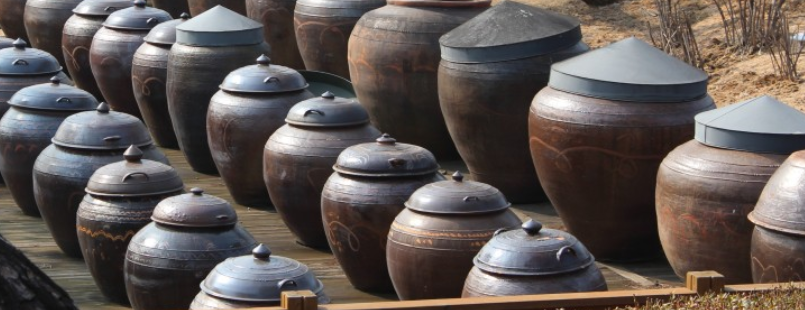
If you walk past a traditional Korean house (Hanok), you might see rows of stout, breathing earthenware jars sitting on a stone terrace. These are Jangdokdae, and they are the “soul” of the Korean home. Inside, nature and time work together to create the fermented foundations of almost every dish you will eat during your stay.
In late 2024, the culture of Jang-making was officially added to the UNESCO Intangible Cultural Heritage of Humanity list, cementing its status as a global culinary treasure. Understanding the three core jang — doenjang, gochujang, and ganjang — is the key to understanding why Korean food tastes the way it does, and why no other cuisine quite replicates it.
| Jang Type | Flavor Profile | Main Ingredient | Best Paired With |
|---|---|---|---|
| Doenjang | Savory, Funky, Earthy | Soybeans | Tofu, Vegetables, Beef |
| Gochujang | Spicy, Sweet, Umami | Chili, Glutinous Rice | Rice, Pork, Street Food |
| Ganjang | Salty, Deep, Saline | Soy Liquid | Seafood, Marinades |
1. Doenjang (된장): The Earthy Soul of Korean Cooking
The Vibe: Pungent, salty, and incredibly deep umami. If you like blue cheese or miso, you will love the complexity of Doenjang.
Unlike Japanese miso, which is often fermented with rice or barley, traditional Korean Doenjang is made purely from soybeans and salt. This results in a much bolder, “funkier” flavor that can withstand high-heat boiling without losing its character.
- Making Process: It begins with Meju—blocks of boiled soybeans that are mashed, shaped into bricks, and hung with rice straw to ferment. These blocks are then submerged in brine inside a Jangdok (crock). After months, the solids are separated and aged further to become Doenjang.
- Must-Try Dishes:
- Doenjang-jjigae: The ultimate Korean comfort stew — tofu, vegetables, and mushrooms simmered in doenjang broth.
- Ssamjang: An addictive dipping sauce for Korean BBQ made by mixing Doenjang and Gochujang.
- Details: History of Doenjang (Visit Korea)
2. Gochujang (고추장): The Vibrant Fire of Korea
The Vibe: Spicy, sweet, and savory. It’s not just “hot sauce”; it’s a thick, viscous paste with a complex, slow-burning heat.
Gochujang is what gives Korean food its iconic red glow. It is a masterpiece of balance, combining the heat of chili with the sweetness of fermented grains.
- Making Process: A mixture of Gochugaru (red chili powder), glutinous rice powder, fermented soybean powder (Meju-garu), and salt. The enzymes in the rice break down into sugars during the long fermentation process, which is why authentic Gochujang has a natural sweetness without added corn syrup.
- Must-Try Dishes:
- Bibimbap: The legendary mixed rice bowl.
- Tteokbokki: Spicy, chewy rice cakes — one of Korea’s most beloved street foods.
- Dakgalbi: Spicy stir-fried chicken.
- Expert Tip: Visit Sunchang Gochujang Village in Jeollabuk-do to see master crafters at work in 2026.
3. Ganjang (간장): The Liquid Gold of Korean Fermentation
The Vibe: Salty, floral, and packed with savory depth.
Korean soy sauce is the byproduct of the Doenjang-making process. When the Meju blocks are removed from the brine, the remaining dark liquid is boiled and aged to become Ganjang.
- Aging Matters: In Korea, you might hear of “centuries-old Ganjang.” Some families pass down “seed soy sauce” through generations.
- Cheong-ganjang: Light and young (1 year), used for soups.
- Jin-ganjang: Aged (5+ years), thick and sweet, used for marinating meat.
- Must-Try Dishes:
- Ganjang Gejang: Raw crabs marinated in soy sauce (often called “the rice thief”). One of Korea’s most beloved premium dishes.
- Japchae: Stir-fried glass noodles seasoned with ganjang.
Traveler’s Spotlight: Sunchang Gochujang Village
For those planning a trip, Sunchang (순창) is the mecca of Jang. Because of its unique humidity and temperature, Sunchang was the historic provider of Gochujang to the Joseon Kings.
Today, you can visit the Sunchang Gochujang Folk Village, where you can join a “Jang-making” experience class and buy artisanal pastes aged for years in traditional jars. This is one of the most rewarding cultural food experiences available to visitors in 2026 — hands-on, deeply rooted in Korean history, and fully participatory.
Conclusion
As you travel through Korea, pay attention to the depth of the stews and the richness of the sauces. That “hidden” flavor you can’t quite put your finger on? That is the magic of Jang — a taste of Korean history that has been bubbling away in a jar for years, just waiting for your visit. For a wider look at the produce and regional ingredients that make Korean cooking so varied, see our Korea regional produce guide.
Official Resources:
Frequently Asked Questions: Korean Jang (장)
What are the three main Korean fermented condiments?
The three core Korean fermented pastes and sauces — collectively known as jang (장) — are: doenjang (된장, fermented soybean paste), gochujang (고추장, red chili paste), and ganjang (간장, soy sauce). Together they form the flavour backbone of nearly all Korean cooking, functioning as seasoning, sauce, marinade, and dipping condiment depending on the dish.
What is the difference between Korean doenjang and Japanese miso?
Both are made from fermented soybeans, but doenjang is fermented using only soybeans and salt — no rice or barley adjuncts — which produces a bolder, more pungent flavour. Doenjang can also be boiled at high heat without losing its character, whereas most Japanese miso is added after the heat is off. The flavour profile of doenjang is often compared to a combination of miso and blue cheese: funky, deep, and intensely savoury.
Why was Korean jang-making added to UNESCO’s Intangible Cultural Heritage list?
The practice of jang culture — the cultivation of meju (fermentation starter), the communal making of fermented pastes, and the multi-generational transmission of fermentation knowledge — was inscribed on UNESCO’s Intangible Cultural Heritage of Humanity list in late 2024. The recognition reflects the cultural depth of jang practice: families maintain living cultures of fermentation passed down through generations, with some households using seed soy sauce hundreds of years old.
Where can I buy authentic Korean gochujang in Korea?
The best source is Sunchang Gochujang Village in Jeollabuk-do, where artisanal producers sell pastes aged 1–3 years in traditional onggi jars. Premium gochujang is also available at traditional markets across Korea — Gyeongdong Market in Seoul has a good selection of regional varieties. For convenience, department store food halls and quality supermarkets like Hansalim stock well-regarded commercial brands.
Can I visit a jang-making workshop in Korea?
Yes. Sunchang Gochujang Folk Village offers hands-on jang-making experiences year-round, where participants mix chili, glutinous rice, and meju-garu in traditional ratios. Several hanok village guest houses in Jeonju also offer jang-making sessions as part of Korean culinary tourism programmes. Booking in advance is recommended for group visits.
How should I use gochujang and doenjang when cooking at home?
Gochujang is used as a base for marinades (bulgogi, dakgalbi), stirred into soups (sundubu jjigae), and mixed with sesame oil and garlic for ssamjang dipping sauce. Doenjang works best in slow-cooked stews (doenjang jjigae) with tofu and vegetables, or as a bold paste in marinades for beef. Both benefit from being bloomed briefly in oil before liquid is added — this develops the fermented flavours and reduces any sharp raw taste.