There’s a neighbourhood in Seoul that most tourists never reach. It sits a few stops past the Han River on Line 2, close to Seoul National University, and it doesn’t have a rooftop café or a viral dessert shop to its name. What it has is Sundae Town — a cluster of steamy, low-lit restaurants that have been serving sundae (순대, pronounced soon-deh) for decades, to the same local regulars, without changing much at all.
Despite sharing a name, Korean sundae (순대) has no connection to the ice cream dessert. It is a savoury steamed sausage — one of Korea’s most beloved comfort foods — and it is very much worth seeking out.
That’s exactly why it’s worth going. For more classic Korean street food experiences in 2026, see our Korean street food guide and Korea traditional markets guide.
Sillim-dong Sundae Town: Seoul’s Best Neighbourhood for Korean Sundae
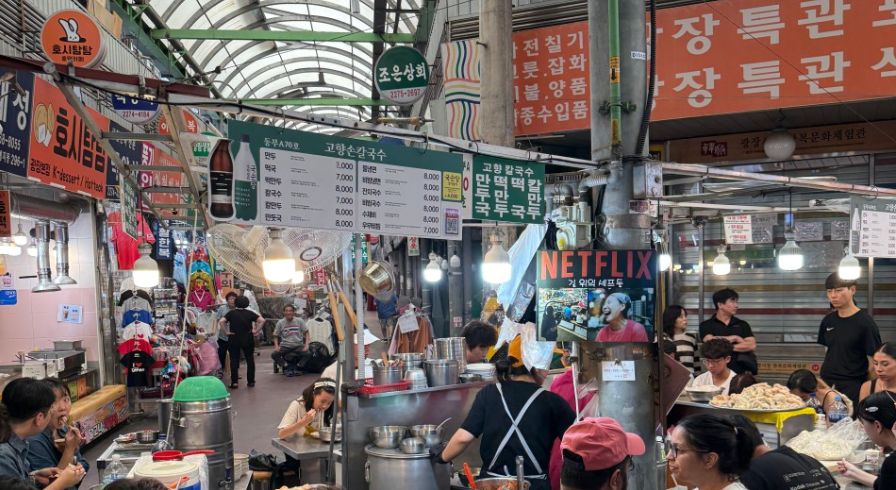
Sillim-dong Sundae Town sits in the Gwanak District of southwestern Seoul, a neighbourhood whose name translates to “new forest” and whose streets have long been shaped by university life and working-class Seoul. The Town itself isn’t a single restaurant — it’s a dense pocket of sundae-specialist spots packed into the alleys near Sillim Station, each one doing its own version of the same essential dish.
The atmosphere is unpretentious to the core. Plastic stools, steamed windows, the thud of metal tongs and the smell of slow-cooked pork broth hanging in the air. Tables fill up fast on cold evenings, and the menus are short by design. This is not a place that needs a lot of words.
It’s recognised as one of Sillim-dong’s defining local attractions — not for tourists, but for the generations of Seoulites who grew up treating it as their neighbourhood canteen. In 2026, it remains one of the most authentic food destinations in Seoul for visitors who want to eat the way locals actually eat.
Sillim-dong, Gwanak-gu, Seoul
Sillim Station, Line 2 — explore alleys to the north, follow the steam
Naver Map →
What Is Korean Sundae (순대)?
If you’re new to it: Korean sundae is a type of blood sausage, made by stuffing cow or pig intestines with a mixture of fillings and steaming the whole thing until tender. In its traditional form, the filling includes seonji (blood), minced meat, rice, and vegetables. The modern street food version — the one you’ll find at Sundae Town — swaps most of that for dangmyeon (glass noodles made from sweet potato starch), which became standard after the Korean War when meat was scarce and expensive.
The result is softer, chewier, and milder than you might expect. It doesn’t hit you over the head. It’s the kind of food that creeps up on you — a few bites in, you realise you’ve been eating steadily and you’re not about to stop.
Korean sundae’s history stretches back to the Goryeo Dynasty (918–1392), and written recipes appear in 19th-century Korean cookbooks. It spent centuries as festive food for special occasions. Then came the Korean War, post-war poverty, and the bunsikjip (snack bar) culture that turned it into the street food it is today.
How Korean Sundae Is Served: What to Expect at the Table
At Sundae Town, sundae comes steamed and sliced into rounds, typically plated alongside steamed offal — gan (liver) and heopa (lung). The dipping condiment in Seoul is a simple mixture of salt and black pepper, which lets the flavour of the sausage come through cleanly. Don’t skip it.
In many spots you’ll also find sundae served as part of the famous tteok-twi-sun (떡튀순) set — tteokbokki, twigim, and sundae together on one tray. It’s the definitive Korean street food trio, and Sundae Town does it well.
What to Order at Sillim-dong Sundae Town
Sundae (순대) — The Main Event · from ₩6,000
Order it plain first. Steamed, sliced, with the salt-pepper dip on the side. This is the baseline — everything else at the table is built around it. The texture should be bouncy and slightly dense, with a faint smokiness from the casing.
Tteokbokki (떡볶이) — Spicy Rice Cakes · ₩4,000–₩6,000
Chewy rice cakes in a deep, gochujang-based sauce. At Sundae Town, many restaurants serve the sundae alongside the tteokbokki sauce for dipping — one of those combinations that sounds odd and works immediately.
Twigim (튀김) — Fritters · ₩3,000–₩5,000
Crispy deep-fried vegetables, dumplings, and seafood. The crunch is the point — it’s the textural counterpart to the soft sundae and the sticky rice cakes. Together these three make the tteok-twi-sun set, and you should order it that way at least once.
Sundae-guk (순대국) — Sundae Soup · ₩8,000–₩10,000
A milky pork bone broth loaded with sundae, offal, and meat, served bubbling in an earthenware pot. This is the cold-weather order — filling, restorative, and more of a full meal than a side. If you’re visiting in autumn or winter, lead with this.
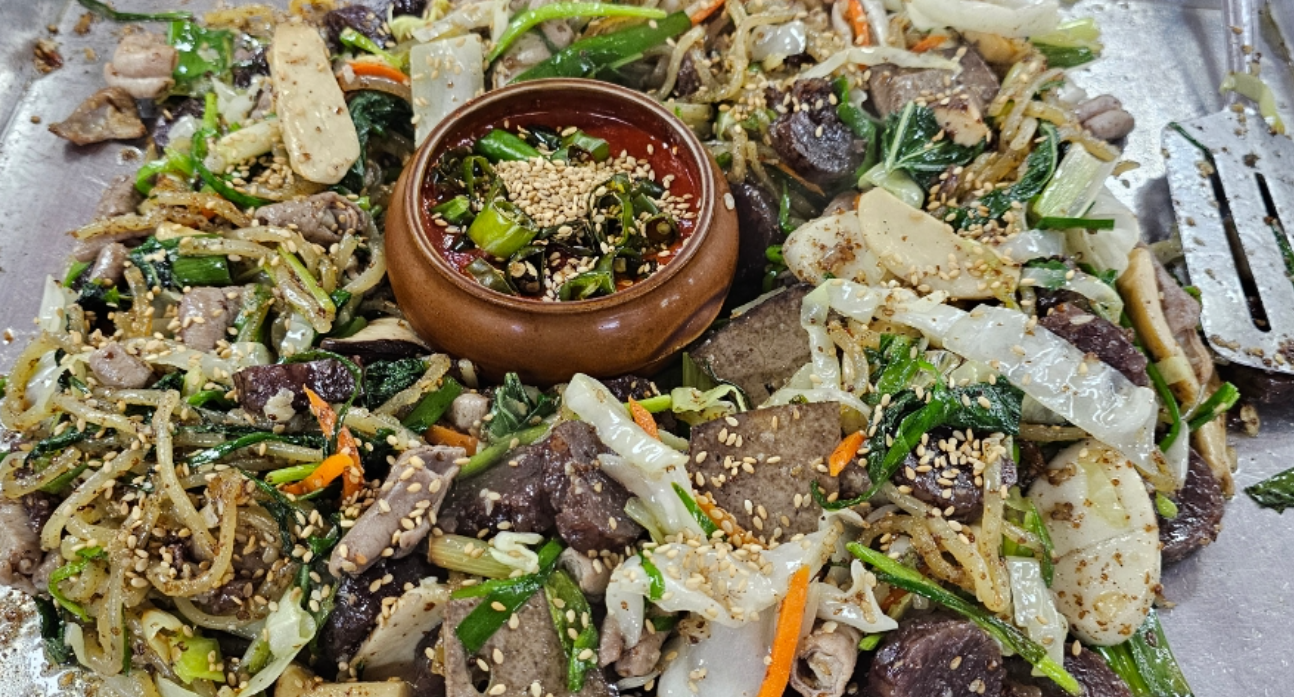
Sundae-bokkeum (순대볶음) — Stir-Fried Sundae · ₩12,000–₩16,000
Sundae tossed in a hot wok with vegetables, gochujang, and gochugaru. Spicy, smoky, and better shared. If heat isn’t your thing, ask for baek-sundae-bokkeum (백순대볶음) — the “white” version without gochujang, which lets the pork do the talking.
Tips for Visiting Sillim-dong Sundae Town, Seoul
- Go on a weekday if you can. Weekend evenings pack out fast — queues form early, and turnover at the smaller spots is slow.
- The flavour is milder than you expect. First-timers often brace for intensity. Korean sundae is chewy and savoury, not overpowering. Give it a few bites before you decide.
- Pair with soju. A small bottle at the table is standard here — and it makes sense. The clean burn of soju cuts through the richness of the offal and broth in a way that nothing else quite does.
- Start with sundae-guk if you’re easing in. The soup format is the gentlest entry point, and it’s hard to dislike a bowl of well-made pork broth.
- Don’t overthink the menu. Every restaurant at Sundae Town does essentially the same short list of dishes. Pick a place that has people in it and order the set.
- Budget around ₩10,000–₩15,000 per person for a full meal with drinks. This is some of the best value eating in Seoul.
Sundae Town isn’t a destination that announces itself. There’s no queue of food bloggers outside, no English menu printed on a chalkboard, no reservation system. It’s just a neighbourhood that Seoulites have been eating at for generations — and that, more than anything, is the reason to go.
For more of where Seoul eats well, see the Seoul restaurant guide 2026 and the Seoul Guide for an interactive map of the city’s best food neighbourhoods.
Frequently Asked Questions: Korean Sundae (순대)
What is Korean sundae made of?
Korean sundae (순대) is a steamed sausage made from pig or cow intestine stuffed with a mixture of fillings. The traditional version contains blood, minced meat, rice, and vegetables. The modern street food version — the most common today — uses dangmyeon (sweet potato glass noodles) as the primary filling, along with vegetables and seasoning. It is steamed rather than grilled, giving it a soft, bouncy texture.
Is Korean sundae the same as ice cream sundae?
No — they share a name by coincidence only. Korean sundae (순대, pronounced soon-deh) is a savoury steamed sausage, one of Korea’s most traditional street foods. It has no connection to the American ice cream dessert. The Korean word 순대 comes from an old term for stuffed intestine, and predates the American ice cream dish by centuries.
Is Korean sundae safe to eat?
Yes. Korean sundae is a well-established, widely eaten food that has been part of Korean cuisine for over a thousand years. It is steamed through fully before serving. As with any offal-based food, the taste and texture may be unfamiliar to first-timers, but it poses no food safety concern when purchased from established vendors — which every stall at Sillim-dong Sundae Town is.
How much does Korean sundae cost?
Korean sundae is one of Seoul’s most affordable foods. At Sillim-dong Sundae Town, a plain sundae portion starts from around ₩6,000–₩9,000. The tteok-twi-sun set (sundae, tteokbokki, and twigim together) costs ₩10,000–₩13,000. Sundae-guk soup runs ₩8,000–₩10,000. A full meal with soju for two people typically costs ₩25,000–₩35,000 in total.
Where is the best place to eat sundae in Seoul?
Sillim-dong Sundae Town (신림동 순대타운) in Gwanak-gu is widely regarded as the best destination for Korean sundae in Seoul — a cluster of specialist restaurants near Sillim Station (Line 2) that has been serving the dish for decades. Sindang-dong and Noryangjin also have sundae clusters, but Sillim-dong is the most concentrated and most local in character.
Is Korean sundae halal?
No. Korean sundae contains pork intestine and, in traditional versions, blood — both of which are not permissible under halal dietary guidelines. There is no widely available halal version of sundae in Seoul at present. Visitors with halal dietary requirements should note this before visiting Sillim-dong Sundae Town.