Makgeolli [막걸리] is the oldest alcoholic drink in Korea. It predates soju by centuries. It was the drink of farmers, poets, and labourers — poured into sabal [사발, earthenware bowls] and drunk at harvest festivals, rainy-day meals, and every occasion in between. For a long period in the late twentieth century, it went quiet: overshadowed by soju’s efficiency and beer’s familiarity, associated with an older generation and plastic bottles sold at corner stores.
That era is over. Since around 2020, makgeolli has undergone a genuine revival — not just as nostalgia, but as a serious drink category attracting craft brewers, food writers, Michelin-starred chefs, and younger Koreans who want something with flavour and history. The global makgeolli market was valued at USD 559 million in 2024 and is projected to grow at 7.6% annually through 2030. In Seoul, boutique makgeolli bars now command waits on weekends.
This guide covers everything: what makgeolli is, how it is made, the best brands and styles in 2026, how to drink it properly, and what to eat alongside it.
What Is Makgeolli?
Makgeolli is a milky-white, lightly effervescent Korean rice wine. It is unfiltered — the rice sediment is left in the liquid, giving it its characteristic opaque appearance — and it ferments naturally using nuruk [누룩], a traditional starter culture made from wheat, rice, or barley inoculated with wild yeasts and moulds.
The name itself describes the production process: mak [막] means “roughly” or “just now,” and geolleuda [걸리다] means “to strain.” Makgeolli is, literally, the drink you make by roughly straining the fermented mash — the immediate, unrefined result of the fermentation vessel, before any further refinement. Cheongju [청주] and yakju [약주] are what you get when you press and clarify that same mash; makgeolli is what you get when you add water and serve it as-is.
The Numbers
| Property | Details |
|---|---|
| Alcohol content | 6–8% ABV (commercial); 10–13% ABV (craft and artisanal) |
| Base ingredients | Rice, water, nuruk (fermentation starter) |
| Colour | Milky white to pale ivory |
| Flavour profile | Lightly sweet, gently sour, faintly effervescent |
| Texture | Slightly thick; sediment settles and must be swirled before drinking |
| Shelf life | Unpasteurised: 10–30 days refrigerated. Pasteurised: several months |
A Brief History
Makgeolli has been brewed in Korea for at least a thousand years. The earliest documented references to takju [탁주, “cloudy liquor” — an older generic term that covers makgeolli] appear in Doeunjip [도은집], a collection of poetry and writings from the Goryeo period. By the Joseon Dynasty (1392–1897), rice wine had become so woven into daily life that the scholar-official Jeong Yak-yong referenced its social role in his administrative manual Mongminsimseo [목민심서].
The specific word makgeolli appears in writing for the first time around 1837, in a home brewing manual called Yangjubang [양주방] — a text that catalogued dozens of traditional Korean brewing recipes. The name suggests a drink that was practical and immediate: something brewed at home, strained into a vessel, and drunk the same day, without ceremony or refinement.
During the Japanese colonial period (1910–1945), home brewing was heavily restricted and industrial production under centralized licences came to dominate. The flavour of commercial makgeolli shifted accordingly — optimised for yield and shelf-stability rather than complexity. Many traditional recipes and regional styles were lost.
The craft revival of the 2020s is partly an attempt to recover what was erased. Brewers like those at Boksoondoga and Naru are returning to heirloom grain varieties, clay jar fermentation, and multi-stage brewing methods (samyang-ju [삼양주], where the fermentation is built in three distinct additions) that were standard household practice before industrialisation intervened.
How Makgeolli Is Made
The core process has not changed in centuries. The variables — grain type, water source, nuruk culture, fermentation time and temperature, the number of brewing stages — determine everything about the final flavour.
1. Preparing the Grain
Rice (ssal [쌀]) is the primary base, though wheat (mil [밀]), barley (bori [보리]), corn (oksusu [옥수수]), and mixed grains (ogok [오곡]) are also used. The grain is washed, soaked, steamed, and cooled before fermentation begins.
2. Adding Nuruk
Nuruk [누룩] is the catalyst. It is a compressed cake of grain — wheat is traditional — that has been colonised by a mixture of wild moulds (Aspergillus, Rhizopus), yeasts, and bacteria. These organisms produce enzymes that break down the starch in the rice into fermentable sugars, while the wild yeasts simultaneously convert those sugars into alcohol and carbon dioxide. This parallel fermentation — saccharification and alcoholic fermentation happening at the same time in the same vessel — is what makes Korean rice wine technically distinct from beer (which separates the two steps) and from sake (which uses a different mould culture).
3. Fermentation
The grain and nuruk are combined with water in a fermentation vessel. Traditional practice used large clay jars (onggi [옹기]), which are breathable and maintain a stable temperature; modern craft brewers often still use clay, while commercial producers use stainless steel. Fermentation typically takes five to ten days at room temperature, though longer periods produce more complexity.
4. Straining and Dilution
The fermented mash is pressed through cloth to separate the liquid from the spent grain. Water is added to bring the alcohol content down to the desired level and adjust the texture. The unstrained sediment is left in the liquid — this is what settles at the bottom of the bottle and must be swirled before serving.
5. Pasteurisation (or Not)
Commercial makgeolli is pasteurised and often has artificial sweeteners (aspartame [아스파탐]) added to stabilise sweetness. Craft and artisanal versions are typically sold unpasteurised (saeng [생, meaning “live” or “raw”]) — still actively fermenting, with a shorter shelf life but significantly more complexity. Always check the label.
The Main Styles
Traditional (Jeontongsik [전통식])
Made using nuruk and multi-stage fermentation, closest to historical brewing practice. Usually higher in ABV (9–13%), drier, and more complex than commercial versions. Harder to find outside specialist shops and craft bars.
Commercial (Sigupum [시제품])
Mass-produced, pasteurised, sold in every convenience store and supermarket. ABV typically 6–8%. Usually contains added sweetener. Perfectly drinkable, especially served very cold. Brands like Jipyeong [지평] and Seoul Makgeolli [서울 막걸리] fall into this category.
Draft / Saeng (생막걸리)
“Live” makgeolli — unpasteurised and still fermenting at point of sale. Sold refrigerated with a short shelf life. Noticeably livelier on the palate than pasteurised versions, with more natural carbonation and a more dynamic flavour. Kooksoondang Saeng [국순당 생막걸리] is the most widely available example.
Sparkling (Seupakling [스파클링])
A subgenre defined by high natural carbonation from extended in-bottle fermentation. Boksoondoga [복순도가] from Ulsan is the defining example — it produces its own bubbles through traditional clay jar fermentation rather than injected CO₂, and when opened carefully it rises like champagne.
Flavoured (Matissneun [맛있는] / Fruit / Grain Varieties)
Flavoured makgeolli captured over 95% of the Korean market in 2025. Popular additions include chestnut (bam [밤]), banana (banana [바나나]), peach (boksunga [복숭아]), corn (oksusu [옥수수]), black bean (heukdong [흑동]), and yuja [유자, Korean citron]. These tend to be sweeter and lower in complexity, aimed at social drinking rather than connoisseurship, but several fruit-forward craft versions are genuinely good.
Premium / Artisanal
Small-batch, single-origin, often seasonal. Some producers label batches by fermentation age — spring, summer, autumn, winter — to indicate flavour stage. Prices run ₩8,000–28,000+ per bottle, compared to ₩1,500–4,000 for commercial versions. Worth seeking out if you are interested in what makgeolli can actually taste like.
The Best Makgeolli Brands in 2026
Boksoondoga (복순도가) — Ulsan
The prestige name in Korean craft makgeolli. Brewed in traditional clay jars in Ulsan, using a long, slow fermentation process that creates natural carbonation without CO₂ injection. When you open the bottle, swirling sediment rises into the liquid on its own — a visual cue to the brewing method. The flavour is clean, slightly floral, and refined. It has been called the “champagne of makgeolli” and the name has stuck for good reason. Available in specialty makgeolli shops and selected supermarkets; increasingly exported internationally.
Naru Saeng Makgeolli (나루 생막걸리) — Seoul
Currently one of Seoul’s most-discussed makgeolli labels. Brewed using Gyeongbokgung rice (경복궁쌀, a heritage variety grown in Seoul), through a three-stage samyang-ju [삼양주] method. 10% ABV, no artificial sweeteners — considerably more structured and complex than commercial alternatives at the same price point. If you want one bottle that demonstrates what the revival is producing, this is it.
Kooksoondang Saeng (국순당 생막걸리) — Nationwide
The accessible benchmark. Kooksoondang uses a patented low-temperature fermentation process and sells its saeng (unpasteurised) version widely through convenience stores and supermarkets. Consistently good, significantly better than basic commercial makgeolli, and available everywhere. The right choice when you want something reliable without hunting.
Neurin Maeul (느린마을) — Nationwide
“Slow Village” — the name signals the philosophy. Notable for labelling batches by fermentation stage: Spring (lightest, sweetest), Summer, Autumn, and Winter (driest, most complex). Buying a bottle at different stages teaches you how fermentation affects flavour in a way that is both practical and genuinely interesting.
Jipyeong (지평) — Gyeonggi Province
The most widely recognised commercial brand among younger Korean drinkers. Jipyeong went through a major brand repositioning in the 2010s and emerged as the makgeolli associated with bars, live music venues, and the early stages of the revival. Clean, slightly sweet, with a mild fizz. Found in virtually every convenience store.
Kyungtakju (경탁주) — Seoul
The most striking entry in the premium segment as of 2025–2026. Celebrity-associated, sells out within minutes of a daily 11 a.m. online release at ₩28,000 for two bottles — a price point that exceeds most Korean wine and far exceeds any commercial makgeolli. The demand reflects a cultural shift: makgeolli as a prestige object, not just a casual drink.
Samyanghchun (삼양춘) — Incheon
Premium three-stage makgeolli made with rice grown on Ganghwa Island (Ganghwa [강화도]), where sea winds and fertile soil produce a grain with a distinct character. One of the cleaner, more refined expressions of makgeolli in the traditional style. Harder to find than the brands above — seek it out at traditional liquor specialty shops (jeontongjoo jeompo [전통주 점포]).
How to Drink Makgeolli
Before You Open the Bottle
The rice sediment (angeum [앙금]) settles at the bottom. Before opening, turn the bottle gently upside down two or three times and swirl — do not shake. Makgeolli has natural carbonation, and vigorous shaking will cause it to overflow when opened. The goal is to redistribute the sediment evenly through the liquid so every pour has the same milky texture and flavour.
Temperature
Commercial makgeolli is best served very cold — 4–6°C. Craft and artisanal versions benefit from being slightly warmer (8–10°C), which opens up the aroma. In winter, some traditional bars serve makgeolli warmed (datgeun [따뜻한 막걸리]) — a different and equally valid experience, particularly good with richer food.
The Vessel
Tradition calls for a sabal [사발], an earthenware bowl. Most bars and restaurants still serve makgeolli in these bowls rather than glasses. The wide mouth releases more aroma, the ceramic retains cold, and the bowl-in-both-hands ritual of receiving and pouring is part of the drinking culture. In casual settings, cups are fine. In traditional spots, accepting the bowl with both hands or with your right hand supported by your left is standard Korean drinking etiquette.
Pouring and Refilling
When pouring for others, use both hands or support the bottle with your non-pouring hand — the same etiquette as wine service. Refill others’ cups before your own. It is considered rude to pour your own cup in formal drinking contexts, though in casual settings this is relaxed.
The Swirl Rule
Because sediment continues to settle between pours, swirl your cup gently before drinking if you have let it sit. This is not an affectation — it actively changes the flavour. The sediment contains residual sugars, enzymes, and live cultures; drinking from the top of an unswirled cup gives you thin, watery liquid; drinking after swirling gives you makgeolli as intended.
What to Eat With Makgeolli
The Korean concept of anju [안주] — food designed specifically for drinking — is essential here. Makgeolli has its own set of traditional anju that have been calibrated over centuries to work with the drink’s acidity, sweetness, and texture.
Jeon (전) — Korean Pancakes
The canonical pairing. Kimchi jeon [김치전, kimchi pancake] and pajeon [파전, scallion pancake] are the most common, and the reasoning is not just cultural sentiment: the oily, savory, crispy exterior of jeon cuts through the sweetness of makgeolli, while the drink’s acidity cleans the palate after each bite. The combination is so ingrained in Korean culture that makgeolli is colloquially called a “rainy day drink” partly because on rainy days people eat jeon — the sound of rain on a roof is said to resemble the sizzle of batter hitting a hot pan. Nokdujeon [녹두전, mung bean pancake] is the earthier, more complex alternative.
Dubu-kimchi (두부김치)
Sliced tofu served alongside stir-fried kimchi and pork. The richness of the pork and the sourness of the kimchi interact with makgeolli in layers — the drink amplifies the kimchi’s fermented depth and softens the fat. One of the most reliably good makgeolli pairings available.
Bossam (보쌈)
Boiled pork belly served with cabbage leaves, fermented shrimp (saeujeot [새우젓]), and kimchi for wrapping. The mildness of the boiled pork relies on its accompaniments for flavour, and makgeolli serves as the drink equivalent of the fermented shrimp: a layer of complexity that elevates the wrap.
Golbaengi-muchim (골뱅이무침)
Canned moon snail mixed with noodles and vegetables in a spicy, vinegary dressing. The sharpness of the dressing and the brininess of the snail find a counterweight in makgeolli’s sweetness. Less commonly known outside Korea, but a makgeolli bar standard.
Dak-galbi (닭갈비)
Spicy stir-fried chicken. The heat and the slight char of dak-galbi create a thirst that makgeolli, at 6–8% ABV, satisfies without dulling — soju would overpower the meal, beer would dilute it. Makgeolli sits at the right register.
Daechang Jeongol (대창전골)
Beef large intestine hot pot. The rich, fatty, assertive broth of daechang jeongol needs acidity to reset the palate between bites, and craft makgeolli provides exactly that. This is the pairing that Songnidan Yangjojangi in Jamsil has made its signature — see our full review of Songnidan Yangjojangi for details.
Where to Find Makgeolli in Korea
Convenience Stores and Supermarkets
Jipyeong, Seoul Makgeolli, Kooksoondang Saeng, and flavoured varieties are sold at GS25, CU, 7-Eleven, and E-Mart nationwide. Prices run ₩1,500–4,000 for a 750ml bottle. This is the entry point.
Traditional Liquor Specialty Shops (Jeontongjoo Jeompo [전통주 점포])
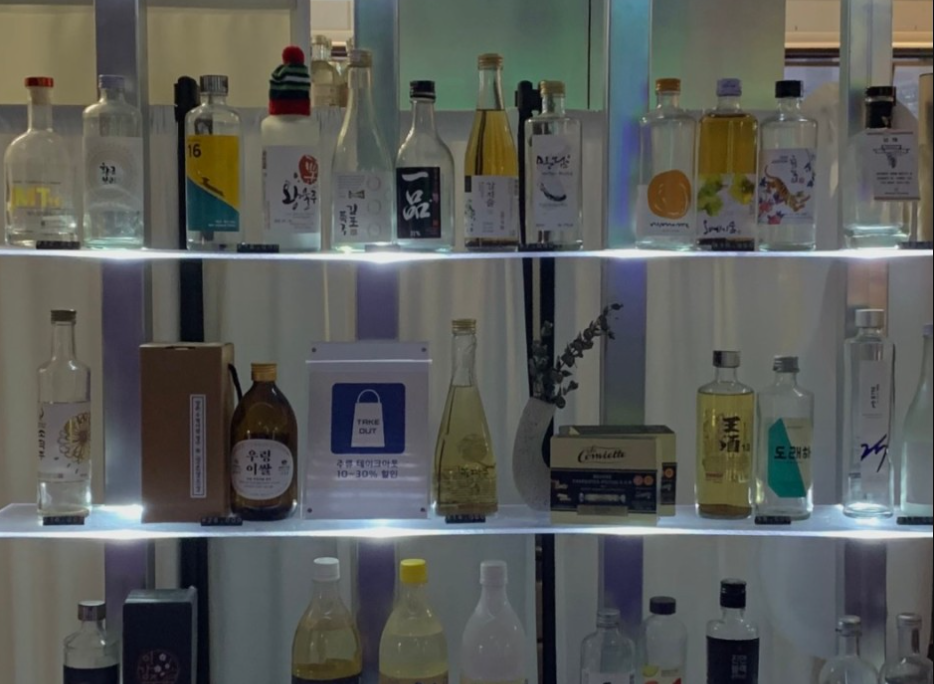
Seoul has a growing number of shops dedicated to jeontongjoo [전통주, traditional Korean liquor] — these carry regional makgeolli brands that do not reach convenience stores, including limited-run craft bottles, aged versions, and single-origin expressions. Soolzip [술집], The Sool Company, and similar retailers operate both physical stores and online. This is where to find Samyanghchun, Neurin Maeul seasonal editions, and small-batch artisanal labels.
Makgeolli Bars and Jeontongjoo Bars
Seoul’s neighbourhood bar scene has shifted noticeably toward traditional liquor in the 2020s. Areas like Seongsu-dong, Mangwon-dong, Hapjeong, Yeonnam-dong, and Songnidangil in Jamsil all have dedicated makgeolli bars and sutjip [술집] that curate selections of craft and regional bottles. Ordering a flight (seteu [세트]) is common — you try three or four small pours and identify what you want more of.
Regional Breweries
Makgeolli is fundamentally a regional drink. Pochen [포천] in Gyeonggi Province has a cluster of well-known breweries producing Pocheon Makgeolli [포천 막걸리]. Jeonju in North Jeolla is the traditional home of makgeolli culture. Boksoondoga is based in Ulsan. Buying makgeolli in the region where it is produced — with food made from ingredients grown nearby — is not nostalgia. It is the drink working as designed.
Health and Nutrition
Makgeolli is not a health food. It is an alcoholic drink. That said, relative to other alcoholic drinks, it contains a notable range of nutrients from the fermentation process: B vitamins (B1, B2, B6, niacin, folic acid), vitamin C, essential amino acids including lysine, tryptophan, and methionine, and live lactic acid bacteria from the fermentation. These are present in meaningful concentrations in unpasteurised saeng versions; pasteurisation reduces or eliminates the live cultures.
Korean food science has studied makgeolli more closely than most Western countries study their fermented drinks, and the existing research is cautiously positive about the role of its probiotic cultures on gut health. None of this changes the alcohol content — drink responsibly, as with any alcoholic beverage.
Practical Notes for Visitors
On Labels: Look for saeng [생] for unpasteurised (more flavour, refrigerate and drink within two to three weeks), museongmi [무설탕 / 무감미료] for no added sweeteners, and the ABV percentage — craft versions typically run 9–13% vs 6% for commercial.
On Storage: Saeng makgeolli must be refrigerated from purchase. Never leave it at room temperature for extended periods — it continues fermenting and will become progressively sourer. A bottle that has been sitting at room temperature for a day will taste very different from one that has been kept cold.
On Pronunciation: The correct pronunciation is closer to mak-keo-ri than “mock-oh-lee.” The initial consonant in makgeolli is aspirated — the k sound is heavier than in English.
On Drinking Culture: Makgeolli is meant to be shared. The traditional communal dongdanji [동단지, shared jar] approach to drinking survives in many traditional bars — a large clay vessel of makgeolli at the centre of the table, refilled as needed. Drink slowly, eat with it, and stay longer than you planned. The drink rewards this.
Frequently Asked Questions
What is the difference between makgeolli and soju?
Makgeolli is a fermented rice wine at 6–13% ABV — milky, slightly sweet and sour, with active cultures still present in the unfiltered version. Soju is a distilled spirit at 16–25% ABV — clear, neutral, and designed for fast drinking. They come from different traditions and serve different purposes in Korean culture.
Why does the bottle say not to shake it?
Natural carbonation from active fermentation builds pressure in the bottle. Shaking causes the CO₂ to come out of solution rapidly, and when you open the cap the contents will overflow like an agitated soda. Swirl gently instead.
Can I buy makgeolli outside Korea?
Yes, increasingly. Makku (a US-brewed version designed for the American market), Boksoondoga, and several commercial brands are available at Korean grocery stores in major cities globally. Japanese imports of Korean makgeolli have risen significantly. For the full range — especially craft and regional bottles — Korea remains the only reliable source.
Is there non-alcoholic makgeolli?
A small category of makgeolli-style fermented drinks with minimal alcohol (under 1%) has emerged, sold as health drinks (sikhye-adjacent, or marketed as probiotic rice drinks). These exist but are not makgeolli in the drinking sense — they lack the alcoholic fermentation and the distinctive flavour profile that comes with it.
What is the right occasion for makgeolli?
Rainy days. Late evenings with friends and jeon on the table. Long meals where you want something that matches food without overpowering it. Traditional ceremonies and holidays. The quiet end of a hiking trip (Bukhansan has a makgeolli bar near every trailhead). The answer, historically, is: most occasions.
For a specific restaurant recommendation, our review of Songnidan Yangjojangi in Jamsil covers one of Seoul’s best craft makgeolli experiences in 2026. For more Korean food and drink, see our Korean BBQ guide and Seoul restaurant guide 2026.