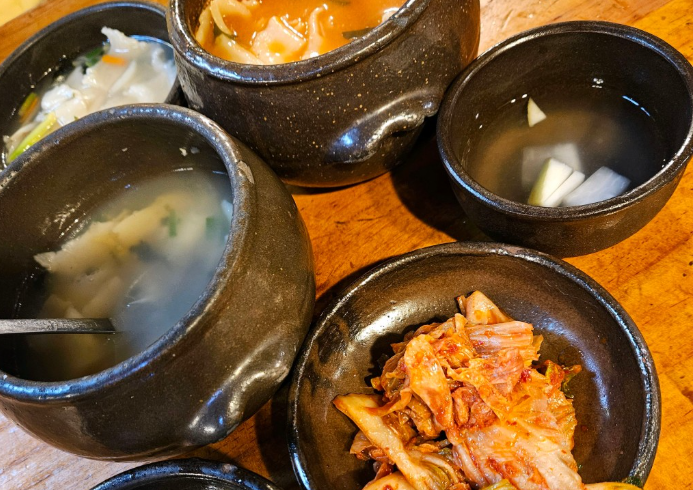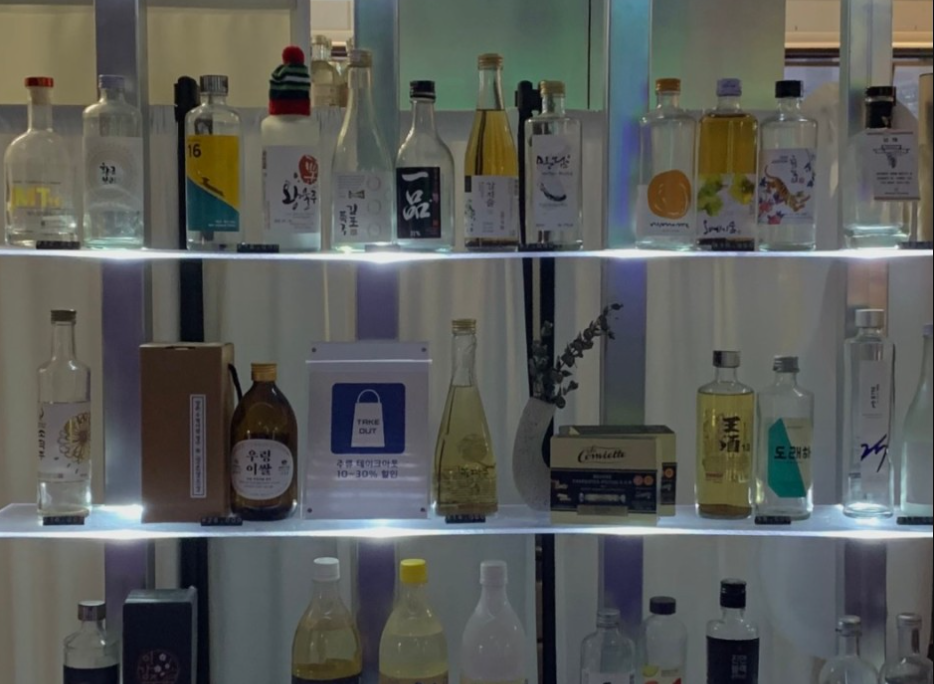
There is a version of makgeolli [막걸리, milky rice wine] that most people outside Korea know: cold, slightly fizzy, poured from a plastic bottle, drunk fast and forgotten. And then there is the version that Songnidan Yangjojangi pours — brewed on the premises, smooth with a natural sweetness that lingers, and calibrated specifically to be drunk slowly, with food, in a room full of people who came here deliberately.
The difference, once you’ve tasted it, is not small.
| Quick Reference | Details |
|---|---|
| Address | 2F Rex Plaza, 11 Baekjegobun-ro 45-gil, Songpa-gu, Seoul |
| Neighbourhood | Songnidangil, Jamsil |
| Getting there | Seoul Metro Line 8 → Songpanaru Station |
| Signature drinks | In-house craft makgeolli, cheongju |
| Signature food | Daechang jeongol (대창전골) hot pot |
| Best for | Dates, small groups, traditional alcohol enthusiasts |
Songnidangil: Jamsil’s Answer to Seongsu-dong
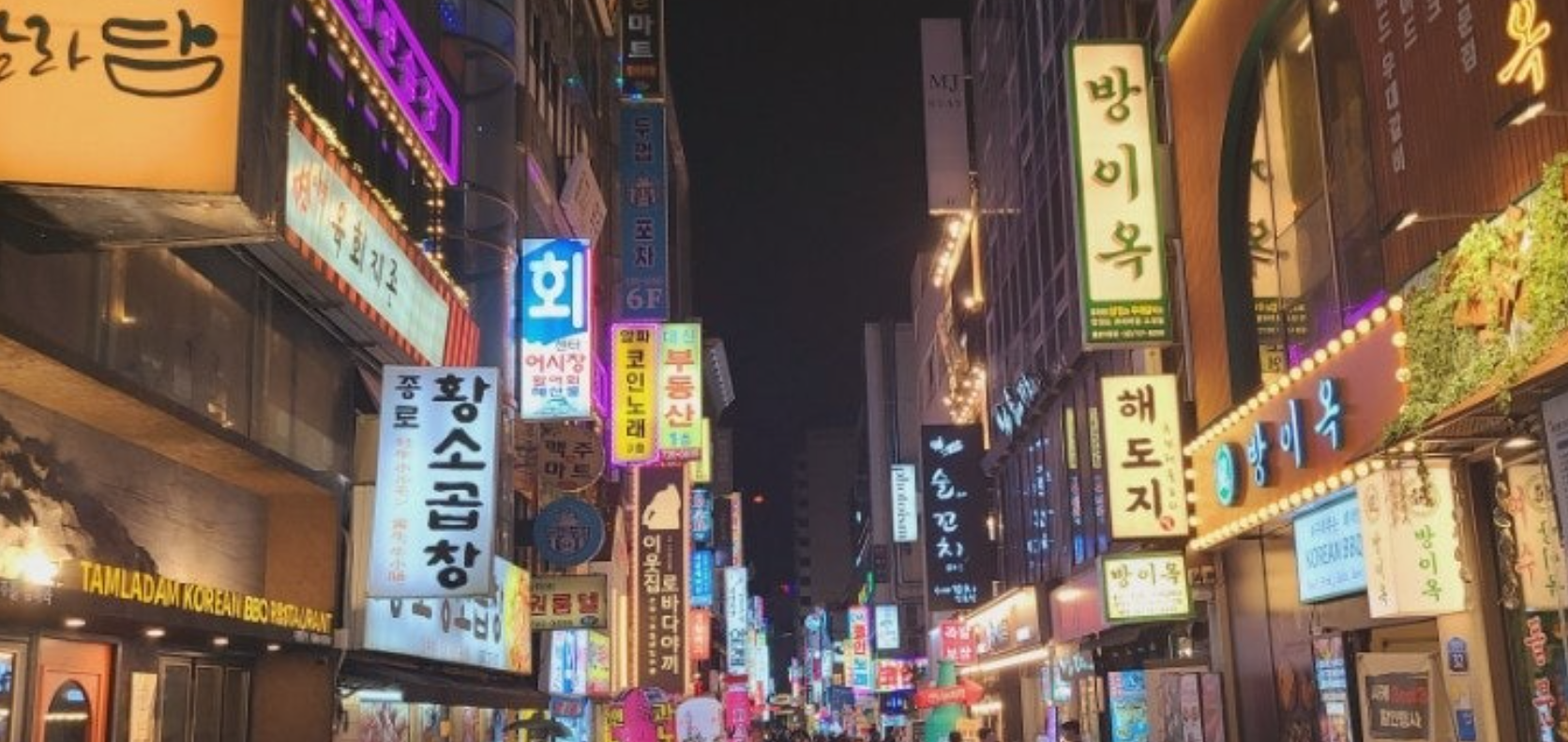
Songnidangil [송리단길] is the kind of street that seems to appear overnight in Seoul. A few years ago it was just a neighbourhood corridor in Songpa-gu, threading through the low-rise residential blocks southeast of Jamsil. Then the cafes arrived, then the small restaurants, then the bars — and now it is firmly on the city’s mental map of places worth crossing town for on a Friday night.
The name follows a pattern Seoulites will recognise: -ridan-gil [리단길] is a suffix that has attached itself to several rising neighbourhood strips across the city, each one signalling a particular mix of independent food and drink businesses, manageable rents (for now), and the kind of energy that draws younger Koreans looking for something that doesn’t feel corporate or overexposed. Seongsu has its Seongsu-daero corridor; Mangwon has Mangwon Ridan-gil; and Jamsil has Songnidangil — with Songnidan Yangjojangi as one of its most-repeated recommendations.
The restaurant sits on the second floor of Rex Plaza (렉스프라자), a building that requires you to climb a flight of stairs before you arrive — which serves, deliberately or not, as a transition from the street-level buzz to something with more intention. You arrive a little out of breath. The room settles you down. The makgeolli [rice wine] arrives shortly after.
Why Songnidan Yangjojangi’s In-House Makgeolli Makes a Difference
Most Korean restaurants serve makgeolli from a commercial brand — Jipyeong [지평], Baekunsan [백운산], or one of the dozens of regional labels available by the bottle. These are fine. Some of them are genuinely good. But they are produced at scale, pasteurised for shelf stability, and travelling some distance before they reach the table.
What Songnidan Yangjojangi does is different. The makgeolli here is brewed in-house — jikjeop yangjohada [직접 양조하다, to brew directly oneself] — using the same basic ingredients that Korean households have been fermenting for centuries: rice, water, and nuruk [누룩, the fermentation starter made from wheat or other grains that introduces wild yeast and enzymes to the mash]. The result is a drink that is genuinely alive in a way that commercial makgeolli is not: unpasteurised, still gently fermenting, and subtly different on every visit depending on temperature, season, and how far along the batch is.
The flavour sits in a register that surprises people who come in expecting the slightly sharp, thin profile of cheap bottled makgeolli. This version is rounder — daldalhamyeonseo budeureowo [달달하면서도 부드러워요, sweet and soft at the same time] is how regulars tend to describe it, and that phrasing is precise. There is sweetness from the residual sugars in the rice, but it is never cloying, balanced by a faint sourness from the fermentation and a gentle fizz that arrives at the back of the palate. It finishes clean.
The menu also lists cheongju [청주, a clear, refined rice wine] alongside the makgeolli, which is worth trying as a counterpoint — it is the same base ingredients taken in a different direction, drier and more delicate. If you are drinking with someone who does not enjoy the milky texture of makgeolli, cheongju is the natural alternative order. Jungnyuju [중류주, a distilled spirit] and highball [하이볼] options round out the drinks menu for those who want something stronger between rounds.
The Food: Seoul’s Top Three Daechang Jeongol Hot Pot
The second reason Songnidan Yangjojangi has earned its reputation — regulars and food writers alike describe it as Seoul 3dae daechang jeongol [서울 3대 대창전골, one of Seoul’s three best daechang hot pots] — is the food.
Daechang jeongol [대창전골] is a hot pot built around daechang [대창, beef large intestine]. For the uninitiated, this is not a timid dish. Daechang has a rich, almost fatty depth to it — the kind of flavour that functions as a flavour amplifier for everything in the pot — and the broth it produces is thick, savoury, and assertive in a way that plain beef guk [국, soup] is not. Eat it on a cold night, or after enough makgeolli that your appetite has properly opened up, and it is one of the most satisfying things Seoul has to offer.
The pairing is not accidental. The slight acidity of the craft makgeolli cuts through the richness of the daechang broth in the same way that a good cider cuts through fatty pork — it resets the palate and makes each bite land as sharply as the first. The restaurant has clearly thought about this. The menu reads as a series of designed pairings, not just a list of things the kitchen can make.
차돌박이전골 — Chadolbagi Jeongol [Thin-sliced brisket hot pot]
For those who prefer a leaner route, the chadolbagi jeongol [차돌박이전골, brisket hot pot] is the natural choice. Chadolbagi [차돌박이, thinly-sliced beef brisket with visible fat marbling] cooks quickly at the table and releases enough fat into the broth to give it body without the intensity of daechang. It is the softer entry point into the same idea — a hot, communal pot that rewards patience and refills.
버터감자떡전 — Beoteo Gamja Tteokjeon [Butter potato rice cake pancake]
If the hot pots are the main event, the beoteo gamja tteokjeon [버터감자떡전, pan-fried potato and rice cake with butter] is the thing people are still talking about on the way home. The concept is straightforward — soft tteok [떡, rice cake] and potato, pan-fried in butter until the outside has crisped and the inside is yielding — but the execution lands somewhere better than it sounds on paper. The butter adds a richness that bridges Korean and more European flavour associations, and the crisp exterior with the chewy interior makes for a textural combination that drinks have a way of making more enjoyable than they otherwise would be. It is a snack designed to slow down the drinking, and it does its job well.
차들깨지참깨밀이 — Chadeulkkae-ji Chamkkae Mili [Perilla and sesame dumplings/noodles]
The chadeulkkae-ji chamkkae mili [차들깨지참깨밀이] is a subtler dish — a preparation of mili [밀이, wheat-flour rolled or pressed noodle/dumpling] dressed with deulkkae [들깨, perilla seeds] and chamkkae [참깨, sesame], both roasted and ground. The nutty, faintly bitter quality of perilla runs alongside the warmer, oil-rich profile of sesame, and together they coat the mili with a flavour that is deeply Korean — herbal and earthy and satisfying in a way that is hard to articulate but immediately recognisable. It is the dish that makes you want to drink more makgeolli, which is presumably the point.
The Room and the Feeling at Songnidan Yangjojangi
Songnidan Yangjojangi is not trying to be a museum piece. The interior has the unpretentious warmth of a place that knows exactly what it is — a neighbourhood drinking room where people come to eat well, drink traditional alcohol made with genuine attention, and stay longer than they planned. The tables are close enough that conversations overlap, the lighting is warm without being dim, and the background noise is the pleasant kind: people enjoying themselves rather than performing enjoyment for their phones.
It attracts a genuinely mixed crowd. On a Friday evening, you will find young couples on dates, groups of friends in their late twenties who have graduated from soju bars but haven’t committed to wine, and the occasional table of older jeontongjoo [전통주, traditional liquor] enthusiasts who come specifically for the in-house makgeolli and know what they are tasting. The commonality is that most people at the tables around you have come with some intention — this is not a place people stumble into.
The service runs at the pace that Koreans tend to prefer in sutjip [술집, drinking establishments]: attentive when you need something, invisible when you don’t. Nobody is rushing you to the next course or the next bottle.
Practical Notes: Songnidan Yangjojangi in 2026
송리단양조장 (Songnidan Yangjojangi)
| Address | 2F Rex Plaza, 11 Baekjegobun-ro 45-gil, Songpa-gu, Seoul |
| Korean address | 서울특별시 송파구 백제고분로45길 11 렉스프라자 2층 |
| Neighbourhood | Songnidangil, Jamsil |
| Getting there | Seoul Metro Line 8 → Songpanaru Station |
| Recommended dishes | In-house craft makgeolli, daechang jeongol, beoteo gamja tteokjeon |
| Best for | Dates, small groups, traditional drink enthusiasts |
Go on a weekday if you can. Songnidangil fills up quickly on weekends, and this is one of the more popular stops on the strip. Weekday evenings offer a more relaxed pace and less waiting.
Order the in-house makgeolli first. The commercial options on the drinks menu are there, but the point of coming here is the house-brewed rice wine. Order that, and let the food follow it.
The hot pot feeds two comfortably. If you are a pair, one hot pot alongside two or three smaller dishes is a reasonable order. The daechang jeongol in particular is a substantial pot — do not underestimate it.
The makgeolli changes. Because it is brewed in small batches on-site, the flavour profile shifts slightly with each new batch. This is a feature, not a bug. Regulars return partly to taste the difference. A batch that has been fermenting longer will be slightly drier and more complex; a younger batch will run sweeter and lighter. Ask the staff what’s currently pouring.
Seoul’s traditional alcohol scene has expanded considerably in recent years — for more context on what to drink while you’re in the city, see our Seoul restaurant guide 2026. For a deeper look at Korean drinking culture and street food, our Korean street food guide is a useful companion read.
Korea has a lot of ways to drink. Soju is the volume play — ubiquitous, fast, designed to lower inhibitions efficiently. Beer is the safe choice. But makgeolli, particularly makgeolli made the way Songnidan Yangjojangi makes it, is something else: a drink that asks for attention and rewards it, that improves with food and slows down the evening in a way that actually makes the conversation better. This is what Korean traditional alcohol looks like when someone decides it deserves more than a plastic bottle and a convenience store aisle. It is worth the trip to Jamsil.
Frequently Asked Questions: Makgeolli and Songnidan Yangjojangi
What is makgeolli and how is it different from soju?
Makgeolli (막걸리) is a milky, unfiltered Korean rice wine made by fermenting rice with nuruk (a fermentation starter). It has a lower alcohol content than soju (typically 6–8% ABV vs 16–25% for soju), a slightly sweet and sour flavour, and a gentle fizz. Soju is a distilled spirit that is clear and neutral; makgeolli is fermented and retains its natural colour, sugar, and complexity. The two serve quite different occasions in Korean drinking culture.
What makes in-house brewed makgeolli different from commercial brands?
Commercial makgeolli is pasteurised for shelf stability, which stops the fermentation process and fixes the flavour profile. In-house brewed makgeolli at Songnidan Yangjojangi is unpasteurised — it is still actively fermenting when served. This produces a livelier, more complex flavour that varies slightly between batches and reflects the season. The residual sweetness is more natural, the fizz is gentler, and the overall profile is rounder than mass-market versions.
What is daechang jeongol and is it suitable for first-timers?
Daechang jeongol (대창전골) is a hot pot built around beef large intestine (daechang), which creates a rich, fatty, assertive broth. For visitors unfamiliar with offal, it is a strong first experience — the flavour is distinctly intense and the texture of the intestine is gelatinous. If you want a gentler entry point, the chadolbagi jeongol (brisket hot pot) at the same restaurant provides similar warmth and satisfaction with a more familiar cut.
How do I get to Songnidan Yangjojangi from central Seoul?
Take Seoul Metro Line 8 to Songpanaru Station. Songnidangil is a short walk from the station. The restaurant is on the second floor of Rex Plaza (렉스프라자) at 11 Baekjegobun-ro 45-gil, Songpa-gu. From central Seoul (Gangnam, Jamsil area), the journey takes approximately 15–25 minutes by metro.
Is Songnidangil worth visiting as an area beyond this restaurant?
Yes. Songnidangil has developed into one of Seoul’s more interesting neighbourhood dining-and-drinking strips since 2022, with a concentration of independent cafes, restaurants, and bars in a residential setting that hasn’t yet become as tourist-oriented as Seongsu-dong. It has a similar energy to Mangwon-dong or Yeonnam-dong — local in character, with good variety. Songnidan Yangjojangi is the most recognised destination on the strip, but exploring the surrounding streets is worthwhile.
Does Songnidan Yangjojangi take reservations?
For weekday visits, walk-ins are generally possible. Weekend evenings fill quickly, and a reservation (via phone or through Korean booking platforms) is recommended. The restaurant can be found on Naver Map (네이버 지도) and Kakao Map with up-to-date booking information.