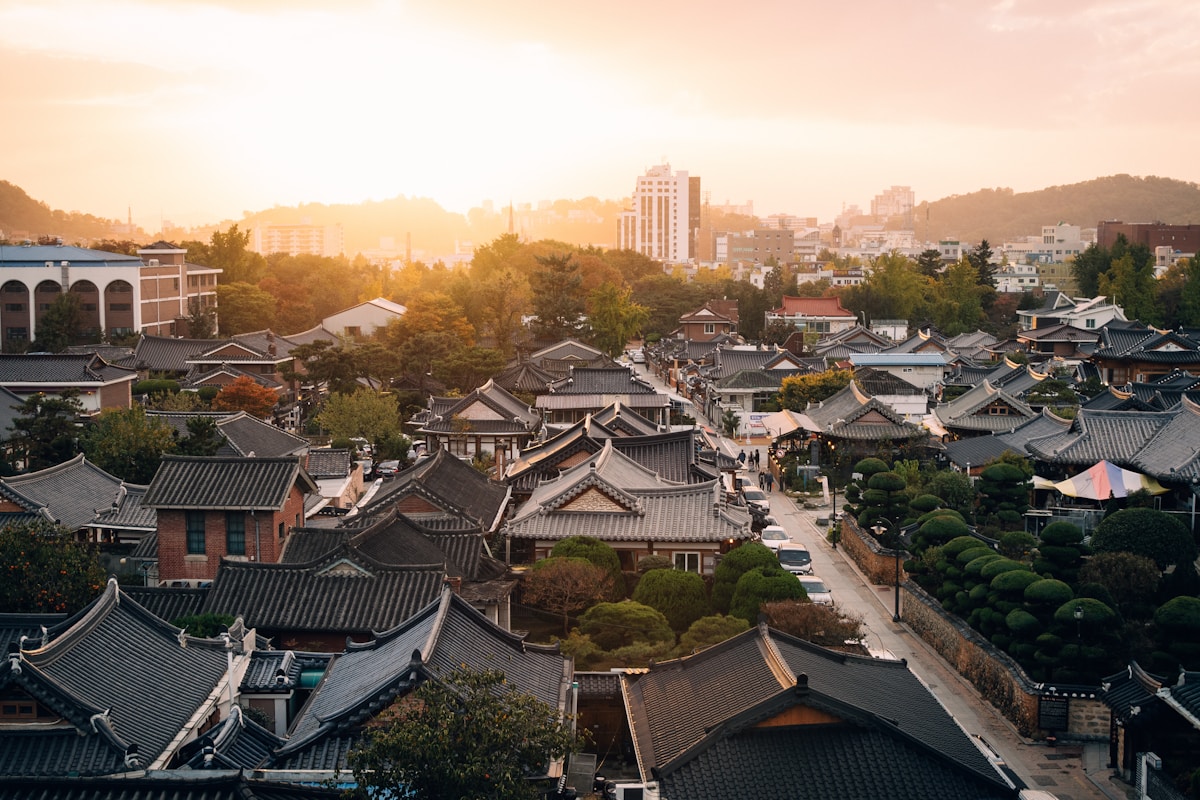
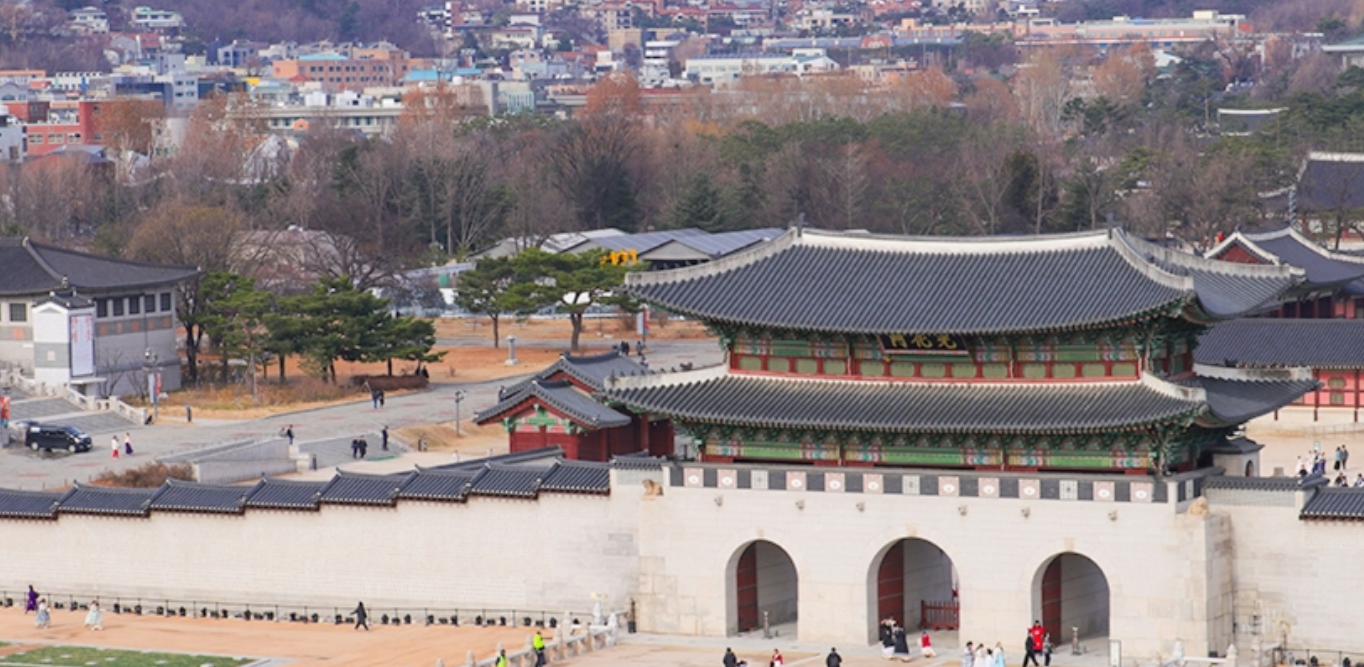
No other city in Korea carries history quite like Gyeongju. For nearly a thousand years — from 57 BCE to 935 CE — it was the capital of the Silla Kingdom, one of East Asia’s great powers, and the centre of a civilisation that produced Buddhist art, astronomical science, and goldsmithing of extraordinary refinement. Today, the royal burial mounds rise like green hills in the middle of the city, Buddhist temples cling to granite mountains, and an ancient stone observatory still stands in the middle of a field — all within walking distance of cafés and craft beer bars.
UNESCO has designated more of Gyeongju as a World Heritage Site than almost anywhere else in Korea, but the city wears this status lightly. It remains a real, lived-in place: schoolchildren on day trips, grandmothers picking up hwangnam-ppang (red bean bread) from the same bakeries that have been there for decades, and a growing strip of independently run restaurants and coffee shops that are quietly making Gyeongju one of the most interesting places to eat in the southeast. In 2026, it sits firmly at the centre of Korea’s turn toward destinations beyond Seoul.
Quick Reference: Gyeongju
| Detail | Info |
|---|---|
| From Seoul | KTX ~2 hrs (to Singyeongju Station, ₩49,300) |
| From Busan | KTX ~22 min (₩10,400) or bus ~1 hr |
| Getting around | Bus (lines 10, 11, 700), taxi, bicycle rental |
| Best time to visit | Spring (Apr–May), Autumn (Sep–Nov) |
| Recommended stay | 2–3 nights |
| Don’t miss | Bulguksa Temple, Donggung Palace at night, Hwangridan-gil |
| Signature food | Hwangnam-ppang, ssambap, Gyeongju Gyodong Beopju (traditional wine) |
Getting to Gyeongju
From Seoul by KTX: The standard option. Seoul Station to Singyeongju Station takes approximately 2 hours, with trains running several times daily. Standard seats cost around ₩49,300. Note: Singyeongju Station is not in the city centre — from there, take bus 700 or a taxi (around ₩9,000–12,000) into town, which takes another 20–25 minutes.
From Busan by KTX: Gyeongju makes for an effortless extension of any Busan trip. Busan Station to Singyeongju takes just 22 minutes (₩10,400). It is also reachable from Busan’s Nopo Bus Terminal by intercity bus in about an hour for ₩4,100 — a cheap and practical option that drops you closer to the city centre.
By intercity bus from Seoul: Buses from Seoul’s Dong Seoul Terminal run direct to Gyeongju and take around 3.5–4 hours (from ₩25,000). Less comfortable than KTX, but a budget-viable option for early morning or late evening travel when train seats are sold out.
Getting Around Gyeongju
The city’s main attractions are spread across a surprisingly large area, so planning how to move between them matters.
City buses: The most budget-friendly option. Bus 10 and Bus 11 loop through the major sights — Tumuli Park, Cheomseongdae, Anapji Pond, and the museum. Bus 700 connects Singyeongju Station to the city centre. Route information is available on the Gyeongju City Bus website; Google Maps is also reliable for bus routing here.
Taxi: Gyeongju taxis are cheap and plentiful. The city centre is compact, and most rides between attractions cost ₩4,000–8,000. Kakao T works well and is the easiest way to book without Korean language skills.
Bicycle rental: One of Gyeongju’s genuine pleasures. The flat terrain around the historic district — Tumuli Park, Cheomseongdae, Hwangridan-gil, Anapji Pond — is perfectly suited to cycling. Rental shops cluster near the Tumuli Park entrance and cost around ₩5,000–10,000 per day. Electric bikes are available at most shops for about ₩15,000 and are worth the upgrade in summer.
Car rental: If you want to visit Yangdong Folk Village (15 km northeast) and Bulguksa/Seokguram on the same day, renting a car from Singyeongju Station gives the most flexibility.
Key Sights in Gyeongju
Bulguksa Temple (불국사) — UNESCO World Heritage
Free admission. Built in 774 CE and one of the finest surviving examples of Silla Buddhist architecture, Bulguksa is the site most people come to Gyeongju to see — and it earns the journey. The temple’s approach, up stone staircases that represent the passage from the earthly realm to the realm of the Buddha, sets the tone for everything that follows: considered, geometrically precise, and formally beautiful.
Inside the main courtyard, two stone pagodas — Dabotap and Seokgatap — stand facing each other. Dabotap is among the most ornate stone structures in all of East Asia; Seokgatap is stark and elegant by comparison. They were designed to be viewed together, and together they make more sense than they do in isolation. The pagodas are, together with the carved staircases, on the reverse of the 10-won coin — Bulguksa is, in this sense, in every Korean’s pocket.
Go in late October for autumn colour, or in spring when the cherry trees along the approach road are in bloom. Arrive before 9 AM on weekends to avoid tour groups. → Bulguksa Temple
Seokguram Grotto (석굴암) — UNESCO World Heritage
Free admission. A 30-minute uphill walk or short bus ride from Bulguksa, Seokguram is a man-made granite cave sheltering a rotunda with a 3.5-metre seated Buddha at its centre — one of the great masterpieces of East Asian Buddhist art.
The Buddha faces east, toward the sea, and on the spring equinox the rising sun illuminates his forehead directly — an intentional alignment by the 8th-century architects who built this. The grotto is enclosed in glass now to protect it from humidity, and photography is not permitted inside, but standing before the figure in the enclosed quiet of the cave is among the more genuinely moving experiences in Korean travel. → Seokguram Grotto
Getting there: Bus 12 from Bulguksa runs to the Seokguram trailhead (10 minutes). The uphill walk to the grotto takes 30–40 minutes through forested granite. Taxis from Bulguksa also make the trip.
Tumuli Park (대릉원) — Royal Burial Mounds
Free admission. Twenty-three grassy mounds rise out of the ground in the middle of the city — these are the burial tombs of Silla royalty, the largest reaching 23 metres high. The scale is extraordinary: these are not archaeological ruins so much as geological features, immovable and unmistakable, which happen to sit next to an urban convenience store and a line of cafés.
The Cheonmachong Tomb within the park is open to walk through — the interior shows the burial chamber reconstruction, with gold crowns and artefacts displayed in replica. The originals are in the Gyeongju National Museum.
The mounds are especially beautiful in late afternoon when low light picks up the curves of the grass, and at cherry blossom season (early April) when the surrounding streets fill with petals. → Tumuli Park
Cheomseongdae Observatory (첨성대)
Free entry. A 9-metre stone tower built in 634 CE, during the reign of Queen Seondeok, making it the oldest surviving astronomical observatory in East Asia. It is also, improbably, one of the most beautiful things in Gyeongju — a perfectly proportioned cylindrical tower rising from a flat field, surrounded in spring by rapeseed flowers and in autumn by cosmos. The geometry is precise; the effect is quietly astonishing.
Cheomseongdae is a short walk from Tumuli Park and usually included as part of the same afternoon. The surrounding field is pleasant at dusk. → Cheomseongdae
Donggung Palace & Anapji Pond (동궁과 월지) — Best at Night
Admission ₩3,000. A royal pleasure garden built in 674 CE, partially excavated in the 1970s and beautifully restored. During the day it is pleasant; at night it is remarkable — the three pavilions and their reflections in the still water of the pond are among the most photographed images in Korean travel, and entirely justified as such.
The night admission (open until 10 PM, last entry 9:30 PM) is the recommended visit. Arrive just after sunset for the best light. On clear nights, the reflection of the lit pavilions in the water is near-perfectly symmetrical. → Donggung Palace & Anapji Pond
Gyeongju National Museum (국립경주박물관)
Free entry. The best single collection of Silla-era artefacts in existence: gold crowns, jade jewellery, bronze bells, and painted ceramic roof tiles, all found in the burial mounds of the surrounding city. The Silla History Hall is the core, but the outdoor garden of stone Buddha statuary is worth an hour in its own right — enormous carved figures weathered by a thousand years of rain and frost.
The museum is free, large, and exceptionally well-curated with English translations throughout. Give it at least two hours. → Gyeongju National Museum
Yangdong Folk Village (양동마을) — UNESCO World Heritage
Free entry to the village. Located 15 km northeast of the city, Yangdong is a 500-year-old Joseon clan village of around 160 traditional tile-roofed and thatched-roof houses, still inhabited. It’s one of the finest surviving examples of Korean traditional village planning — the houses arranged according to pungsu (geomantic) principles along a ridge, with pavilions positioned to oversee the valley below.
Yangdong is quieter and less visited than the main city sites, which is its appeal. A taxi from Gyeongju costs around ₩15,000 one way; there is also an infrequent bus service (Bus 203 from the Intercity Bus Terminal). → Yangdong Folk Village
Hwangridan-gil (황리단길) — Gyeongju’s Café & Restaurant Street
The lane running south from Tumuli Park along Hwangridan-gil has transformed over the past several years into one of the most pleasantly low-key food and café streets in Korea. Unlike similar streets in Seoul, it hasn’t been fully commercialised: there are still independent bakeries, owner-run restaurants, craft beer bars, and specialty coffee shops tucked between small guesthouses and traditional houses.
Key stops:
- Sura Hanjeongsik (수라 한정식) — Traditional multi-course Korean meal in a beautifully restored hanok setting; book ahead on weekends
- Café Borisu (카페 보리수) — Specialty coffee in a converted traditional house with courtyard seating; one of the better espresso options in the city
- Gyeongju Brewery (경주 브루어리) — Local craft brewery producing ales and lagers with a Silla theme; rotating taps and good snacks, open evenings
What to Eat in Gyeongju
Hwangnam-ppang (황남빵)
Gyeongju’s most iconic food: a small, round pastry with a soft dough casing filled with sweetened red bean paste. They’ve been made the same way since 1939 at the original Hwangnam Bakery (황남빵) near Tumuli Park, and the recipe hasn’t changed. Sold warm in boxes of 10, they’re the thing to eat while walking through the park and the correct souvenir to bring back for anyone who asked you to bring something Korean.
A second notable version comes from Choi’s Hwangnam-ppang (최씨 황남빵) across the street — the two bakeries have existed in friendly rivalry for decades and the debate over which is better is a Gyeongju tradition.
Ssambap (쌈밥)
Gyeongju has a strong tradition of ssambap — rice wrapped in fresh vegetable leaves (perilla, lettuce, cabbage, chrysanthemum) with a selection of fermented pastes, seasoned side dishes, and thin slices of pork or tofu. It is healthy, deeply flavoured, and the kind of meal that makes Seoul’s restaurant prices feel unnecessary. Several restaurants near the Gyeonggijeon Shrine area in the city centre serve it as a set menu for ₩12,000–15,000.
Gyodong Beopju (교동 법주) — Traditional Wine
Gyeongju is home to one of Korea’s six government-designated intangible heritage foods: Gyodong Beopju, a traditional cheongju (clear rice wine) brewed using a method passed down through the Choi family for over 350 years. Unlike makgeolli, it is clear, golden, and aged — rich, slightly sweet, and around 13% alcohol. A small tasting shop operates at the family’s Gyodong house (교동 법주 전시관); bottles can be purchased to take home. Seek it out — it is one of the few genuinely unrepeatable food experiences in Korean travel.
Poseokjeong Garden Soybean Soup (포석정 앞 두부 전골)
The area around Poseokjeong Garden, south of the main sights, has a cluster of restaurants serving rustic home-style Korean food — particularly dubu jeongol (tofu hotpot) and dotorimuk (acorn jelly) dishes. Unassuming and popular with older Koreans; quietly excellent.
Practical Tips for Visiting Gyeongju
- Best time to visit: Spring (late March–early May) for cherry blossoms and rapeseed flowers around Cheomseongdae. Autumn (September–November) for red and gold foliage at Bulguksa. Avoid major Korean holidays (Chuseok, Seollal) when KTX tickets sell out weeks ahead.
- Itinerary approach: Day 1 — Bulguksa and Seokguram (morning), Gyeongju National Museum (afternoon), Donggung Palace at night. Day 2 — Tumuli Park, Cheomseongdae, Hwangridan-gil. Day 3 — Yangdong Folk Village, Poseokjeong, departure.
- Night visit to Anapji: Build your evening around Donggung Palace — have dinner on Hwangridan-gil first, then walk over at sunset (around 7–8 PM depending on season).
- Accommodation: The area around Tumuli Park and Hwangridan-gil has the best selection of guesthouses and small hotels; staying here puts you walking distance from the main sights. Bomun Lake (7 km east) has larger resort hotels if you prefer that style.
- Language: The main tourist sites have excellent English signage. Google Maps is accurate for Gyeongju navigation. Kakao T works for taxi booking.
Day Trips from Gyeongju
Busan — Just 22 minutes by KTX; see our Busan Complete Guide for a full itinerary.
Pohang — 40 minutes by bus or taxi; the city’s POSCO Steel Museum and Homigot Cape (where the sunrise is spectacular) make for a worthwhile half-day.
Andong — Home to the Hahoe Folk Village (another UNESCO site) and Andong Jjimdak; about 1.5 hours northwest by bus.
For help choosing when to visit, see The Best Months to Visit Korea. For combining Gyeongju with Seoul and Busan, see our Seoul and Busan Beginner’s Itinerary.
Frequently Asked Questions
How do I get from Seoul to Gyeongju? KTX from Seoul Station to Singyeongju Station takes approximately 2 hours (₩49,300 for a standard seat). From Singyeongju, take Bus 700 or a taxi (₩9,000–12,000, ~20–25 minutes) into the city centre. Book KTX tickets in advance through the Korail website or Korail app — trains sell out on weekends and Korean public holidays.
Is Gyeongju worth a day trip from Seoul? It can be done as a very long day trip from Seoul — two hours each way by KTX leaves around 6–7 hours in the city, which is enough for Bulguksa, Tumuli Park, and a walk along Hwangridan-gil. But Gyeongju strongly rewards a two-night stay: the Donggung Palace night visit, a morning at Seokguram before the crowds, and time to explore Yangdong Folk Village all require more time than a day allows.
Is Gyeongju worth visiting from Busan? Absolutely, and it’s one of the easiest excursions from Busan — 22 minutes by KTX. Many visitors base themselves in Busan and do Gyeongju as a day trip. If you have two or more nights in Busan, allocate one full day to Gyeongju.
What is Gyeongju known for? Gyeongju was the capital of the Silla Kingdom for nearly 1,000 years and is sometimes called Korea’s “open-air museum” for the density of historical sites within the city. It holds three separate UNESCO World Heritage designations: the Gyeongju Historic Areas (the burial mounds, Cheomseongdae, and palace sites), Bulguksa Temple, and Seokguram Grotto — plus Yangdong Folk Village as a fourth. It is the single most historically significant city on the Korean peninsula outside Seoul.
When is the best time to visit Gyeongju? Spring (late March to early May) and autumn (September to November) are both excellent. Spring brings cherry blossoms along the Tumuli Park lanes and yellow rapeseed flowers around Cheomseongdae. Autumn colours at Bulguksa are among the finest in Korea. Summer is warm and manageable; winter is cold but very uncrowded, and the National Museum is beautiful in snow.
What should I definitely not miss in Gyeongju? The three non-negotiable experiences: Bulguksa Temple (ideally with Seokguram on the same morning), Donggung Palace at night (the reflection in the pond is genuinely extraordinary), and Hwangnam-ppang from the original bakery by Tumuli Park. If you have three days, add Yangdong Folk Village and a tasting of Gyodong Beopju traditional wine.
How easy is it to get around Gyeongju without a car? Very manageable. The city buses (especially lines 10, 11, and 12) connect all the major sights with some patience; taxis fill the gaps cheaply. The flat terrain around the historic district makes bicycle rental the most enjoyable option for covering Tumuli Park, Cheomseongdae, Anapji Pond, and Hwangridan-gil in a morning. Yangdong Folk Village and Bulguksa are the only sites that genuinely benefit from a car or taxi.