A jjimjilbang (찜질방) is not a spa in the Western sense. It’s a heated public bathhouse where Koreans come to sweat, sleep, eat eggs, watch television, and recover from the week. Entrance is cheap. Most are open around the clock. You will share the space with grandmothers doing stretches, teenagers on their phones, and salarymen sleeping on the heated floor in matching shorts. This is normal and, once you settle into it, deeply relaxing.
For travellers, a jjimjilbang offers something that no hotel can: a direct encounter with how Koreans actually decompress. The communal sleeping hall (sujimchil 수면찜질), the gender-separated bathing areas, the clay-pot snacks and hard-boiled eggs — none of it is performed for tourism. It just is.
This guide explains how jjimjilbangs work, what to bring, and which venues in Seoul are currently operating in 2026.
Quick Reference: Korean Jjimjilbang
| Detail | Info |
|---|---|
| Entry cost | ₩12,000–₩20,000 (standard) |
| Hours | Most open 24 hours |
| What’s included | Entry, towels, sauna uniform |
| Extras | Italy towel scrub (₩15,000–25,000), food, sleeping area |
| Best for | Relaxation, local experience, budget overnight stay |
How a Jjimjilbang Works
Arrival and entry
Pay at the front desk — typically ₩12,000–₩20,000 for a standard entry. You’ll receive a wristband with a locker key (the number doubles as your tab for any food or extras you purchase inside), a towel, and a set of the venue’s own shorts and T-shirt. Most modern jjimjilbangs use RFID wristbands; swipe to charge anything you eat or drink, and settle the balance when you leave.
Gender-separated bathing areas
The bathhouse portion is strictly gender-separated. Leave your clothes in the locker and enter the bathing area carrying only your small towel — the Korean approach is to rinse at a shower station first, then move between the baths at your own pace. Most venues have multiple pools at different temperatures (cold, warm, hot, very hot), a steam room, and various exfoliation stations.
Italy towel (때밀이, dae-mil-i) scrubs are a jjimjilbang institution. Attendants with rough exfoliation mitts will remove an alarming amount of dead skin for around ₩15,000–₩25,000 extra. It is as effective as it sounds. Book at the front desk on arrival if you want one.
The communal area
After bathing, change into the venue’s uniform (the shorts and T-shirt) and enter the main communal space — the sujimchil hall. This is where genders mix, where the heated rooms are, and where most of the social life happens.
Heated rooms (jjimjilbang rooms proper) come in several types:
- Hwangto-bang (황토방) — ochre clay room, typically 45–55°C
- Bulgama (불가마) — charcoal kiln room, very dry heat, 70–90°C
- Ice room — a cold room for contrast between the hot rooms
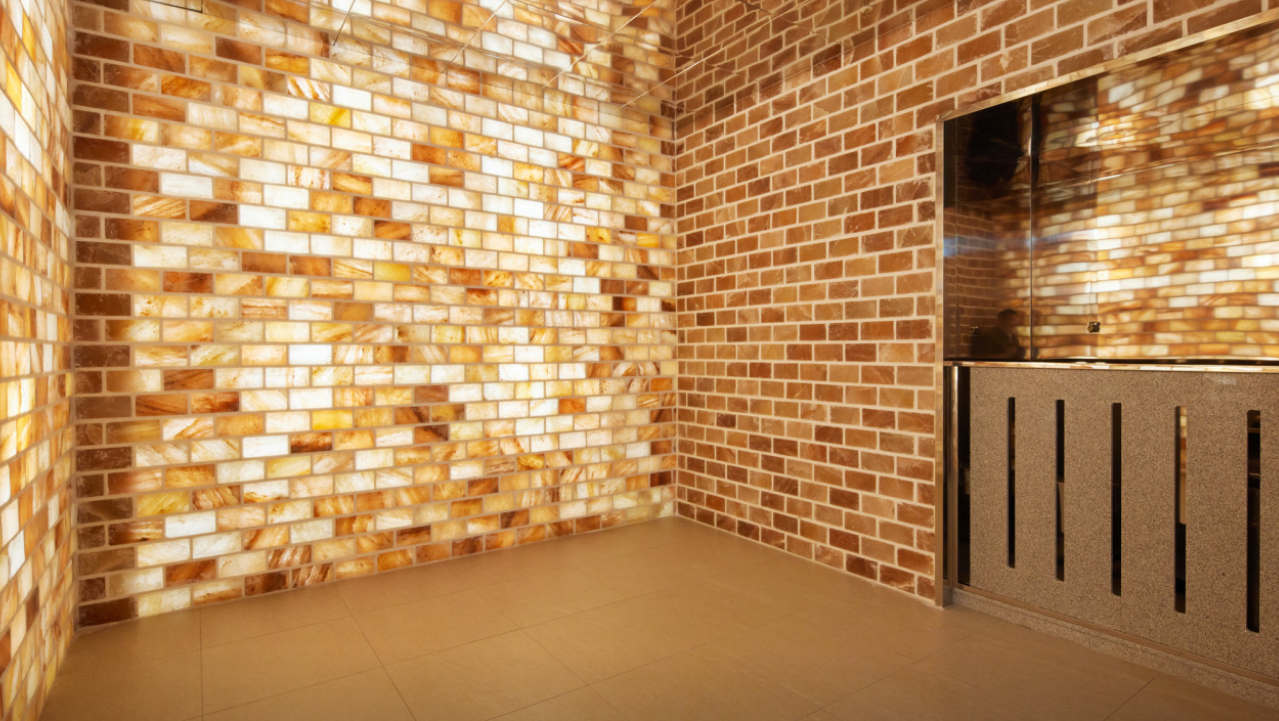
- Jade room, salt room, carbon room — different mineral compositions, cooler temperatures
The protocol is simple: enter, sit or lie on the floor, sweat, leave when you’re ready. Most people rotate between two or three rooms over an hour or two.
Eating and sleeping
The communal hall always has a snack counter. The quintessential jjimjilbang snack is sikhye (식혜, a sweet rice punch served cold) and maekbanseok eggs (맥반석 계란) — hard-boiled eggs cooked slowly in the kiln rooms until the whites turn light brown. They taste different from a regular boiled egg. Get at least one.
If you’re staying overnight — many travellers do this to save on accommodation — bring your own thin blanket or rent one. The sleeping hall operates on the honour system: find a mat, claim a space, sleep. Ear plugs help.
What to Bring to a Jjimjilbang
- Cash or card for entry (most venues accept card now, but some older ones prefer cash)
- Flip flops — useful in the bathing area, though most venues have disposable slippers
- Your own toiletries if you’re particular — shampoo, conditioner, and body wash are provided in the bathing areas, but quality varies
- A change of clothes for leaving — you’ll return the uniform at the desk
- Nothing valuable — the lockers are secure, but leave unnecessary items at your hotel
Leave: jewellery, anything you don’t want wet or sweaty, a full stomach (eat after).
Best Jjimjilbangs in Seoul in 2026
The Seoul jjimjilbang landscape changed significantly after COVID-19. Several well-known venues closed permanently — including Dragon Hill Spa (용산), the original Siloam Sauna near Seoul Station, and Spa 1899 Insadong. The following venues were confirmed operating as of 2026.
Sparex Dongdaemun (스파렉스 동대문)
The largest jjimjilbang complex in Seoul, located inside Good Morning City mall in Dongdaemun. Sparex is the full package: multiple themed kiln rooms, a large communal hall with good food options, clean bathing facilities, and a sleeping area large enough that finding space is rarely an issue. It’s open 24 hours, popular with travellers staying in Dongdaemun, and tickets are available on Klook and the Seoul Pass if you’d rather book ahead.
The Dongdaemun location is practical — you’re already at one of Seoul’s main shopping districts, and the 24-hour format means arriving after a late night out or leaving before an early flight is entirely feasible.
Good Morning City B2–B3, 278 Majang-ro, Seongdong-gu
Dongdaemun History & Culture Park Station, Line 2/4/5, Exit 1
Naver Map
Spa Lei (스파레이)
A women-only jjimjilbang in Sinsa-dong, Gangnam. Spa Lei is among the more upscale options in Seoul — the facilities are clean, the bathing area well-maintained, and the communal space quieter than the larger 24-hour venues. Being women-only makes it a practical choice for solo female travellers who want a more relaxed environment.
Open 24 hours, with a wide range of heated rooms and a decent food menu in the common area.
Sinsa-dong, Gangnam-gu
Sinnonhyeon Station, Line 9, Exit 6
Naver Map
Insadong Hanjeungmak (인사동 한증막)
A traditional wood-fired sauna (hanjeungmak, 한증막) near Anguk Station in Jongno-gu. Where most modern jjimjilbangs use electric or gas heating, a hanjeungmak uses a wood-burning kiln — the smell is different, the heat is drier, and the atmosphere is more austere. These facilities are increasingly rare in Seoul.
This is a smaller, more local operation than the larger venue-style jjimjilbangs. The experience is stripped back — go for the hanjeungmak room itself and the neighbourhood character rather than for luxury facilities.
Insadong, Jongno-gu
Anguk Station, Line 3, Exit 6
Naver Map
SeaLaLa (씨라라)
A water park and spa complex at Mullae Station in Yeongdeungpo-gu — a different category from the traditional jjimjilbang, but worth knowing about if you want a longer day out. SeaLaLa combines a water park with jjimjilbang facilities, making it popular with families and groups. The atmosphere is livelier and noisier than a quiet neighbourhood bathhouse.
Better suited to a half-day or full-day visit than an overnight stay.
Yeongdeungpo-gu
Mullae Station, Line 2, Exit 7
Naver Map
Closed Jjimjilbangs to Avoid
Several popular jjimjilbangs that still appear on older travel lists have permanently closed:
- Dragon Hill Spa (드래곤힐스파) — permanently closed circa 2021–2022; building is still standing but operating as retail/dining
- Siloam Sauna, Seoul Station (시로암사우나) — the original Seoul Station location is closed; a separate Junggok-dong location exists in Gwangjin-gu under the same name but is a different venue
- Spa 1899 Insadong — closed; the Insadong branch no longer operates
If a booking platform or older guide recommends any of these, the information is out of date.
Jjimjilbang Etiquette & Practical Notes
Hours and overnight stays. Most large jjimjilbangs charge a flat entry fee that covers unlimited time. If you’re staying overnight, many venues add a small overnight surcharge (₩3,000–₩5,000) after midnight or simply cover it in the base entry. Confirm at the desk.
Tattoos. Some jjimjilbangs prohibit visible tattoos in the bathing areas — a policy holdover from associations with organised crime. Enforcement varies widely. If you have visible tattoos, call ahead or ask at the entrance before paying.
Etiquette. Rinse before entering any pool. Keep your voice down in the sleeping hall. Don’t use your phone in the bathing area. These are enforced by social convention rather than rules, but they’re observed.
Age restrictions. Children are generally welcome in the communal areas; policies on children in the bathing areas vary by venue and by age.
Language. Front desks at larger venues in tourist-adjacent areas (Dongdaemun, Gangnam) typically have English-capable staff. At smaller neighbourhood saunas, a phone translator works fine for the essentials.
A few hours in a jjimjilbang costs less than a cinema ticket and will leave you feeling substantially better than a film would. If you’re spending more than three days in Korea, going at least once isn’t optional — it’s part of understanding how the country works.
For more on Seoul’s wellness and neighbourhood culture, see the Seoul First-Timer’s Guide and Korea Travel Essentials.
Frequently Asked Questions
What is a jjimjilbang and how is it different from a regular sauna? A jjimjilbang is a Korean public bathhouse that combines gender-separated bathing pools (hot, warm, cold) with a mixed-gender communal area featuring different heated rooms (clay, charcoal, jade), a sleeping hall, and a snack counter. Unlike a Western spa, it’s a social space where Koreans come to relax, sleep overnight, and eat. Entry costs ₩12,000–₩20,000, including towels and a sauna uniform.
Can foreigners use jjimjilbangs in Seoul? Yes, absolutely. Major jjimjilbangs in tourist areas (Dongdaemun, Gangnam) have English-capable staff and the process is easy to follow even without Korean. You’ll receive a locker key wristband, towels, and a uniform on entry. The main potential issue is tattoo policies — some venues prohibit visible tattoos in the bathing areas, so call ahead if this applies to you.
Is it okay to stay overnight at a jjimjilbang? Yes — many travellers and Koreans use jjimjilbangs as budget overnight accommodation. The sleeping hall has floor mats and blankets (sometimes for a small extra charge). Most 24-hour venues allow unlimited time on a flat entry fee, with a small overnight surcharge at some venues. Bring earplugs; sleeping halls can be lively.
What should I do at a jjimjilbang as a first-timer? Start in the bathing area: rinse at a shower station, then try the different temperature pools. Move to the communal area, change into the provided shorts and T-shirt, and try the heated rooms — start with the medium-temperature clay room (황토방) before working up to the very hot charcoal kiln (불가마). Order a maekbanseok egg (kiln-cooked hard-boiled egg) and sikhye (sweet rice punch) from the snack counter.
How much does a jjimjilbang cost in Seoul in 2026? Standard entry is ₩12,000–₩20,000, which includes towels, a sauna uniform, and access to all bathing and heated rooms. Extras cost more: Italy towel body scrub ₩15,000–25,000, food and drinks charged to your wristband, and overnight surcharges of ₩3,000–5,000 at some venues. The total for a full evening including food typically comes to ₩20,000–35,000.
Which jjimjilbang in Seoul is best for tourists in 2026? Sparex Dongdaemun is the most practical choice for first-timers — 24-hour operation, large facilities, easy metro access (Dongdaemun History & Culture Park Station), and bookable on Klook. For solo female travellers, Spa Lei in Gangnam’s Sinsa-dong is the most comfortable option. For a more traditional and local experience, Insadong Hanjeungmak near Anguk Station is worth seeking out.