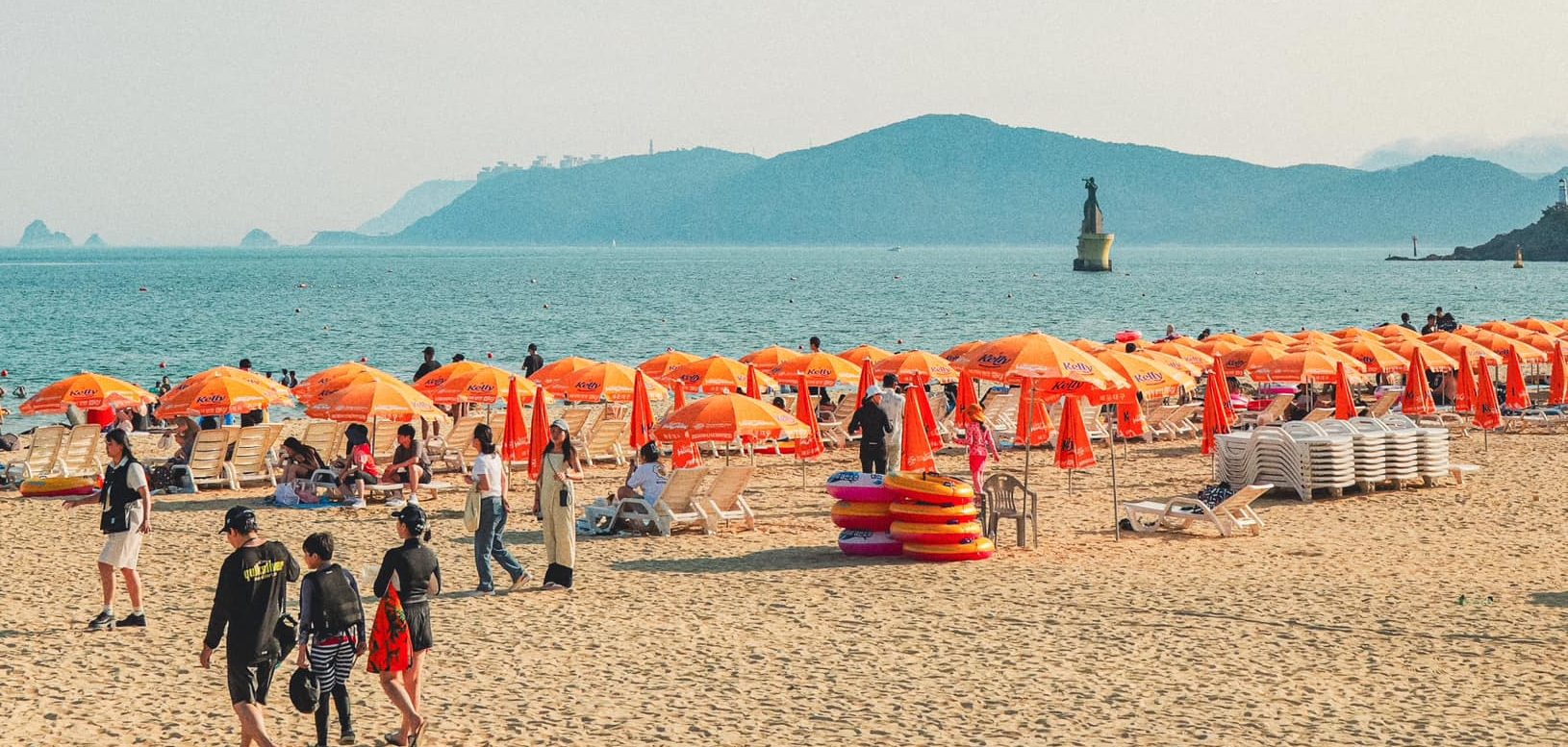
Korea’s coastline stretches across three very different seas — the East Sea (동해), the Yellow Sea (서해), and the South Sea (남해) — and each has a distinct personality. The East Coast delivers cold, clear, deep-blue water and consistent surf. Jeju Island offers the closest thing in Korea to tropical transparency. Busan combines city-level nightlife with long sandy beaches and some of the country’s best seafood. The West Coast is calmer, tidal, and home to one of the world’s great summer festivals.
Beach season in Korea runs from late June through late August, with the national peak in the first two weeks of August when Korean schools break for summer holidays. If you are flexible, the best time to visit is late June or early September — water is warm, crowds are manageable, and accommodation prices are significantly lower.
This guide covers the ten beaches worth building your trip around in 2026, organised by region.
| Beach | Region | Opens | Best For |
|---|---|---|---|
| Haeundae | Busan | 26 Jun | Atmosphere, nightlife, families |
| Gwangalli | Busan | 26 Jun | Night views, drone show, couples |
| Songjeong | Busan | 26 Jun | Surfing, relaxed vibe |
| Surfyy Beach / Jukdo | Yangyang, Gangwon | Early Jul | Surfing, beach parties |
| Gyeongpo | Gangneung, Gangwon | Late Jun | Classic East Coast, day trips from Seoul |
| Naksan | Yangyang, Gangwon | Late Jun | Scenery, temple, calm swimming |
| Hyeopjae | Jeju | 24 Jun | Turquoise water, families |
| Hamdeok | Jeju | 24 Jun | Snorkelling, pet-friendly |
| Woljeongri | Jeju | 24 Jun | Cafes, windmills, photography |
| Daecheon | Boryeong, Chungnam | 4 Jul | Mud Festival, West Coast experience |
Busan
Busan (부산) is South Korea’s second city and its undisputed beach capital. Three distinct beaches sit within the same metropolitan area, each with a different character. You can island-hop between them in a single day via the Blue Line Park beach train. The city’s food scene — raw fish at Jagalchi Market, grilled clams on the waterfront, dwaeji gukbap at dawn — is reason enough to come even without the sea.
2026 opening dates: Haeundae and Songjeong beaches open 26 June. Haeundae runs until 15 September — longer than almost any other beach in Korea, a direct response to 990만 명 (9.9 million visitors) recorded last year.
1. Haeundae Beach (해운대 해수욕장)
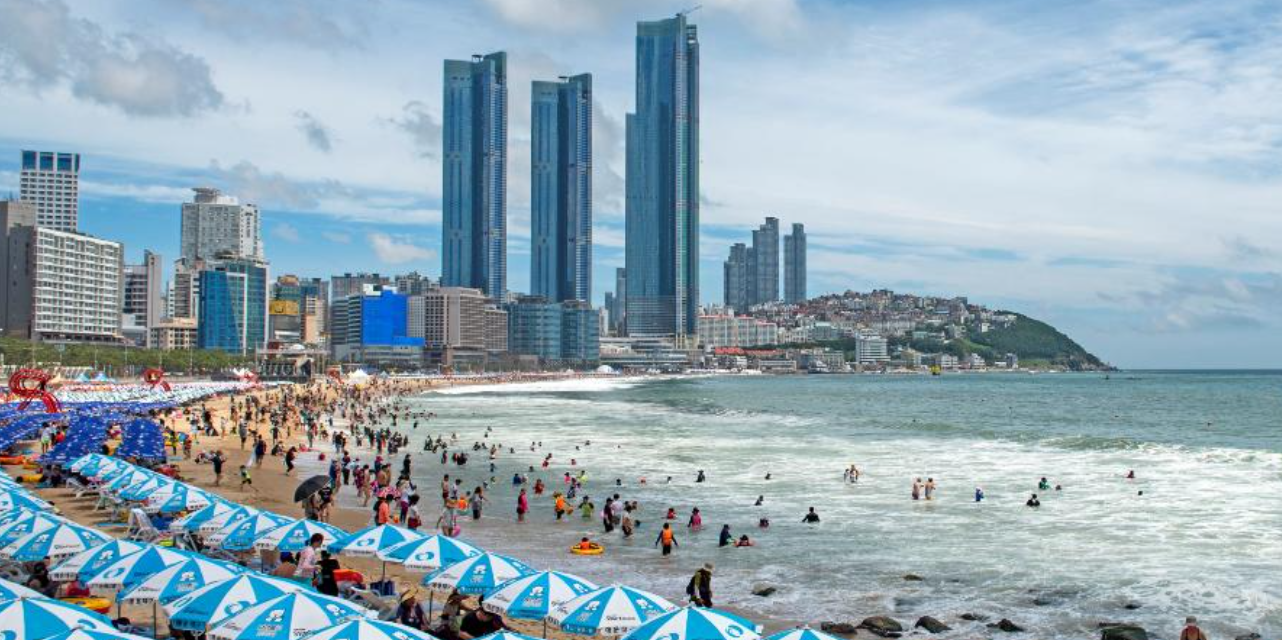
Haeundae is the most visited beach in Korea, and the numbers reflect it: 9.9 million people came last summer, with 800,000 of them arriving in September alone after the city extended the season. The beach itself is a 1.5km crescent of fine sand backed by high-rise hotels, seafood restaurants, and the BIFF cinema district. The Busan Aquarium sits at the western end. In peak August, the sand is so densely packed with beach umbrellas that finding a clear strip requires arriving before 9am.
What makes Haeundae worth the crowds is the infrastructure around it. The Blue Line Park (해운대 블루라인파크) runs along the old coastal railway from Mipo to Songjeong — 4.8km of clifftop track served by a beach train and, more memorably, sky capsule gondolas that dangle 7–10 metres above the sea. The views looking back over Haeundae from the capsule are exceptional. Book in advance at bluelinepark.com — it sells out weeks ahead in summer.
Haeundae is also the starting point for the Korea Beach Festival (한국 해변 축제), with sand sculpture competitions, water sports events, and evening concerts throughout July and August.
Water temperature: 22–26°C at peak summer
Crowds: Very high in August; moderate in late June and September
Getting there: Haeundae Station (Line 2), 5-minute walk to beach
Tip: For the actual swimming experience with fewer people, come on a weekday morning before 9am or in the last week of August when Korean holidays end.
2. Gwangalli Beach (광안리 해수욕장)

Where Haeundae is big and busy, Gwangalli is cool and cinematic. The beach is slightly shorter but frames one of Korea’s great urban backdrops: the Gwangan Bridge (광안대교), a 7.4km double-deck suspension bridge lit up in colour-changing LEDs every night. Sitting on the sand at 9pm with a convenience store beer, watching the bridge shift from violet to gold to turquoise across the bay, is one of the more underrated pleasures in Korean travel.
The big draw in 2026 is the Gwangalli M Drone Light Show (광안리 M 드론라이트쇼) — a permanent weekly fixture that runs every Saturday evening in two sessions. In 2025 the fleet was expanded from 700 to 1,000 drones, and the 2026 show is expected to be the most elaborate yet. The show is free and visible from anywhere along the beach. Arrive by 8pm on a Saturday to get a good spot on the sand.
The streets behind Gwangalli are packed with independent restaurants, craft beer bars, and late-night cafes. It is the best all-round night out of any beach neighbourhood in Korea.
Getting there: Gwangan Station (Line 2) or Geumnyeonsan Station (Line 3), both a short walk
Tip: The drone show runs Saturday evenings only. Check gwangallimdrone.co.kr for exact times before you go.
3. Songjeong Beach (송정 해수욕장)

Songjeong sits at the far end of the Blue Line Park rail, about 5km northeast of Haeundae, and it feels like a different world — a village-scale beach with a genuine surfing community, compact wooden surf shops, and fish restaurants that have been there for decades. It is Busan’s only designated surfing beach and draws a year-round crowd of Korean surfers who find Haeundae too tame.
The waves here are consistent enough for beginners taking lessons (rental and instruction available from multiple shops along the beach road) but interesting enough that experienced surfers come specifically for the conditions. During July and August the beach is divided into a swimming zone and a surf zone with roped boundaries — follow these strictly as the rip current near the surf area is real.
The accessible-by-train convenience (Songjeong Station on the Donghae Line, or the Blue Line Park beach train from Haeundae) makes this an easy half-day trip within a Busan itinerary.
Crowd level: Low to moderate — noticeably quieter than Haeundae
Getting there: Songjeong Station (Donghae Line) or Blue Line Park beach train from Haeundae
Best for: Surfers, anyone wanting a Busan beach with elbow room
Gangwon Province (East Coast)
The East Coast of Gangwon Province (강원도) sits two hours from Seoul by KTX, and the contrast with the capital is immediate. The water is cold (20–24°C, versus the warmer West and South) but startlingly clear. The coastline is dramatic — pine forests running to the cliff edge, rocky coves between sandy stretches, the unmistakable deep blue that has made 동해 (the East Sea) famous in Korea. Gangwon-do is also the country’s surf hub, centred on Yangyang (양양), which now hosts more surf schools, surf cafes, and surf hostels than any other county in Korea.
4. Surfyy Beach & Jukdo Beach — Yangyang (서피비치 & 죽도해변)

Yangyang has become South Korea’s surf capital over the past decade, and two beaches a few kilometres apart define the scene.
Surfyy Beach (서피비치, sometimes written Surfyy) is a 1km purpose-built surf destination with a sand bar, consistent beach break, and an entire resort infrastructure — restaurants, cafes, equipment rental, board storage, and a surf school — all in one location. The gradual slope and shallow depth make it ideal for beginners. On summer evenings, Surfyy hosts outdoor parties and DJ events on the beach itself, drawing a younger Seoul crowd that arrives by the Seoul-Yangyang Expressway in under two hours.
Jukdo Beach (죽도해변) sits nearby and is the choice of more experienced surfers. Named after a bamboo-covered island visible from the shore, it has a steeper break, shallower sections near the reef, and waves that hollow out properly in the right swell. It doubles as a campsite — beachside camping here is popular from July through August. Wave forecasts are available at weeksurf.com.
During peak summer, the swimming and surfing zones are separated by roped buoys. Stick to the designated areas; the surf zone has unpredictable currents not suitable for casual swimmers.
Getting there: Seoul-Yangyang Expressway by car (fastest option); or bus from Dong Seoul Terminal to Yangyang Terminal, then local bus or taxi to beach
Tip: Book accommodation in Yangyang at least three weeks ahead for July–August. The town fills up fast and nearby guesthouses double in price by late June.
5. Gyeongpo Beach (경포해변) — Gangneung

Gyeongpo is the East Coast’s establishment beach — the one Koreans have been visiting for generations, a long sweep of white sand flanked by pine forest with the inland Gyeongpo Lake (경포호) directly behind it. The setup is classic: the beach faces east for sunrise (spectacular, and much photographed), the lake offers a quieter walk or cycle, and the city of Gangneung, famous for its coffee culture and Chodang tofu, is a short taxi ride away.
Gangneung became a destination in its own right after the 2018 Winter Olympics, and the infrastructure shows — well-maintained coastal paths, a renovated waterfront, and easy KTX access (Gangneung Station is around 2.5 hours from Seoul, with direct KTX services running frequently in summer).
Water temperature at Gyeongpo runs 22–26°C in July and August — among the warmest on the East Coast. Waves are moderate, and the beach has lifeguards and facilities throughout the season.
Getting there: KTX to Gangneung Station, then bus 202 or taxi (about 10 minutes) to beach
Best for: Families, first-time East Coast visitors, day-trippers from Seoul
Nearby: Gyeongpo Lake trail, Gangneung coffee street (안목해변 카페거리), Chodang tofu village
6. Naksan Beach (낙산해수욕장) — Yangyang
Naksan is a different kind of East Coast experience. The beach is calm and family-friendly — shallow, with gentle waves and soft sand — but the setting elevates it above a generic seaside destination. Naksansa Temple (낙산사), one of Korea’s most scenic Buddhist temples, sits on the cliff directly above the beach, and the walk up through pine forest for sunrise or sunset is worth the visit on its own. The Haesujeon pavilion overlooks the sea from the temple grounds.
The beach runs approximately 1.5km and is less frenetic than Gangneung or the surf beaches further south in Yangyang. It draws a mix of families, Buddhist visitors, and travellers wanting a slower pace on the East Coast. Local sashimi restaurants near the harbour are notably good.
Getting there: Bus from Yangyang Terminal (same terminal as Jukdo/Surfyy buses), short taxi from Sokcho
Tip: Combine with a morning temple visit to Naksansa — the pink walls against the sea backdrop are one of the East Coast’s most photogenic views.
Jeju Island
Jeju (제주도) is South Korea’s largest island and its most-visited domestic destination, 1 hour by flight from Seoul or Busan. The beaches here are in a different league for water clarity — the volcanic geology creates white coral sand and a distinctive turquoise palette that turns deep blue offshore. All three Jeju beaches below open on 24 June 2026 and run through 6 September — 75 days total, six days longer than last year.
2026 operational notes: Parasol rental is capped at ₩20,000 and deck chairs at ₩30,000, fixed at 50% below market rate for the third consecutive year. Extended hours apply in peak season (15 July–15 August): Woljeongri and Samyang beaches stay open until 8pm; Hyeopjae and Ihoteu (with night lighting) until 9pm.
7. Hyeopjae Beach (협재 해수욕장) — Jeju West Coast

Hyeopjae is routinely listed as the best beach in Korea, and it earns the ranking. The water is genuinely turquoise — not a filter, not a marketing claim — and the shallow gradient means it stays that shade for 50–100 metres offshore before deepening. The sand is fine white coral, soft underfoot. On clear days, Biyangdo Island (비양도) sits on the horizon like a postcard backdrop.
The combination of shallow water, calm conditions, and exceptional clarity makes Hyeopjae the top choice for families with young children. Snorkelling is feasible near the rocks at the beach edges. The surrounding area has good cafes and restaurants along the main road.
Water depth: Shallow for extended distance from shore — ideal for children
Crowds: High in August; arrive before 10am for a clear stretch of sand
Getting there: Rent a car at Jeju Airport (strongly recommended for Jeju generally) or take bus 784 to Hyeopjae Beach stop
Tip: Hyeopjae stays open until 9pm during peak weeks in 2026 thanks to night lighting — evening swims are notably less crowded than afternoons.
8. Hamdeok Beach (함덕 해수욕장) — Jeju North Coast
Hamdeok sits on the north coast, about 15km east of Jeju City, and is the island’s most accessible beach from the airport. The water is clear, the waves are gentle, and a rocky outcrop called Seoubong (서우봉) provides a dramatic backdrop to the eastern end. There is a walking trail to the top of Seoubong that rewards with a panoramic view over the whole beach — do it in the late afternoon for the light.
The standout 2026 update: Hamdeok is operating as a designated pet-friendly beach (펫 비치) for the second year running, meaning dogs are officially welcome in the water during designated hours. Korea’s pet travel market has grown significantly and Hamdeok has become the go-to destination for travellers bringing animals.
The area around Hamdeok has strong cafe culture — the beach road is lined with independent coffee shops, many with floor-to-ceiling sea views.
Getting there: Bus 701 or 710 from Jeju City Bus Terminal, approximately 40 minutes
Crowd level: Moderate — busy but rarely as packed as Hyeopjae
Best for: Couples, pet owners, single travellers, photography
9. Woljeongri Beach (월정리 해변) — Jeju North Coast

Woljeongri went viral on Korean social media several years ago and has not really come down since. The combination of deep turquoise water, white sand, a line of windmills on the horizon, and a high density of photogenic cafes directly behind the beach created a perfect social media storm — and the physical reality lives up to the content. The water here is particularly vivid, and the windmill backdrop is genuinely distinctive.
The beach itself is more about atmosphere than swimming. It is relatively short and fills with visitors who have come for the cafes as much as the sea. The row of ocean-view coffee shops behind the beach is one of the better cafe strips in all of Korea — expect to queue for the best ones in August. Cycling from Hamdeok along the coastal path to Woljeongri (approximately 10km) is a popular half-day activity.
Woljeongri operates extended hours to 8pm during the peak 15 July–15 August window, making it one of few Korean beaches viable for an evening visit.
Best for: Cafe culture, photography, Instagram content, cycling routes
Getting there: Bus 701 from Jeju City Bus Terminal to Woljeongri Beach stop; approximately 55 minutes
Tip: The cafes facing the sea have tables that book out by mid-morning on weekends. Arrive at opening time (most open at 9–10am) or visit on a weekday.
West Coast
Korea’s West Coast is tidal — mud flats extend hundreds of metres at low tide, the water is murky rather than clear, and the swimming experience differs markedly from the East or South. What the West Coast offers instead: dramatic sunsets, mud flat experiences (gaebeol, 갯벌), fresh shellfish, and proximity to Seoul. Daecheon is the single exception worth the trip in summer, specifically because of what surrounds it.
10. Daecheon Beach (대천 해수욕장) — Boryeong, Chungcheongnam-do

Daecheon is a 3.5km stretch of West Coast beach with a feature unlike anywhere else in Korea: shell-ground sand (패각분) made from finely crushed shellfish. It does not stick to skin the way ordinary beach sand does, and the texture underfoot is distinctly softer. The beach is wide and flat, the sea calms quickly after low tide, and the area has well-developed facilities including beachfront accommodation strips.
The reason most international visitors come to Daecheon — and the reason you should time your visit carefully — is the Boryeong Mud Festival (보령머드축제), one of the most attended summer events in Korea. The 29th festival runs 24 July to 9 August 2026 (17 days) at the Boryeong Mud Expo Plaza adjacent to the beach. The festival involves mud pools, mud slides, mud wrestling arenas, and mud-based skincare products made from the local Boryeong coastal mud — genuinely beneficial for skin, as the regional tourism authority is quick to note. The event has grown into one of Korea’s few truly international festivals, drawing significant numbers of visitors from the US military community as well as independent travellers from across Asia.
Outside festival dates, Daecheon is a relaxed, low-key beach town with excellent grilled shellfish restaurants and significantly fewer crowds than the East or South coasts.
2026 opening: Daecheon opens 4 July; neighbouring Taean beaches open 11 July
Getting there: Mugunghwa train or express bus from Seoul to Daecheon (about 2 hours), then short taxi to beach
Tip: If visiting during the Mud Festival, book accommodation at least 6–8 weeks in advance — the town fills completely for peak festival weekends.
Practical Tips for Summer Beach Travel in Korea
Getting Around
KTX connects Seoul to Busan (2h 15m) and Gangneung (2h 30m) with frequent services. Book through Korail (letskorail.com) or the Korail app — summer trains sell out, especially Friday evening and Sunday return services. For Jeju, domestic flights from Gimpo Airport (Seoul) run approximately every 30 minutes in peak season; the flight is 1 hour.
For getting around within Jeju, renting a car is strongly recommended. Public buses exist but are slow, and the beaches are spread across a large island. For Busan’s beaches, the subway and beach train handle most needs well.
For navigation in Korea, use Naver Map or Kakao Map — Google Maps walking and transit directions are unreliable in Korea. Both Korean apps are free, available in English, and work with public transit.
When to Go
| Period | Pros | Cons |
|---|---|---|
| Late June (24 Jun – 10 Jul) | Beaches open, low crowds, cheaper rates | Water slightly cooler; monsoon possible |
| Mid July (11 Jul – 31 Jul) | Full season underway | Monsoon rain likely; humidity very high |
| August (1–15 Aug) | Peak atmosphere, all festivals running | Maximum crowds and prices; book everything early |
| Late August (16–31 Aug) | Crowds thin after Korean holidays end | Season winding down at some beaches |
| September | Haeundae open until 15 Sep; Jeju until 6 Sep | Many smaller beaches already closed |
Money and Costs
Korea is increasingly cashless — most beach food stalls, rental shops, and restaurants accept cards and mobile payments (Samsung Pay, Kakao Pay). Some older beachside stalls are still cash-only; carry ₩50,000–100,000 in cash as a buffer.
Beach umbrella and deck chair rental is capped at ₩20,000 and ₩30,000 respectively at Jeju beaches under 2026 regulations. Prices at other beaches vary — negotiate or buy your own folding beach mat (sold at Daiso for around ₩3,000) to avoid the rental queues entirely.
What to Pack
Korea’s summer sun is stronger than it feels, especially reflected off water and sand. SPF 50+ sunscreen is non-negotiable — Korean pharmacies (올리브영 / Olive Young) stock excellent options at reasonable prices. Aqua shoes are useful on rocky beaches like Naksan and Hamdeok. A small dry bag for your phone is worthwhile given the combination of sea spray and the frequent sudden rain showers.
Safety
All major beaches have lifeguard (수상구조대) coverage during operating hours (typically 10am–7pm, extended to 8–9pm on select Jeju beaches in peak season). Swim only within designated zones — roped boundaries separate swimming and surfing areas for a reason, and currents outside the buoys are not casual.
Check the Korea Meteorological Administration app (기상청) for typhoon alerts if travelling in August or September. Korea experiences roughly one significant typhoon event per year; the app provides real-time tracking.