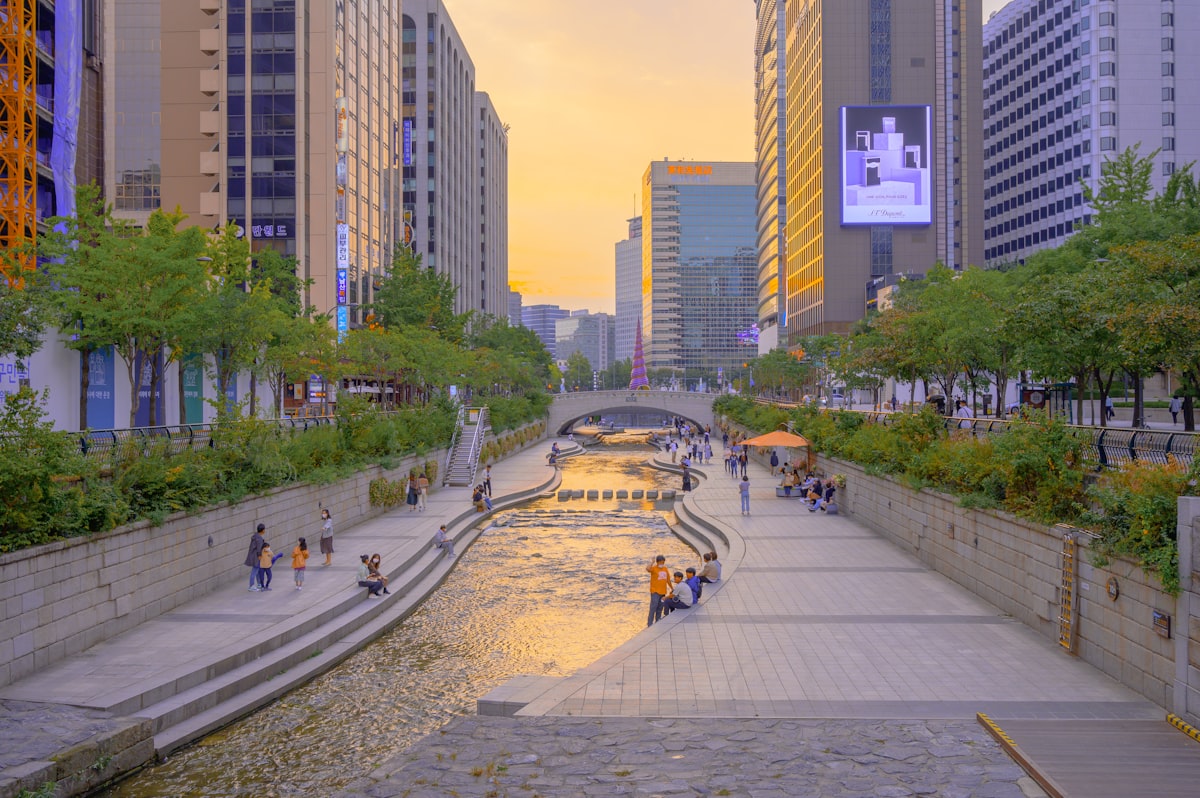
South Korea is one of the best countries in the world for solo female travel — a fact that catches a lot of people off guard if their image of Korea is still shaped by headlines rather than experience. The streets are safe, the infrastructure is world-class, and the culture is built around a kind of social orderliness that makes it feel very easy to move through cities alone at any time of day. On top of that, Korea actively celebrates solo living: there’s a word for eating alone (혼밥, honbap), a word for drinking alone (혼술, honsul), and an entire ecosystem of cafes, restaurants, and experiences designed for exactly one person.
That doesn’t mean you show up without any preparation. There are things worth knowing — about neighbourhoods, about getting home after midnight, about a few specific safety concerns that are particular to Korea. This guide covers all of it honestly.
| Overall safety | Very high — low violent crime, dense CCTV, strong police presence |
| Best areas in Seoul | Myeongdong, Hongdae, Insadong, Gangnam |
| Night transport | Kakao T app, N-buses after midnight, subway until ~1am |
| Emergency numbers | 112 (police), 119 (ambulance/fire), 1330 (Korea Travel Helpline) |
| Key safety awareness | Molka (hidden cameras) in public restrooms — check before using |
| Solo dining | Widely normalised across Korea in 2026 |
How Safe Is Korea for Solo Female Travelers?
The short answer: very safe. Seoul consistently ranks in the top tier of the world’s safest major cities, with a crime index of around 24 — lower than Tokyo, London, and most major European capitals. Violent crime targeting foreign tourists is rare. You will almost certainly not encounter mugging, assault, or aggressive harassment in the street. Korean public spaces operate under strong social norms of orderliness and non-confrontation; strangers generally mind their own business.
Walking alone at night in well-lit, populated areas of Seoul is normal and fine. The city doesn’t shut down — convenience stores glow all night, people are out late, and the subway is full until close to midnight. That said, like anywhere, exercising basic awareness in quiet back alleys after 2am is common sense rather than paranoia.
The experience outside Seoul is similarly reassuring. Busan and Jeju have crime indices lower than Seoul’s. Smaller cities and rural areas are generally even quieter. Korea’s low violent crime rate holds across the country, not just the capital.
Safety Concerns Specific to Korea
Molka: Hidden Cameras
This is the most significant safety concern specific to Korea for women, and it’s worth addressing directly rather than burying it. Molka (몰카) refers to illegally installed hidden cameras, most commonly placed in public restrooms, changing rooms, and occasionally accommodation. The issue gained major attention in 2018 and has been the subject of ongoing government crackdowns, stricter penalties, and active detection campaigns since — but incidents still occur.
What to do:
- Before using a public restroom in a cafe, restaurant, or attraction, take 30 seconds to scan for anything unusual: small holes in walls or fixtures, objects positioned oddly (particularly facing the toilet or changing area), unfamiliar electronics, or odd Wi-Fi network names showing up on your phone.
- Major tourist facilities (palaces, shopping malls, government buildings) have been subject to proactive inspection campaigns and are generally lower-risk.
- For accommodation, choosing established hotels and guesthouses with strong recent reviews provides the most peace of mind. Many solo female travelers prefer to avoid Airbnbs in Korea for this reason, sticking to hotels or well-reviewed hostels with visible management.
The issue is real and worth knowing about. It is not, however, a reason to avoid Korea — it’s a reason to know the quick check and do it.
Digital Scams and Overpricing
2026 has seen a slight uptick in digital scams targeting tourists, particularly around Myeongdong and Itaewon: fake QR codes, inflated tour pricing, and medical tourism brokers who quote vastly different prices to foreigners. Keep your banking apps secured with two-factor authentication, be cautious about scanning QR codes from strangers, and always get a written price quote before agreeing to any medical or beauty service. Our Korea travel scams guide covers the most common schemes in detail.
Where to Stay in Seoul
Myeongdong — Best for First-Timers
If it’s your first trip, Myeongdong is the most practical base. It sits in the centre of the city with multiple subway lines converging nearby, making it easy to reach almost anywhere without transfers. The streets stay busy until late, which is its own form of safety, and the density of accommodation options means you’ll find something for almost every budget. K-beauty shops, street food carts, and cafes fill the surrounding streets — you can spend half a day without leaving the neighbourhood if you want to.
Nearest subway: Myeongdong Station (Line 4)
Hongdae — Best for Young Travellers and Budget Stays
Hongdae is the city’s university district, home to a high concentration of hostels, guesthouses, and budget hotels, plus some of the best cafe culture and street life in Seoul. It’s extremely international — you’ll hear English, Japanese, and Chinese almost constantly — and it runs 24 hours with the kind of foot traffic that keeps it lively all night. Female-only dorm options are available at several hostels here, which is useful if you want both community and added security.
Nearest subway: Hongik University Station (Lines 2, Gyeongui-Jungang, Airport Railroad)
Insadong — Best for a Slower, Cultural Stay
Insadong is quieter and more traditional in feel, with antique shops, tea houses, pottery boutiques, and streets that reward slow walking. It’s a few stops from both Myeongdong and Gyeongbokgung Palace, making it well-placed for culture-focused itineraries. It tends to attract a slightly older and quieter crowd than Hongdae, with accommodation leaning toward boutique guesthouses and hanok-style stays.
Nearest subway: Anguk Station (Line 3) or Jongno 3-ga Station (Lines 1, 3, 5)
Gangnam — Best for Upscale Comfort
Gangnam is polished, affluent, and extremely well-lit at all hours. English signage is dense, foot traffic is constant, and the neighbourhood is full of high-end cafes, department stores, spas, and beauty clinics — which makes it particularly appealing for travelers who want a glow-cation as part of their trip. It’s also one of the safest neighbourhoods in the city by CCTV density. Accommodation here skews pricier than the areas above.
Nearest subway: Gangnam Station (Line 2)
Itaewon / Hannam-dong — Most International Atmosphere
Itaewon has historically been Seoul’s most international neighbourhood — foreign restaurants, English-speaking staff, a mix of expats and tourists. It went through a difficult period following the 2022 crowd crush tragedy and has continued to evolve. Hannam-dong, immediately adjacent, has become increasingly popular as a more upscale and residential alternative. Both are perfectly safe for solo female travelers; Itaewon in particular is one of the few areas in Seoul where solo women eating and drinking at a bar counter at night is entirely unremarkable.
Nearest subway: Itaewon Station (Line 6)
Accommodation Types
Hotels are the most straightforward option for solo travelers who want privacy, security, and no shared facilities. Mid-range business hotels in Korea offer excellent value — clean, modern, and professionally managed.
Capsule hotels have expanded significantly in recent years and are now a genuinely good option: private pods with personal lockers, shared bathrooms (well-maintained), and very competitive rates. Many have female-only floors.
Guesthouses and hanok stays provide a more personal experience and can be ideal for solo travelers who want to connect with other guests or get local tips from hosts. Read recent reviews carefully and look for properties where hosts are present or reachable.
Female-only guesthouses exist in Seoul, particularly in Hongdae and near Insadong, and can provide extra peace of mind for travelers who are new to solo travel or simply prefer that environment.
Getting Around
Subway
Seoul’s subway is your primary tool. It covers virtually the entire city, stations are numbered and colour-coded, all signage is in English and Korean, and free Wi-Fi runs throughout. Trains run from approximately 5:30am to midnight (slightly later on Friday and Saturday nights). Buy a T-money card from any convenience store or airport kiosk — it’s reloadable, works on subways and buses, and costs slightly less per trip than single tickets.
Women-only subway cars are available on designated carriages during rush hours on certain lines (marked with pink signage on the platform). These are not mandatory to use but are there if you want them.
Night Transport
After the subway closes, your two best options are:
Kakao T (카카오T) — Korea’s dominant ride-hailing app, equivalent to Uber. Download it before you travel and set up your account. The app shows the driver’s name and car plate before you’re picked up, and your route is logged — meaningfully safer than flagging a random cab. Taxis in Korea are inexpensive by Western standards; late-night trips across central Seoul rarely exceed ₩15,000–20,000.
N-buses (야간버스) — Seoul runs a network of night buses on major routes from approximately 1am to 5am, marked with the letter N before the bus number. Routes are fewer than the daytime network but cover the main corridors. Payment via T-money card.
Getting Around Outside Seoul
KTX connects Seoul to Busan in approximately 2.5 hours, and to Gwangju, Daejeon, and other cities comparably quickly. Book in advance on the Korail website or Korail app, especially for weekend travel.
Intercity buses are cheaper and serve destinations not on the rail network. Kakao T works for taxis in Busan and most larger cities — an important note, as flagging cabs and communicating destinations without Korean is significantly harder outside Seoul.
Korean Social Culture: What to Know
Eating and Drinking Alone Is Fine
This is worth stating clearly because it surprises many first-time visitors to Korea. Eating alone — honbap — has been a normal and accepted part of Korean urban life for years, driven by the rise of single-person households among younger Koreans. In 2026 it is entirely unremarkable to sit down alone at a Korean BBQ restaurant, a ramen counter, or a bibimbap spot. Many restaurants have specifically adapted their menus and grill setups for solo diners.
The same applies to solo drinking at cafes or casual bars. Walk-in, sit down at a counter, order what you want.
Dress and Appearance
Korean fashion culture is highly expressive and varied, but a few general patterns are worth knowing: showing legs is common and widely accepted, while showing significant cleavage or bare shoulders can draw more attention — not hostile attention, but you’ll stand out in traditional neighbourhoods and at older restaurants. For temple visits, cover shoulders and knees as you would anywhere with religious significance.
In central Seoul — Hongdae, Myeongdong, Seongsu, Gangnam — almost anything goes, and you’ll see fashion that ranges from conservative to highly experimental.
Street Harassment
It’s rare. Korea has very low rates of the kind of vocal street harassment (catcalling, following, aggressive approaches) common in other countries. People in public spaces leave each other alone. Subway and bus behaviour is orderly. This doesn’t mean zero unwanted attention ever exists — heavily intoxicated individuals in Itaewon late at night can occasionally be a nuisance — but it is not something you’ll be managing as a constant presence.
Drinking Culture
Korea has a strong drinking culture, and it is entirely socially acceptable for women to drink, including solo. That said, heavily intoxicated groups of men in certain late-night entertainment districts (Hongdae’s club strip, Itaewon’s main street) can get boisterous. Sticking to the main roads and avoiding quiet alleys late at night is the same advice that applies everywhere.
Language
Outside of Seoul — and sometimes within it — English proficiency drops quickly beyond tourist areas. Download Naver Maps (not Google Maps, which has functionality limitations in Korea) for navigation, and use Google Translate’s camera function to point at menus or signs. In smaller cities like Gyeongju, Jeonju, and even parts of Busan, even some hotel staff may have limited English. Showing your destination address written in Korean on your phone (any translation app can produce this) resolves most practical communication moments.
Outside Seoul: Busan and Jeju
Busan
Korea’s second city is very safe — with a crime index lower than Seoul’s — but the dynamic is different. For a full breakdown of what to see and where to stay, see the Busan complete guide. Central Busan (particularly Seomyeon and parts of the old downtown) can feel more rough-and-tumble than Seoul’s tourist areas. Use Kakao T for taxis rather than flagging cabs, and be aware that English proficiency is noticeably lower than in central Seoul. The upside: Busan is spectacular, and Haeundae and Gwangalli are excellent bases with good accommodation options and lively beach-adjacent atmospheres that feel very manageable solo.
Jeju
Jeju is among the safest destinations in Korea. The island is compact, well-geared to independent travel, and increasingly easy to navigate in English — though still imperfect outside tourist areas. Renting a car is the most practical way to see Jeju properly (much of what makes it worth visiting is distributed across rural coastal roads that buses serve infrequently). International driving licences are accepted.
Practical Tips and Emergency Contacts
Emergency numbers:
- 112 — Police
- 119 — Ambulance and fire
- 1330 — Korea Tourism Organization Travel Helpline (English-speaking, available 24/7, can assist with emergencies, translation, and tourist guidance)
Apps to download before you arrive:
- Naver Maps — essential for navigation, including public transport
- Kakao T — ride-hailing, set up your account before landing
- Papago — Korean translation with better accuracy than Google Translate for Korean
- 1330 app — tourism helpline and information
Medical and beauty services: Korea’s aesthetic medicine sector is world-class and draws visitors specifically for procedures. If you’re booking any medical or cosmetic service, our Seoul dermatology and clinic guide covers reputable options and pricing. Research any clinic independently and avoid brokers or walk-in touts offering deals in tourist areas — prices quoted to foreigners without a written menu can vary wildly.
Travel insurance: Comprehensive travel insurance is strongly recommended, particularly if you’re planning any medical or dental treatments, or outdoor activities like hiking Hallasan on Jeju or Bukhansan in Seoul.
Solo travel in Korea in 2026 is genuinely excellent. The combination of low crime, excellent infrastructure, a solo-friendly dining culture, and a city like Seoul — which can absorb weeks of exploration and still have more to offer — makes it one of the most rewarding destinations for women traveling alone, at any experience level. For everything else before your trip, the First-Timer’s Complete Guide to Korea covers visas, money, transport, and cultural etiquette in full.