
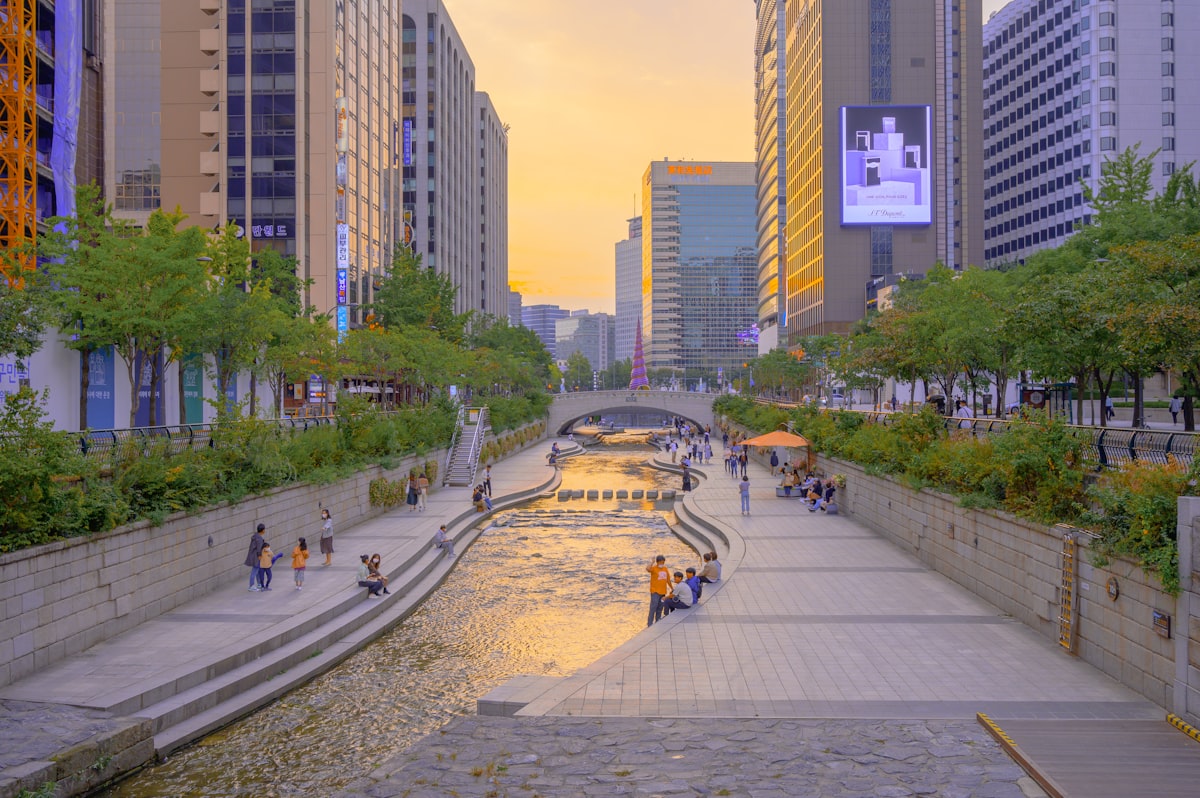
South Korea is one of the safest countries in the world for tourists. Crime rates are low, infrastructure is excellent, and most visitors complete an entire trip without a single problem. But “safe” and “scam-free” are not the same thing. In 2024, foreign tourists filed 1,543 formal complaints with the Korea Tourism Organization — a 71% jump year-over-year, in a year when visitor numbers grew by a comparatively modest 48%.
The scams here are rarely dangerous. They are almost always financial. And the good news is that every single one of them is avoidable once you know what to look for.
This guide covers every significant tourist scam currently operating in Korea in 2026, with specific detail on how each one works, where it happens, and what to do if it happens to you.
Quick Reference: Korea Tourist Scams 2026
| Scam | Where | Risk Level | Easy Fix |
|---|---|---|---|
| Rigged taxi meters / long routes | Seoul, Jeju | High | Use Kakao T app |
| Forced shopping tour stops | Seoul, Jeju | High | Book licensed tours only |
| Bar overcharging / drink spiking | Itaewon, Hongdae | High | Check menu prices first |
| Fake monk donation requests | Myeongdong, Insadong | Low | Decline and walk away |
| Currency exchange short-changing | Airports, Myeongdong | Medium | Count bills at the counter |
| Market price gouging | Gwangjang, Namdaemun | Medium | Ask for written price |
| Counterfeit K-beauty products | Street vendors, unofficial sellers | High | Buy from official stores only |
| Accommodation bait-and-switch | Online platforms | Medium | Never pay off-platform |
| Romance / friendship scam | Tourist areas, online | High | Trust your instincts |
| QR code phishing | Restaurants, tourist sites | Medium | Preview URL before scanning |
1. Taxi Scams
Taxi complaints account for 20% of all foreign tourist complaints filed in Korea — 309 cases in 2024 alone. A Japanese TV crew filmed a Seoul driver deliberately overcharging foreign tourists on camera in 2025, prompting the Seoul Metropolitan Government to launch a 100-day taxi crackdown and introduce English-language receipts that show surcharge status.
The most common variations:
- Meter manipulation — the driver starts the meter at an inflated rate, or switches on the late-night surcharge at the wrong time
- Long routes — taking a roundabout path to a destination a tourist won’t recognise
- Round-trip charging — a Jeju driver was reported charging one-way fares as round-trips, collecting double for a single short ride
- Unlicensed touts at Incheon Airport — “Call Van” operators who loiter in the arrivals hall offering “cheap taxis.” These are illegal. They are not cheap.
How to avoid it:
The single most effective protection is booking through Kakao T, T-map Taxi, or Naver Map. When you call a taxi through these apps, the fare is calculated before you get in, the route is tracked on your phone, and there is a paper trail if anything goes wrong. For airport arrivals, skip anyone approaching you inside the terminal and use the official taxi queue outside — or book a Kakao T pickup before you land.
If you take a street hail, confirm the meter starts running immediately after you sit down. Keep the driver’s ID card photo in view (it’s displayed on the dashboard). If the fare seems wrong, the new QR complaint system at Incheon and Gimpo airports lets you report it instantly, and the Korea Travel Hotline (1330) takes multilingual complaints 24 hours a day.
For everything else about arriving at Incheon, see our Incheon Airport Guide 2026.
2. Forced Shopping Tours (Ginseng Centers & More)
Shopping scams are the single largest complaint category — 26% of all foreign tourist grievances, totalling 398 cases in 2024. The Seoul Metropolitan Government has specifically named “forcing tourists to shop” as an illegal act under active enforcement.
Here is how it works: you book a tour that is either free or suspiciously cheap. The itinerary lists a “traditional Korean medicine experience” or a “cultural shopping stop.” You arrive at a large, windowless showroom — a ginseng center, an amethyst shop, a cosmetics warehouse — and the doors close. A guide delivers a high-pressure sales pitch for 45 to 60 minutes. Prices are multiple times the retail value of the same items elsewhere. The tour guide earns a commission on everything sold.
This model is most associated with Chinese-language group packages, where rock-bottom tour prices are deliberately subsidised by aggressive in-store selling. But it operates in English-language tours too.
How to avoid it:
- Book only through operators licensed by the Korea Tourism Organization (KTO)
- Read the full itinerary before booking; vague “cultural stops” are a red flag
- Know that you are legally entitled to refuse any purchase — no legitimate operator can compel you to buy anything
- If you are taken to a shop and feel unable to leave, contact the Seoul Tourist Issue Assistance Center (02-1800-9008) or call 1330
3. Bar and Restaurant Overcharging
The Itaewon nightlife district has the densest concentration of bar-related complaints in Korea. The scam takes several forms, but the core of each is the same: you end up with a bill that bears no relation to what you actually consumed.
- Hostess bar recruitment — a friendly stranger (often well-dressed, fluent in English) approaches you near a tourist area and suggests a great bar nearby. You arrive and find yourself in a hostess bar, where you are pressured into buying drinks for staff. Bills regularly reach hundreds of thousands of won.
- Menus without prices — no price list is displayed, or a menu is shown that does not reflect what is actually charged. Extra “service fees” appear on the bill.
- Drink spiking — a prosecuted 2017 Itaewon case documented bar owners charging an American tourist ₩17 million and a German tourist ₩7.9 million after traces of zolpidem were found in the American’s hair. This pattern is not historical — it is a documented risk that continues to be reported.
How to avoid it:
Always ask for a written menu with prices before ordering. Avoid bars that are recommended by strangers you have just met on the street. Stay with your group, and do not accept drinks you did not personally order. Research a venue on Naver or Google Maps before walking in — if it has no reviews or suspiciously generic ones, that is a warning sign.
4. Fake Monk and Street Charity Scams
Near Jogyesa Temple in Jongno, along Myeongdong’s main strip, and throughout Insadong, you will occasionally be approached by someone in Buddhist robes. They offer a small amulet, a blessing, or a prayer bead bracelet — free of charge. Then they produce a photograph of “their temple” and request a donation.
The robes are genuine. The temple affiliation is not. Real Buddhist monks do not solicit donations on public streets.
The money goes directly into the individual’s pocket. The amounts requested are modest — typically ₩5,000 to ₩10,000 — which is partly why this scam persists: the financial stakes are low enough that most tourists simply pay rather than make a scene.
How to avoid it:
Politely decline and keep walking. If you want to make a donation to a Buddhist temple, do it at the donation box inside the temple grounds. No explanation is necessary — the people running this scam rely on social awkwardness to extract payment.
5. Currency Exchange Scams
There are three versions of this scam operating in Korea:
- Short-changing — rapid counting, sleight-of-hand, or deliberate distraction at the exchange counter. Bills are miscounted and you leave with less than you paid for.
- Counterfeit won notes — in 2025, South Korean police arrested a criminal ring that printed counterfeit ₩50,000 notes worth approximately ₩450 million. These circulate. Unofficial exchangers are the most common source.
- Hidden rate manipulation — booths advertising “0% commission” that embed their margin in an exchange rate well below the market rate. The headline looks competitive; the actual amount you receive is not.
How to avoid it:
Use official exchange counters at banks, post offices, or hotels. Count every note before leaving the counter — no legitimate exchanger will object to this. For the best rates overall, use ATMs affiliated with major Korean banks (KB Kookmin, Shinhan, Woori, Hana) and check the current interbank rate on XE or a similar app before you exchange anything. Street exchangers and unofficial booths near tourist areas carry significantly higher risk.
6. Market Price Gouging
The Gwangjang Market controversy of 2024 put this issue on the national agenda. Videos showing vendors charging foreign tourists dramatically inflated prices for standard street food went viral, generating significant backlash. The market association responded with suspensions and mandatory price displays — but enforcement is inconsistent across Seoul’s older markets.
The pattern is straightforward: no price tags are visible, prices are quoted verbally, and the number quoted to a tourist is higher than what a local would pay. Extra charges appear after items are wrapped. On Jeju Island, jeep tour operators near Manjanggul Cave and Seongsan Ilchulbong have been reported charging double standard rates, and counterfeit “volcanic rock” souvenirs are sold as authentic collectibles.
How to avoid it:
Ask for a written price, or point directly at a price tag before committing. Compare what neighbouring stalls charge for the same item. The government is rolling out a “Real-Name Stall System” as of 2025–2026 that requires clear price displays — compliant stalls are worth prioritising. If a price drops dramatically the moment you start walking away, you were being overcharged.
7. Counterfeit K-Beauty Products
This is the fastest-growing scam in Korea by volume. Losses tied to counterfeit K-beauty products reached ₩22 billion (~$15 million USD) in 2025 — a 24-fold increase from the previous year. Customs authorities seized fake products from brands including Manyo (952 units) and Sulwhasoo (812 units). Laboratory testing found counterfeits containing mercury, arsenic, bacterial contamination, and in some cases material from unsanitary manufacturing conditions.
The packaging is the problem: it is nearly indistinguishable from genuine product. Minor differences in font weight, texture, and holographic seal quality are present, but they require close comparison with an authentic product to spot. The fake items are sold primarily through street vendors, unofficial online sellers, and unlicensed market stalls — not through official brand stores or major retailers.
How to avoid it:
Buy K-beauty products exclusively from official brand stores, authorised department stores (Lotte, Shinsegae, Hyundai), Olive Young (multi-brand, licensed), or the brand’s own online shop. For any purchase, check that all packaging text is in Korean, that holographic seals are intact, and that the batch code verifies on the brand’s website. If the price is significantly below what the same product costs in Olive Young, treat that as a warning.
See our Seoul K-Beauty Shopping Guide for a full list of legitimate stores and districts.
8. Accommodation Scams
Accommodation-related complaints rose 82% year-over-year in the most recent KTO data. Three variations are currently active:
- Fake listings — scammers create listings using stolen photos and descriptions from legitimate properties. The property either doesn’t match what was advertised, or doesn’t exist. Complaints are highest for Seoul, Busan, and Jeju.
- Bait-and-switch — advertised as a hotel or licensed guesthouse; on arrival it is an unlicensed studio in a residential building.
- Off-platform payment requests — after booking through a legitimate site, a message claiming to be from the host asks you to confirm via wire transfer or an external payment link. The host never receives the money.
Note that as of October 2025, new South Korean regulations prohibit one-room studio apartments from being listed on short-term rental platforms. Some listings were already operating illegally — an added reason to verify before you book.
How to avoid it:
Book only through established platforms and pay only through those platforms. Never transfer money off-platform regardless of what the “host” claims. Check the property address on Google Maps Street View before booking. Read recent reviews carefully — templated or generic-sounding reviews are a red flag. Legitimate Korean property types for short-term rental include “minbak” (민박) and “pension” (펜션); verify that a listing clearly states its registration type.
9. Romance and Friendship Scams
In-person version: A well-dressed local who speaks fluent English strikes up a conversation near a tourist attraction or subway station. They offer to show you around. The tour ends at a bar, restaurant, or norebang (karaoke) where the bill is grotesquely inflated. Your new friend may disappear when it arrives.
Online “pig butchering” version: A scammer cultivates a fake romantic or social relationship over days or weeks — often posing as a Korean-speaking individual — then introduces an investment opportunity, typically a fraudulent cryptocurrency platform. Victims are encouraged to make progressively larger deposits until the platform disappears. Romance scams in Korea totalled ₩100 billion (~$73 million USD) in just the first nine months of 2025, already surpassing the full-year total for the prior year. Criminal networks operating out of Southeast Asia specifically recruit Korean-speaking workers and target visitors to Korea.
Religious recruitment (related pattern): Groups including the World Mission Society Church of God approach individuals who appear alone near university campuses, shopping streets, and tourist areas. Invitations to “free cultural events” escalate into financial pressure campaigns. Former members have reported significant financial losses.
How to avoid it:
Be sceptical of unusually enthusiastic strangers in tourist areas who are keen to spend time with you. Never invest money — in any form, on any platform — based on advice from someone you have met recently, online or in person. Use only major regulated investment exchanges. If you suspect financial fraud, report it to Korean police (112) or the Korea Financial Intelligence Unit.
10. QR Code Phishing (“Quishing”)
QR menus and QR payment codes are near-universal in Korea — at restaurants, cafés, tourist attractions, and public facilities. Scammers exploit this by physically placing malicious QR codes over legitimate ones. Scanning the fake code redirects to a phishing site that harvests payment credentials or personal information.
QR phishing incidents surged dramatically in late 2025, jumping from roughly 47,000 reported cases globally in August to over 249,000 in November. Korea’s dense QR infrastructure makes it a higher-exposure environment than most countries.
How to avoid it:
Before scanning any QR code, check whether a sticker has been placed over the original code — that is the primary physical tell. Use a QR scanner app that previews the destination URL before opening it. If a scan redirects to an unfamiliar payment page or requests sensitive credentials, close it immediately and alert the venue.
What to Do If You’ve Been Scammed
- Korea Travel Hotline: 1330 — multilingual (English, Chinese, Japanese), available 24 hours a day, 365 days a year. This is the first call to make for any tourist complaint.
- Police: 112 — for anything involving theft, fraud, or personal safety.
- Seoul Tourist Issue Assistance Center: 02-1800-9008 — Tuesday to Saturday, 09:00–18:00. Accepts complaints about forced shopping, taxi overcharging, and restaurant fraud.
- QR complaint cards — distributed at the departure halls of Incheon and Gimpo airports. These go directly to the Seoul Metropolitan Government’s tourism enforcement team.
- Your accommodation’s front desk — hotels and guesthouses in Korea deal with tourist scam complaints regularly and can assist with translation and reporting.
Document everything: screenshots, receipts, photographs of the taxi ID card. The more detail you have, the more likely a complaint results in a refund or enforcement action.
Frequently Asked Questions
Is Korea safe for solo travellers? Yes — Korea consistently ranks among the world’s safest travel destinations. Violent crime against tourists is exceptionally rare. The scams documented here are financial, not physical.
Are taxis in Seoul generally safe to use? Most taxi drivers are honest. The scam subset is small but disproportionately targets tourists in high-footfall areas. Using Kakao T or T-map Taxi eliminates virtually all risk.
Is Itaewon safe for tourists? Itaewon is safe in the sense that violent crime is low. The bar overcharging risk is real but concentrated in a small number of venues. Research specific venues on Naver before entering, avoid following strangers to bars, and always ask for a price menu before ordering.
Can I trust Olive Young and official brand stores for K-beauty? Yes. Olive Young is a licensed multi-brand retailer and the safest place to buy K-beauty products in Korea. Fake products are overwhelmingly found through street vendors and unofficial online sellers, not through Olive Young or department store concessions.
What is the 1330 hotline? It is the Korea Tourism Organization’s multilingual travel helpline, available around the clock. It handles complaints, provides translation assistance, gives travel advice, and connects callers with relevant authorities. It is free to call from within Korea.
Do I need travel insurance in Korea? Travel insurance is always recommended but especially useful in Korea if you are concerned about accommodation or financial scams — some policies cover fraud losses. Check that your policy covers trip disruption caused by accommodation fraud before you travel.
For more on staying safe and getting the most from your trip, see our First Timer’s Guide to Korea, Korea Travel Essentials, and Korea Travel Budget Guide.


