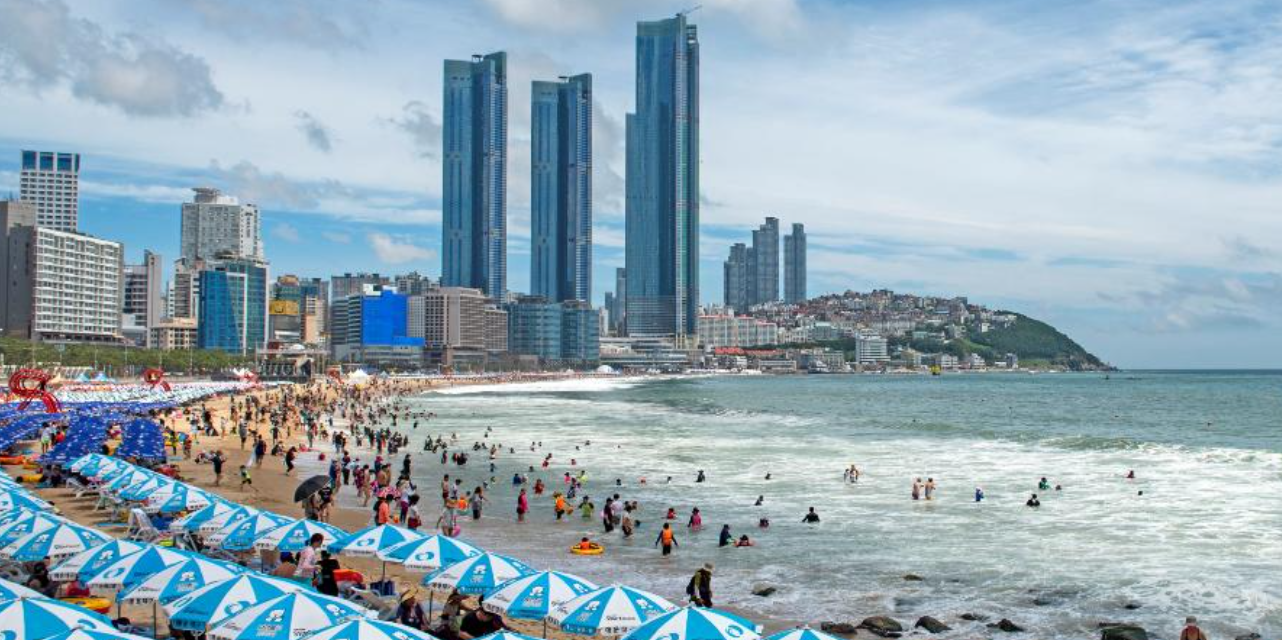
Most people visiting Korea don’t think of it as a surfing destination. They should. In 2025, surfing crossed from niche pursuit to mainstream lifestyle trend among Korea’s MZ generation, and the infrastructure around it has grown to match. Yangyang — a small coastal city in Gangwon-do, two hours from Seoul — has quietly transformed into one of Northeast Asia’s best-connected surf towns. Beyond Yangyang, you have a world-class artificial wave pool in Siheung, a growing scene in Busan, and consistent swells off Jeju’s southern coast.
Whether you have never stood on a surfboard or you are a seasoned surfer looking to schedule a session into your Korea itinerary, here is what to know.
Quick Reference
| Detail | Info |
|---|---|
| Best surf destination | Surfyy Beach (서피비치), Yangyang |
| Closest to Seoul | Wavepark (웨이브파크), Siheung — 40 min by car |
| Best surf season | June–October (typhoon swells peak July–September) |
| Beginner lesson cost | ₩50,000–₩80,000 for a 2-hour group lesson |
| Getting to Yangyang | Seoul-Yangyang Expressway, approx. 1h 45m by car or bus |
| Best for non-drivers | Intercity bus from Dong-Seoul Terminal |
Why Koreans Went Surfing
The opening of the Seoul-Yangyang Expressway in 2017 was the turning point. Overnight, a stretch of coastline that had taken over three hours to reach from Seoul by winding mountain roads became a 1h 45m drive. Young Koreans who had discovered surf culture through travel to Bali, Hawaii, and Portugal suddenly had their own wave within day-trip distance of the capital.
What followed was rapid. Surf schools multiplied along Yangyang’s northern beaches. Cafés and craft beer bars opened in their wake. The hashtag #양양서핑 now has millions of posts on Instagram. In a country where outdoor activities are tightly linked to social identity — where people post their runs, their hikes, and their swim sets as curated lifestyle content — surfing arrived with exactly the right visual aesthetic. The footage of someone catching their first wave at sunrise, wetsuit still dripping, iced Americano in hand twenty minutes later at a clifftop café, became the defining travel image for a generation of Seoul weekenders.
By 2025, surfing participation in Korea had grown enough to register in national sports industry surveys. Trail running may have more raw numbers, but surfing has the lifestyle cachet.
Yangyang: Korea’s Surf Capital
Yangyang-gun (양양군) sits on the east coast of Gangwon-do, sandwiched between the Taebaek Mountains and the East Sea. The ocean-facing coast runs north-south and catches swells generated by low-pressure systems in the East Sea — particularly during the summer typhoon season, when consistent 1–2 metre waves arrive with predictable frequency. In a good swell window, conditions here are legitimately fun. Outside of peak swell periods, the waves are typically smaller and better suited to beginners, which is part of what makes Yangyang so well-suited to a surf culture that skews young and new to the sport.
Surfyy Beach (서피비치)
Surfyy Beach is the reason most people come to Yangyang. It is a private beach operated as an integrated surf resort, which in practice means it is well-maintained, well-staffed, and slightly more expensive than the public alternatives — and in exchange it delivers a consistently social-media-ready experience that has made it the most photographed surf spot in the country.
The beach is clean, the changing facilities are modern, and the in-house surf school (Surfyy School) runs structured beginner lessons throughout the day from June to October. If you have never surfed before, this is the easiest entry point in Korea: the instructors speak English, the equipment is included in lesson fees, and the whitewash waves close to the shore are forgiving for first timers.
Beyond the surf, Surfyy Beach runs a lineup of events through the summer — surf competitions, DJ sets, beach film screenings — that give it a festival atmosphere on weekends and long weekends. Think less quiet fishing village, more managed resort with a genuinely good beach attached.
San 11, Jukwang-myeon, Yangyang-gun, Gangwon-do
Open daily, June–October · Reduced schedule off-season
Naver Map
Hajodae Beach (하조대해수욕장)
Five kilometres south of Surfyy Beach, Hajodae is the public alternative — free to enter, with several independent surf schools operating from the beach car park. The waves here are similar in character, but the atmosphere is more relaxed and less curated. On a weekend in August you will see a mix of local families, experienced surfers who prefer the quieter vibe, and beginner groups from Seoul working through their first whitewash sessions.
The landmark pine pavilion on the cliff above the beach (하조대, from which the beach takes its name) is a short walk away and worth the five minutes — views north and south along the Gangwon coast are excellent.
Hajodae-gil, Hyeonbuk-myeon, Yangyang-gun, Gangwon-do
Open year-round (swimming season July–August only; surfing year-round with wetsuit)
Naver Map
The Yangyang Lifestyle Scene: 양리단길
Yangyang has its own version of Seoul’s Ikseon-dong or Seochon café corridors. The strip locally nicknamed 양리단길 (a portmanteau of Yangyang and Gyeong리단길, mirroring similar streets in Seoul) runs through the town of Naksan and has become a destination in its own right.
You will find specialty coffee roasters that would hold their own in Seongsu-dong, burger joints serving craft patties with local Gangwon beef, craft beer bars, surf brand pop-up shops, and independent boutiques selling Korean surf apparel. After a morning session, it is common for groups to drive the few minutes from the beach into town, shower at the surf school, and spend the rest of the afternoon eating and drinking through the strip. This secondary scene is a large part of why Yangyang draws Seoul visitors who don’t surf at all — it works as a destination for anyone who wants coast, good food, and a relaxed pace.
Wavepark: Korea’s Wave Pool, Near Seoul
If driving two hours to the coast is not in your schedule, South Korea has something that very few countries can offer: a world-class artificial wave pool within commuting distance of the capital.
Wavepark (웨이브파크) in Siheung, Gyeonggi-do, opened in 2020 and uses controlled wave-generation technology to produce consistent, shapely waves in a controlled lagoon environment. The waves are adjustable for skill level — beginners get spilling, manageable rollers; intermediate and advanced surfers get steeper, faster walls. Because the waves are machine-generated, there is no waiting for the right swell, no paddling out into chaotic ocean conditions, and no reading of tide tables. You show up, book your session, and surf.
For first-timers or anyone who wants to develop their technique in a lower-stakes environment before heading to open ocean, Wavepark is excellent. Lessons, board rental, and wetsuit hire are all available on-site.
Siheung-si, Gyeonggi-do (check official site for exact address and booking)
Open year-round · Session slots must be booked in advance online
wavepark.co.kr · Naver Map
One practical note: Wavepark session slots sell out quickly on weekends. Book at least a week in advance for Saturday and Sunday slots during summer.
Jeju Island: Surfing with a View
Jeju’s southern coast catches swells from the Pacific and offers a longer surf season than the mainland. Jungmun Beach (중문해수욕장) on the southern coast is the main surf hub, active from late spring through October. The beach has a handful of established surf schools, and the combination of Jeju’s volcanic coastline and subtropical water temperature makes surfing here a more visually dramatic experience than anywhere on the mainland.
For beginners, Iho Tewoo Beach (이호테우해수욕장) on the western coast near Jeju City is a calmer, more sheltered option with small, manageable whitewash — several schools offer half-day introductory packages aimed specifically at first-timers.
Saekdal-dong, Seogwipo-si, Jeju Special Self-Governing Province
Active surf season: May–October
Naver Map
Busan: Songjeong Beach
Busan’s surf scene is older and less social-media-saturated than Yangyang’s, which for some surfers is exactly the draw. Songjeong Beach (송정해수욕장) — a 30-minute bus ride northeast from central Busan — has been the city’s surf beach for decades. It is quieter than Haeundae, the water is clean, and the local surf schools have the kind of worn-in competence that comes from operating in the same break for years.
Songjeong is particularly good in the spring and autumn when typhoon season has passed but the ocean hasn’t fully flattened. The surrounding area — a mix of guesthouses, noodle shops, and surf gear stores — feels more like a working beach town than a tourist attraction.
Songjeong-dong, Haeundae-gu, Busan
Subway Line 2 to Haeundae Station (exit 1 or 7) · Transfer to local bus 100-1 · Get off at Songjeong Beach Bus Stop
Naver Map
When to Go: Surf Seasons in Korea
| Season | Conditions | Notes |
|---|---|---|
| Spring (Mar–May) | Small, clean waves | Cooler water (12–18°C), less crowded — good for lessons |
| Summer (June–Aug) | Best swells; typhoon season | Peak crowds at Yangyang; water warm enough for shorties |
| Autumn (Sep–Oct) | Consistent, often excellent | Best time for experienced surfers; post-typhoon swells |
| Winter (Nov–Feb) | Small waves, cold | 5mm full wetsuit + boots + hood required; very few people |
The sweet spot is September to early October. The peak summer crowds have thinned, the water is still warm (around 22–24°C at Yangyang), and the swells from dissipating typhoons tend to produce the most consistent and well-shaped waves of the year. Experienced surfers who can plan around a swell forecast and time their visit to coincide with post-typhoon conditions will find Yangyang genuinely rewarding.
For beginners, July and August are the easiest entry point — warm water, lots of instructors at every beach, and busy enough that the social atmosphere at Surfyy Beach feels festive rather than intimidating.
What to Wear and What to Rent
June–September: A spring suit (3/2mm shorty wetsuit) is comfortable. In July and August, when the East Sea water temperature climbs above 24°C, a rash guard alone is enough on flat-wave days, though most schools recommend a wetsuit for protection against the board and sun exposure.
October: A 3/2mm fullsuit. The water is still manageable but the air temperature in the mornings drops quickly.
November–March: A 5mm or 5/4mm fullsuit, gloves, boots, and hood. This is committed surfing; the East Sea in winter is cold in a way that requires planning.
Every surf school and beach in Yangyang rents full equipment packages. For a day trip, there is no need to bring anything except a change of clothes — most schools include board, wetsuit, and lesson instruction in a single price. If you plan to surf more than two or three days during a Korea trip, renting a board from the same school for a daily rate becomes more cost-effective than paying for package lessons each time.
Getting to Yangyang from Seoul
By car or rental car: The fastest and most flexible option. Take the Seoul-Yangyang Expressway (서울양양고속도로) directly to Yangyang IC. Under 2 hours in normal traffic, longer on Friday evenings heading east. A car also lets you stop at mountain passes and local farmers’ markets on the way back.
By intercity bus: Buses from Dong-Seoul Bus Terminal (동서울종합터미널) on Line 2 run to Yangyang throughout the day. Journey time is approximately 2h 30m to 3 hours. Buses drop you at Yangyang Bus Terminal, from which Surfyy Beach is a short taxi ride (₩5,000–₩8,000). Book tickets via Kobus (kobus.co.kr) or at the terminal counter.
Note for non-drivers: Yangyang is manageable without a car if you are staying near the beach, but getting between multiple spots (Surfyy Beach, Hajodae, and 양리단길) is easier with a car. Taxis are available but not always immediately on call during busy summer weekends.
Surf Schools and Booking Tips
Most Yangyang surf schools operate on a walk-in basis from June through August — you can show up at Surfyy Beach or Hajodae on a Saturday morning without a reservation and find available lesson slots. In September, the crowds thin and walk-ins are almost always possible.
Exception: Wavepark requires advance online booking year-round. Weekend slots in July and August sell out days in advance.
English support: Surfyy Beach’s official school has English-speaking instructors. At Hajodae and Songjeong, English ability varies by instructor but most schools have at least one English-capable staff member available during summer.
Booking platforms: KKday and Klook both list surf lessons at Yangyang, Wavepark, and Jeju with English interfaces and overseas card support. The price premium over direct booking is small. Waug (와그) has the widest range of Korean surf school listings, though the interface is Korean only.
Frequently Asked Questions
Do I need any experience to surf in Korea? None. Every beach listed in this guide has beginner-level instruction, and the whitewash sections at Surfyy Beach and Hajodae are specifically suited to first-timers. A typical 2-hour group lesson will have you standing on the board by the end. Wavepark is arguably the best option for complete beginners because the wave height and speed are controlled.
Is surfing in Korea expensive? It is affordable by the standards of surf destinations. A beginner group lesson including wetsuit and board hire typically runs ₩50,000–₩80,000 (roughly $35–$55 USD). Daily board rental without instruction is ₩20,000–₩40,000 depending on the school and board type.
What is the water like at Yangyang? Clean. The Gangwon-do coast north of Samcheok is not an industrial coastline, and water quality at both Surfyy Beach and Hajodae is consistently rated good. The East Sea is generally clearer than the West Sea.
Can I surf in the winter in Korea? Yes, and it is increasingly popular with serious surfers who want empty lineups. You will need a 5mm wetsuit at minimum in January and February. A handful of surf schools in Yangyang remain open year-round for experienced surfers, though beginner programs are mostly limited to the May–October season.
How does Korea’s surf compare to Bali or Japan? Korea is not Bali. The waves are typically smaller and less consistent than Southeast Asian surf destinations, and the season is short by tropical standards. What Korea offers is proximity, affordability, and a lifestyle scene that has grown up around surfing in a way that makes Yangyang feel like a destination even when the ocean is flat. For surfers already in Korea or within striking distance of Seoul, it is absolutely worth going.
Is Yangyang only for surfing? No. The 양리단길 café and restaurant strip makes Yangyang a weekend destination in its own right. Even if you spend one morning learning to surf and the rest of the day eating and drinking your way through town, the trip from Seoul is worth it. The coastal stretch between Yangyang and Sokcho further north also includes Naksansa Temple (낙산사), set dramatically on cliffs above the East Sea, and Sokcho’s Abai Village seafood market — both worth adding to a two-day itinerary.
For more on things to do outside Seoul, see the Korea Summer Guide and the Best Beaches in Korea.