Seoul is one of the few cities in the world that can fill a week without repetition and leave you with a longer list for the return trip. A 600-year-old royal capital where you can hike granite peaks by subway, eat a ₩85,000 omakase at a fish market, watch 25,000 people chant in perfect unison at a baseball game, and recover from all of it in a heated bathhouse for the price of a coffee. The problem is not finding things to do in Seoul — it is deciding which version of the city to spend your time in.
This guide covers the full range of things to do in Seoul in 2026 — from the unmissable landmarks to the neighbourhood-level experiences that most first-timers miss: historic sites, neighbourhood walks, outdoor activities, food experiences, cultural institutions, and the kind of distinctly Korean things that have no real equivalent anywhere else. It is written for 2026, with notes on what is new, what is in its final season, and what remains worth doing regardless of the year.
For a general orientation before you start planning, the Seoul First-Timer’s Guide covers transport, money, and what to prepare before you arrive.
Seoul Historical Attractions: Palaces, Gates & Hidden Gems
Gyeongbokgung Palace (경복궁)
The largest and best-preserved of Seoul’s five Joseon-era royal palaces, Gyeongbokgung is the starting point for most first-time visitors and earns the reputation when approached correctly. Arrive before 09:30 to beat tour groups, watch the royal guard-changing ceremony at the main gate, then move through the throne hall toward Gyeonghoeru Pavilion — the raised stone pavilion over a pond that is among the most photographed scenes in Korea. The National Folk Museum of Korea is free with palace admission and pairs naturally as a two-hour morning circuit.
161 Sajik-ro, Jongno-gu
Gyeongbokgung Station, Line 3, Exit 5
Naver Map →
Gwanghwamun Gate (광화문)
A short walk from the palace, Gwanghwamun is the ceremonial entrance to Gyeongbokgung and one of the most historically loaded addresses in the city — destroyed under Japanese colonial rule, rebuilt, and restored again. The 2026 renovation work on the surrounding plaza has made the approach cleaner than it has been in years. The full Gwanghwamun Gate guide covers its six centuries of history and what to look for on a visit.
Cheonggyecheon Stream (청계천)
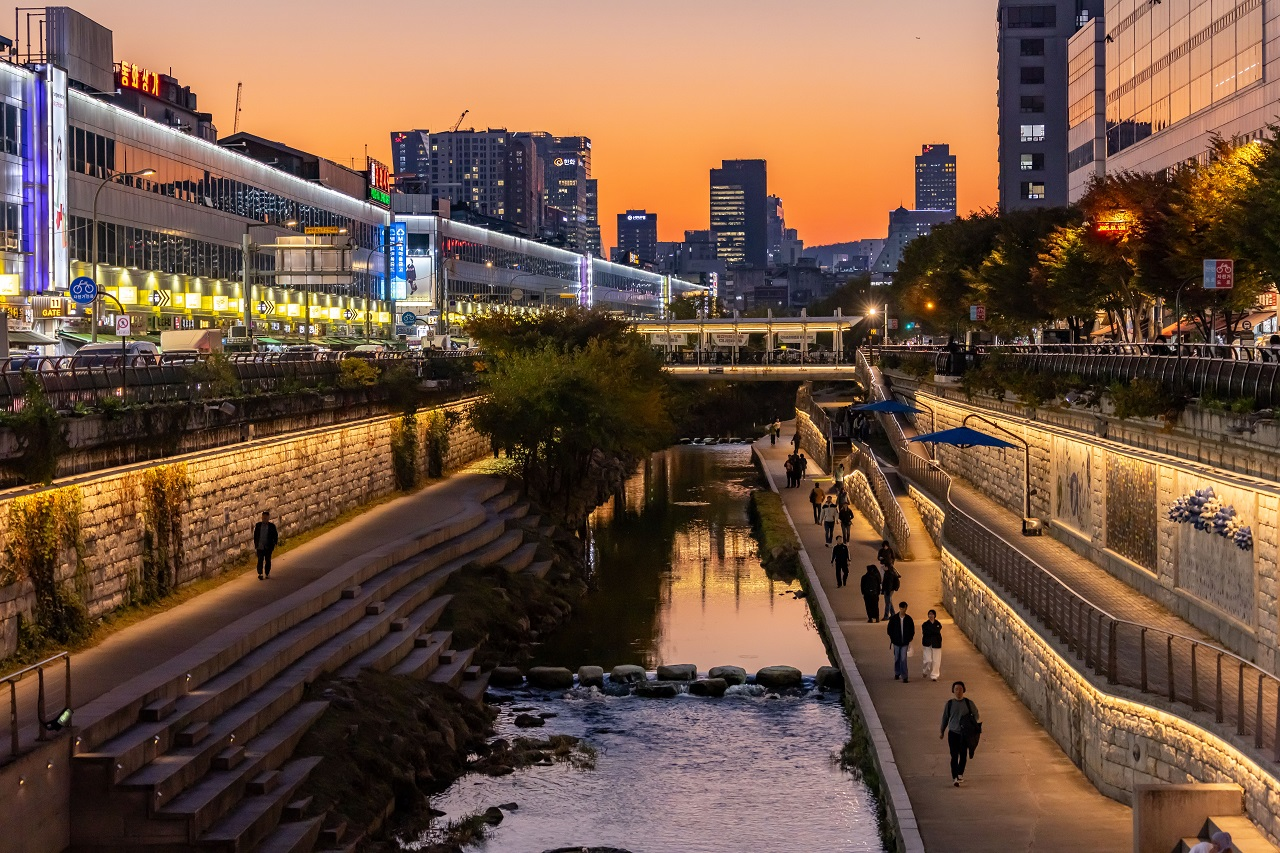
The stream buried under an elevated highway in the 1970s and restored in 2005 is a 5.8-kilometre linear park running through central Seoul. Walking it from Cheonggyecheon Plaza eastward takes you through a city that was smart enough to undo one of its own mistakes. From April 2026, the Seoul Outdoor Library occupies sections of the streamside walkway — free to use, with books to borrow, open Friday through Sunday.
Cheonggyecheon-ro, Jung-gu (western entrance near Gwanghwamun)
Gwanghwamun Station, Line 5, Exit 4
Naver Map →
Best Seoul Neighbourhoods to Explore in 2026
Seongsu-dong (성수동)
The neighbourhood most worth understanding in 2026. What was a leather-and-printing industrial zone a decade ago is now Seoul’s most creative district — converted factories, independent coffee shops, concept stores, and pop-up spaces that turn over faster than anywhere else in the city. HAUS NOWHERE, Gentle Monster’s 14-storey flagship installation that opened in 2025, is the current anchor: part retail, part immersive art space, unlike anything in conventional retail. The full Seongsu-dong guide explains how the neighbourhood is laid out and what makes it worth a half-day.
For dinner in the area, Seonchae Seongsu is a basement Korean dining bar near Ttukseom with a seasonal menu and considered drink pairings — one of the better reservations in eastern Seoul.
Gangnam (강남)
More than the song. Seoul’s wealthiest district contains Bongeunsa Temple (a working Buddhist temple between glass skyscrapers), COEX Mall underground, the city’s best pork barbecue streets, and a dining scene spanning every price point. The Gangnam guide covers the restaurants, cocktail bars, and the specific streets worth walking.
Insadong & Bukchon (인사동 · 북촌)
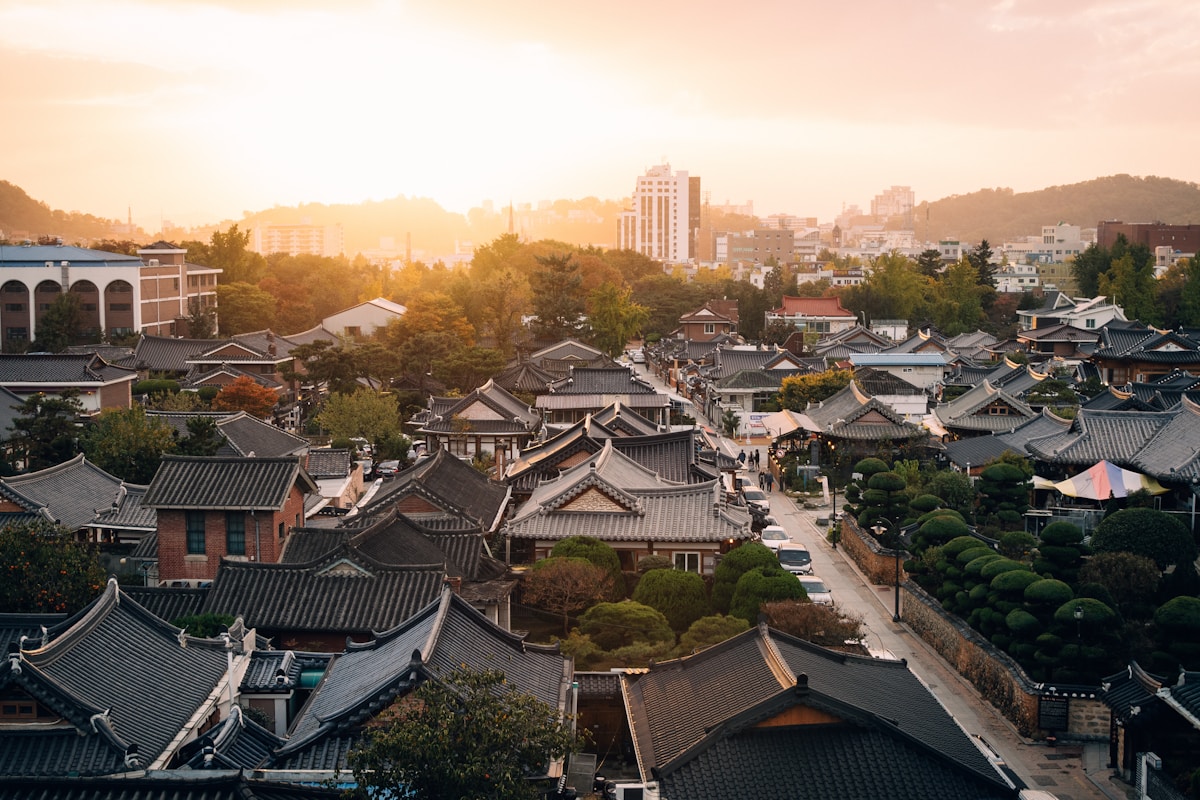
Insadong is the antique-market and gallery district — worth a morning for its craft shops, traditional tea houses, and ceramic vendors. Bukchon Hanok Village, uphill from Anguk Station, is a residential neighbourhood of preserved hanok wooden houses with narrow stone alleys and elevated views over the city. Visit on a weekday morning; weekend afternoons are crowded.
Bukchon-ro, Jongno-gu
Anguk Station, Line 3, Exit 2
Naver Map →
Hongdae & Yeonnam-dong (홍대 · 연남동)
Hongdae is Seoul’s student and arts district — street performers, live music venues, and the independent shops that survive because rent is lower than in Gangnam. Best experienced from early evening. Yeonnam-dong, immediately to the east, is quieter and increasingly the address for the city’s better independent coffee shops and small restaurants. Together they make a half-day into evening itinerary.
Outdoor Things to Do in Seoul: Parks, Mountains & the Han River
Bukhansan National Park (북한산국립공원)
Seoul’s own mountain, accessible by subway. Granite ridgelines, ancient Buddhist temples, and 600-year-old fortress walls — all above one of the world’s most densely built cities. The Bukhansan hiking guide covers the best trails by difficulty, what to bring, and the mid-trail ramyeon stall you should not skip.
N Seoul Tower & Namsan (N서울타워 · 남산)
Namsan Mountain sits in the geographic centre of the city. The cable car or a 40-minute walk from the base brings you to N Seoul Tower — the best elevated panorama of Seoul available to visitors. Worth the trip on a clear day; the surrounding park is one of the most pleasant places in the city for cherry blossoms in late March and early April.
105 Namsangongwon-gil, Yongsan-gu
Myeongdong Station, Line 4, Exit 3 + cable car, or walk from Chungmuro Station
Naver Map →
Han River Parks (한강공원)
The Han River parks running through central Seoul are where Seoulites go to decompress. Rent a bike at Yeouido, buy convenience store food and sit on the grass at Banpo, watch the Banpo Bridge Rainbow Fountain (runs spring through autumn at set times each evening), or catch a sunset from Mangwon. Free, open until midnight, and full of locals rather than tourists. The Hangang River Light Show runs through the first half of 2026 — LED drones, firework drones, and water drones in themed formations over the river.
Best Seoul Food Experiences: Markets, BBQ & Unique Dining
Food is not incidental to Seoul. It is the point.
Korean BBQ is the obvious starting point. Charcoal-grilled samgyeopsal or galbi at a proper table grill, with banchan, soju, and good company — the Korean BBQ guide explains the cuts, the etiquette, and how to navigate menus across different budgets.
Korean street food is best experienced at Gwangjang Market — Seoul’s oldest covered market — where bindaetteok (mung bean pancakes), mayak gimbap, and beef tartare come from vendors who have been at the same stalls for decades. The Korean street food guide covers what to order city-wide.
88 Changgyeonggung-ro, Jongno-gu
Jongno 5-ga Station, Line 1, Exit 8
Naver Map →
Noryangjin Fish Market is where the city’s chefs shop for live seafood, and one stall — Cheongyang Seafood — runs an ₩85,000 omakase built around whatever is freshest that morning. Full details in the Noryangjin omakase article.
Gopchang (grilled beef intestines) is one of Seoul’s most beloved late-night dishes and one of the most misunderstood. The place to start is Wonjomanlgobchang in Mullae — Hanwoo beef, garlic-stuffed intestines, and a 4.9-star rating from tens of thousands of visitors.
Seoul’s café scene is serious. Fritz Coffee Company in Mapo-gu is the specialist roaster worth going out of your way for. Seongsu-dong has the highest concentration of design-forward independent coffee shops in the city.
Craft makgeolli — fermented rice wine — is undergoing a genuine revival. Songnidan Yangjojangi in Songpa-gu brews in-house and pours the most interesting glass of it in the city.
For the full dining picture — from neighbourhood institutions to the Black Pearl and Blue Ribbon-listed tasting menus — the Seoul restaurant guide 2026 is the reference.
Seoul Art & Culture: Museums Worth Your Time
Seoul’s museum offer is stronger than most visitors expect. The National Museum of Korea in Yongsan is free, one of the largest museums in the world by floor area, and houses the most significant collection of Korean artefacts anywhere — Silla gold crowns, Goryeo celadon, and a Room of Quiet Contemplation with 6th-century Buddhist sculpture that stops people in their tracks. The War Memorial of Korea, also free, carries more weight for understanding modern Korea than anywhere else in the city. The Leeum Museum of Art in Hannam-dong is the strongest private art museum in Korea, with 36 National Treasures and a contemporary collection built around both Korean and international names.
All three are covered in detail in the Seoul museums guide.
Uniquely Seoul Experiences You Won’t Find Anywhere Else
Jjimjilbang (찜질방)
A heated public bathhouse where Koreans come to sweat, sleep on the floor, eat hard-boiled eggs cooked in the kiln rooms, and recover from the week. Entry costs ₩12,000–₩20,000 and covers unlimited time. It requires no Korean language ability, accepts solo visitors, and operates around the clock. The jjimjilbang guide covers how they work, what to bring, and which venues in Seoul are currently open.
Korean Baseball at Jamsil — Final Season (KBO)
A KBO game at Jamsil Baseball Stadium is one of the best ₩12,000 you will spend in Seoul: coordinated fan chants, backpack beer vendors pouring foam-topped cups at your row, fried chicken delivered by app, and a cheermaster conducting 25,000 people like an orchestra. 2026 is the final season at Jamsil before the stadium is demolished for redevelopment. LG Twins and Doosan Bears home games run April through October — this is worth prioritising if your dates align. The Korean baseball game guide covers tickets, seating, food, and the cheering culture.
10 Olympic-ro, Jamsil-dong, Songpa-gu
Jamsil Station, Lines 2 & 8, Exit 5 or 6
Naver Map →
Noraebang (노래방)
A private karaoke room — rented by the hour with your own group, no performance in front of strangers required. One of the most reliably enjoyable things to do in Seoul at 11 PM. Chains like Su Noraebang (수노래방) operate throughout the city; budget around ₩15,000–₩25,000 per person per hour including drinks. Coin noraebangs (동전노래방) offer single songs for a few hundred won if you want to try before committing.
Personal Colour Analysis (퍼스널컬러)
One of the most-booked visitor experiences in Seoul right now. Spend an hour with a professional stylist who uses fabric swatches to determine exactly which colour palette suits your skin tone — the results inform your shopping for the rest of the trip. Studios in Hongdae, Sinchon, and Gangnam run sessions in English; book at least a week ahead as good studios fill quickly. Prices range from ₩50,000–₩120,000.
Shopping in Seoul: K-Beauty, Marts & What to Buy
K-beauty is best experienced at its source. Myeongdong’s flagship stores, Olive Young pharmacy chains city-wide, and the concentrated beauty retailers in Seongsu-dong and Gangnam all carry formulations, tools, and products that are not exported. The K-beauty guide explains what to look for and how to navigate the options.
For a different kind of shopping, Korean hypermarkets earn their own visit. Lotte Mart, E-Mart, and Homeplus sell aged kimchi, gochugaru, anchovy stock, and snacks that make excellent luggage-friendly souvenirs. The mart attack guide covers the best Seoul locations and what to put in your basket — including the Lotte Mart ZETTAPLEX at Seoul Station, which connects directly to the AREX airport line.
2026-Specific Notes
A few things worth knowing that are particular to this year:
- Jamsil Baseball Stadium hosts its final KBO season. Catch a game before November.
- Seoul Festa (April 30 onward) is a large K-content and cultural tourism festival centred around Yeouido and the Han River parks — good timing if your trip overlaps.
- Seongsu-dong changes faster than any other neighbourhood in the city. Search 성수 팝업 on Instagram or Naver Map before you visit to see what has opened in the past month.
- Cherry blossoms peak in late March to early April, with the best viewing at Yeouido Hangang Park, Seokchon Lake (near Lotte World), and along the Cheonggyecheon. The cherry blossom guide covers timing and the best spots across Korea.
Seoul Travel Tips: Getting Around & Planning Your Visit
How many days do you need in Seoul? Three days covers the palaces, one or two key neighbourhoods, and a proper food circuit. Five to seven days lets you add Seongsu-dong, a day trip outside the city, a baseball game, and eat at a more relaxed pace. Ten or more days allows genuine depth — most first-timers leave wishing they had stayed longer. Seoul consistently rewards time invested, and almost every visitor underestimates how much is here.
Free things to do in Seoul — more than you might expect. Gyeongbokgung Palace costs just ₩3,000 (essentially free). Cheonggyecheon Stream, all Han River parks, Bukhansan National Park entry, the National Museum of Korea, the War Memorial of Korea, and Gwanghwamun Gate are all free. Neighbourhood walking in Bukchon, Insadong, Seongsu-dong, Hongdae, and Yeonnam-dong costs nothing beyond food and coffee.
Getting around: Seoul’s subway is easy to navigate with a T-money card loaded at any convenience store. For maps, skip Google — see Does Google Maps work in Korea? for why Naver Map and Kakao Map are the correct tools.
Before you arrive: For everything you need — SIM cards, currency, accommodation, etiquette, and what to pack — the Korea travel essentials guide covers it all. If this is your first time in Korea beyond Seoul, the first-timer’s guide to Korea gives a broader country-level orientation.
The Seoul Guide on this site maps the city’s best restaurants, cafés, nightlife, and activities in one interactive page — useful for planning routes by neighbourhood.
Frequently Asked Questions: Things to Do in Seoul
What are the best free things to do in Seoul?
Several of Seoul’s best experiences cost nothing. The National Museum of Korea, War Memorial of Korea, all Han River parks, Cheonggyecheon Stream, Gwanghwamun Gate, and Bukhansan National Park are all free. Neighbourhood walking in Bukchon Hanok Village, Seongsu-dong, Insadong, and Hongdae costs nothing. Gyeongbokgung Palace (₩3,000) is effectively free. Many of the most memorable things to do in Seoul require only transit fare and an appetite.
How many days do you need to see Seoul?
Three days covers the main highlights — a palace, two or three neighbourhoods, and a proper food experience. Five to seven days is the sweet spot for most visitors: enough time for Seongsu-dong, outdoor activities, a unique experience like a baseball game or jjimjilbang, and eating at a comfortable pace. Ten or more days suits those who want to explore the city at depth, take day trips, and discover the neighbourhoods beyond the tourist trail.
What is Seoul best known for?
Seoul is known for its Joseon-era royal palaces, K-beauty and K-pop culture, a world-class food scene ranging from market street food to tasting menus, efficient public infrastructure, and a unique blend of deep history and rapid modernity. It is also one of the safest major capitals in the world and one of the most liveable cities in Asia.
When is the best time to visit Seoul?
Spring (late March–May) and autumn (September–November) are the most consistently pleasant seasons — comfortable temperatures, lower humidity, and the cherry blossoms or autumn foliage as a backdrop. Summer (June–August) is hot and humid with a monsoon season in July, but offers beaches, festivals, and peak outdoor atmosphere. Winter (December–February) is cold but dry, and the city handles snow well. The best time to visit Korea breaks down all four seasons in detail.
What is the best area to stay in Seoul?
For first-timers: Myeongdong or Jongno for central access to palaces, shopping, and subway connections. Hongdae for nightlife and a younger vibe. Gangnam for business travel and the southern half of the city. Seongsu-dong is emerging as a boutique hotel destination for return visitors who want to be in the city’s most creative neighbourhood. All areas have excellent subway access to everywhere else.
Is Seoul easy to get around as a tourist?
Exceptionally so. The subway covers nearly every destination in this guide, is clearly signed in English, and a T-money card (loaded at any convenience store) works across subway, bus, and some taxis. Naver Map provides accurate public transport routing in English. Most restaurant menus have photos or English translations in tourist-heavy areas. Korean hospitality toward visitors is generally warm and helpful even without shared language.