There is a specific kind of Seoul afternoon that people who live here understand: you finish a coffee in a place that still feels like someone’s living room, step out into a tree-lined alley you don’t recognise, and realise it’s already past three. Yeonnam-dong is where that afternoon is most likely to happen.
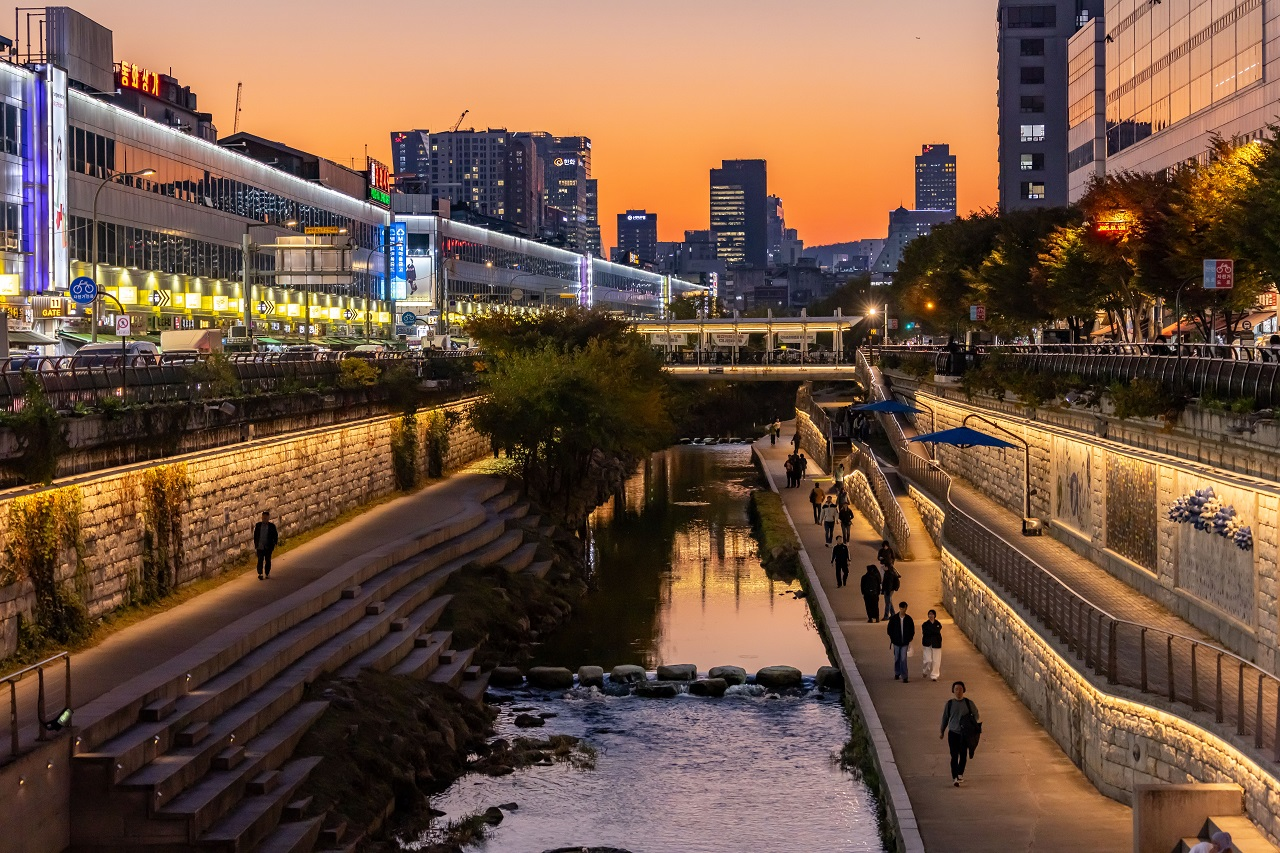
The neighbourhood sits in Mapo-gu, immediately north of Hongdae — close enough to share a metro station but different enough in character that locals treat it as a separate world. Where Hongdae runs loud and commercial, Yeonnam-dong runs quiet and residential. The streets are narrow, the buildings are low, the cats are numerous. Down the middle of the neighbourhood runs the Gyeongui Line Forest Path (경의선 숲길): a six-kilometre strip of park that was a railway line until 2014, converted into a green corridor that has become one of the best urban walks in the city. In spring, when the cherry trees along the path are in bloom, it becomes briefly one of the most beautiful places in Seoul.
The neighbourhood has been “discovered” by now — the cafés have Instagram accounts, the brunch spots fill on Saturday mornings, young Seoulites know exactly what Yeonnam-dong is for. But unlike Seongsu-dong, where the transformation is architectural and dramatic, Yeonnam-dong has absorbed its new identity quietly. It still feels like a place where people live. That is, increasingly, a rare quality in Seoul, and it is the reason people keep returning.
| Best for | Café-hopping, the Gyeongui Line walk, spring cherry blossoms, brunch |
| How long | Half day; full day in spring |
| Best time to visit | Weekday mornings or early afternoon; spring for the forest path |
| Getting there | Hongik University Station (홍대입구역), Line 2 / AREX, Exit 3 — 10 min walk north |
| Nearest areas | Hongdae (10 min walk south), Mangwon-dong (15 min walk west) |
How to Get to Yeonnam-dong
By Metro: The most convenient access is Hongik University Station (홍대입구역), served by Line 2 (the green circular line), AREX (the airport express), and the Gyeongui-Jungang Line. From Exit 3, walk north along Donggyo-ro for around ten minutes and you cross into Yeonnam-dong without any obvious announcement — the streets simply get quieter and the buildings get shorter.
From central Seoul (City Hall, Myeongdong), Hongik University Station is approximately 20 minutes on Line 2. From Incheon Airport, the AREX express takes around 45 minutes directly to Hongik University Station.
Alternatively, Seogangdae Station (서강대역) on the Gyeongui-Jungang Line puts you at the eastern edge of the neighbourhood, a few minutes’ walk from the forest path.
By Taxi: From central Seoul, ₩9,000–13,000. Kakao T is reliable; give the driver the Korean name 연남동 or a specific café name rather than a street address.
Understanding Yeonnam-dong: Key Streets and Areas
Yeonnam-dong doesn’t have a single main strip — it is a patchwork of side streets that rewards walking without an agenda. The broad shape of the neighbourhood is determined by two reference points.
Gyeongui Line Forest Path (경의선 숲길) runs diagonally through the neighbourhood from northeast to southwest and functions as Yeonnam-dong’s de facto spine. Most of the neighbourhood’s café and restaurant life clusters within a few minutes’ walk of the path on either side.
Seongmisan-ro (성미산로) and Donggyo-ro (동교로) and their branching side streets are where the density of independent cafés and restaurants is highest. These blocks have the character most associated with Yeonnam-dong: two-storey buildings, hand-painted signs, small front gardens, ground-floor cafés visible directly from the pavement.
The whole neighbourhood is compact. Walking from one end to the other takes under twenty minutes — exactly the right amount of time to feel like you have explored it.
경의선 숲길 (Gyeongui Line Forest Path): The Neighbourhood’s Defining Feature
No other space in Seoul quite resembles the Gyeongui Line Forest Path. It runs six kilometres through the middle of a dense residential district, built on the former right-of-way of a railway that once connected Seoul to Sinuiju in what is now North Korea. The tracks were rerouted underground in 2014. What replaced them — a planted corridor of trees, grass, benches, and slow pedestrian space — has become one of the most used public spaces in the city, nicknamed 연트럴파크 (Yentral Park, a play on Central Park) by locals.
The Yeonnam section (연남 구간) is the section most visitors come for. It runs roughly 1.8 kilometres and is the widest and most planted part of the path, with a double row of cherry trees that became famous almost as soon as they matured. The path is genuinely flat — notable in a city that is otherwise almost entirely hills — and accessible for prams and wheelchairs.
Several weekend markets and pop-up vendors operate along the path between April and October: handmade goods, seasonal food, and independent design brands that prefer a market table to a shopfront. These rotate and are not consistent week-to-week.
Cherry Blossoms on the Gyeongui Line Forest Path
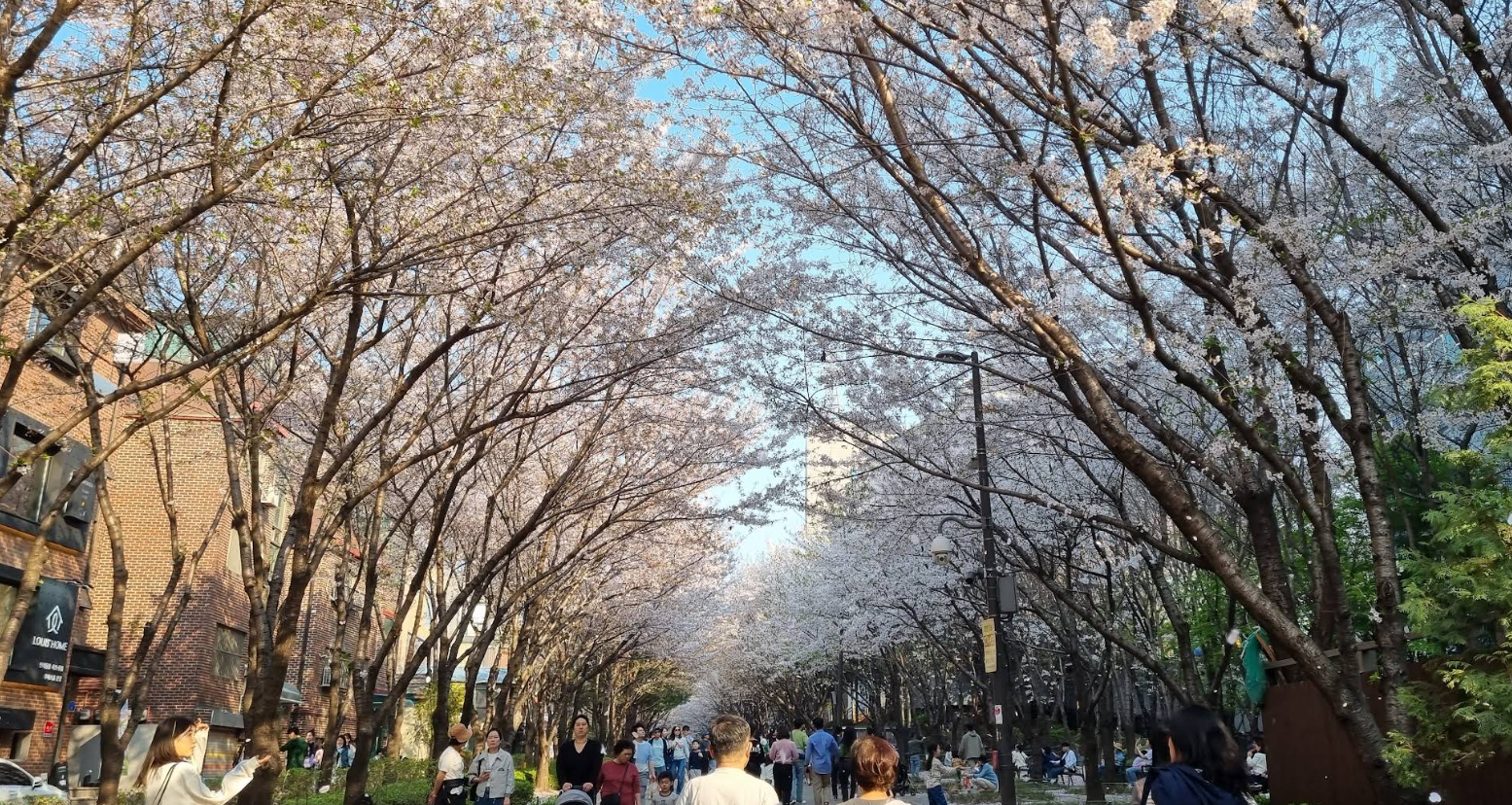
The cherry trees on the Yeonnam section were planted during the conversion of the railway corridor and are now mature enough to form a proper canopy. Peak bloom is typically in the first or second week of April — a window that shifts year to year, so checking the Korea Meteorological Administration forecast before visiting is worthwhile.
At full bloom, the path is spectacular by the standards of a dense city neighbourhood. The branches meet overhead in the wider sections, and the combination of the pink canopy, the human-scaled buildings alongside, and the absence of traffic makes it feel disconnected from the scale of the rest of Seoul.
Arriving before 10am on a weekday during peak bloom gives you the path largely to yourself. Weekend afternoons during cherry blossom season are genuinely crowded — enjoyable for the atmosphere, less so if you want a quiet walk.
For the broader cherry blossom context across Seoul and Korea, see the Korea cherry blossom guide.
Best Cafés in Yeonnam-dong
The café scene here covers everything from internationally recognised specialty chains to small neighbourhood locals. The best Yeonnam cafés tend toward comfort and space rather than concept and drama — high ceilings, second floors with windows, terraces that open in spring.
블루보틀 연남 (Blue Bottle Coffee Yeonnam)
Blue Bottle’s Yeonnam location is the most architecturally considered of the brand’s Seoul branches. The two-storey building at 52 Seongmisan-ro 32-gil was designed to reinterpret the texture of the old Yeonnam-dong alleyways — exposed brick, vintage pipe details, long benches that reference the neighbourhood’s street furniture — while floor-to-ceiling windows make the interior feel continuous with the outside. The basement level has a different atmosphere to the ground floor: lower ceilings, more contained, better for a longer sit.
The coffee quality is consistent across Blue Bottle locations; what distinguishes the Yeonnam branch is the space and its position — a short walk from the forest path, in a block that still feels genuinely residential.
Hours: Mon–Thu 9:00am–9:30pm | Fri–Sun 8:30am–9:30pm · 52 Seongmisan-ro 32-gil
커피냅로스터스 (Coffee Nap Roasters)
A glasshouse-style café on Seongmisan-ro 27-gil that has become one of the most consistent neighbourhood regulars in the area — popular with both locals and visitors. The roasting is done on-site and the approach is to offer three distinct flavour profiles at any given time, presented with actual tasting notes. The glasshouse structure means exceptional light in the morning and early afternoon; the space fills quickly from Saturday noon onwards. On weekday mornings it is quiet enough to work in.
Hours: Mon–Fri 10:00am–5:30pm | Sat–Sun 10:00am–8:00pm · 70 Seongmisan-ro 27-gil
턴다운서비스 (Turndown Service)
A vinyl record café that functions differently from everything else in the neighbourhood. The concept is a hotel turndown service transposed into a café: the space is designed for slowing down, the music is always analogue, and the signature drink — espresso with a peanut cream topping — is the kind of thing that sounds gimmicky until you have it. The late hours on weekdays (open until 11pm) make it one of the few Yeonnam-dong venues that works as an evening destination.
Hours: Mon–Fri 10:00am–11:00pm | Sat–Sun 12:00pm–11:00pm · 7 Donggyo-ro 50-gil
커피 리브레 연남점 (Coffee Libre Yeonnam)
Coffee Libre is the roaster that started the independent specialty coffee movement in Korea — led by Pil-hoon Seo, the first Korean to earn Q-grader certification. The Yeonnam branch occupies a converted traditional market space that gives it more character than most of the brand’s locations. The coffee is serious and the blends are designed for complexity: their Bad Blood blend is consistently cited as one of the more distinctive espresso profiles in the city. A necessary stop if you want to understand what Korean specialty roasting is about.
Hours: Daily 11:00am–9:00pm · 20-5 Seongmisan-ro 32-gil
Along the Forest Path
The cafés immediately adjacent to the Gyeongui Line Forest Path operate by different logic from the residential street cafés: they face the park, have outdoor seating that fills first, and in spring are genuinely packed. The best approach is to walk the path, see which terraces have seats, and go in. Oats Coffee (오츠커피) at 29-8 Seongmisan-ro 29-gil is a reliable stop, as is Peace Piece at 91 Donggyo-ro 51-gil — a second-floor café with window seats and good pies and fruit drinks.
For takeaway coffee on the path itself, independent carts and small counter-service spots set up along the Yeonnam section on weekends from late March through October.
Where to Eat in Yeonnam-dong
The restaurant scene here is considerably more eclectic than in most Seoul neighbourhoods — a high concentration of Asian independents (Thai, Japanese, Vietnamese, Chinese) alongside Korean options, reflecting the tastes of the residents who moved here and the rents that let small operations stay. Most places are in the Donggyo-ro and Seongmisan-ro side streets within ten minutes of Hongik University Station Exit 3.
소이연남 (Soi Yeonnam) — Thai
The most consistent recommendation for Thai food in western Seoul. The kitchen produces rice noodles and soups with real depth — the beef rice noodles (₩12,000) and tom yum rice noodles (₩12,000) are the dishes to start with. The Soi spring rolls (₩14,000) and som tam (₩13,000) are worth adding. Naver booking is reliable for lunch slots; weekends fill quickly.
Hours: 11:00am–10:00pm
니시무라멘 연남본점 (Nishimura Ramen) — Ramen
A Michelin Guide-selected ramen restaurant in a fourth-floor space above Donggyo-ro 265 — the kind of address that requires actually looking for it. The broth is rich and properly developed; the noodles are chewy in the way that Japanese ramen rarely achieves in Seoul. Walk-in only; arrive before noon on weekdays to avoid a queue.
Hours: 11:30am–9:00pm · 4F, 265 Donggyo-ro
미쁘동 (Mippeudong) — Seafood Rice Bowls
A lunch-focused restaurant built around visually elaborate seafood rice bowls. The signature 미쁘동 bowl (₩15,000) features nine toppings arranged over rice and eats as generously as it looks. The tomato salmon noodles (₩20,000) are a strong alternative. Reservations via KakaoTalk are possible; walk-ins are manageable before noon.
Hours: 11:00am–10:00pm (last order 9:30pm) · 33-21 Donggyo-ro 38-gil
연하동 (Yeonhadong) — Japanese
A small Japanese restaurant specialising in salmon sushi and karaage. The salmon sushi 4pc (₩13,000) and karaage bowl (₩12,500) are the consistent orders; the King karaage (₩20,500) is worth ordering for a group. Featured on television programmes, which has brought it a wider following than its size suggests. Walk-in only; go early or expect a queue.
Hours: 11:30am–9:00pm · Donggyo-ro 38-gil
연남토마 (Yeonnam Toma) — Fusion Pasta
A converted-house restaurant popular as a date spot — the carefully considered residential interior makes the pasta taste better than it has any right to. The wagyu cream pasta (₩18,000) and pollack roe basil oil pasta (₩17,000) are the signature dishes. Phone booking recommended for weekend dinners.
Hours: 11:30am–10:00pm
연남장 (Yeonnamjang) — Market and Food Hall
A converted building at 239 Seongmisan-ro that functions as a market, food hall, and event venue. On weekend afternoons the courtyard fills with independent food vendors, craft sellers, and occasional live performances. The food inside varies week to week; arrive, see what’s on, and eat accordingly.
Things to Do in Yeonnam-dong Beyond Cafés
Walk the Forest Path End to End
The most rewarding way to spend time in Yeonnam-dong is to walk the Gyeongui Line Forest Path from the Hongdae end toward Gajwa, stopping when something looks interesting and backtracking when you find a café worth trying. The full Yeonnam section takes around 25 minutes at a steady pace; two hours if you do it properly.
Independent Shops and Design Spaces
The alleys immediately flanking the forest path have a concentration of independent design shops, bookstores, and small galleries that take an afternoon to find properly. There is no aggregated list that stays reliably current — the turnover is real — but the method is: walk slowly, look at ground floors, go in when something is interesting.
Combine with Mangwon-dong
Mangwon-dong is a 15-minute walk west from the Yeonnam section of the forest path. The walk between the two neighbourhoods passes through genuinely residential Seoul — dry cleaners, school gates, pojangmacha — and is worth doing in itself. The Mangwon-dong café guide covers where to go once you arrive.
Practical Tips for Visiting Yeonnam-dong
When to go: Spring (late March through April) and autumn (October–November) are the most compelling seasons. Summer is humid but manageable in the morning. Winter is cold but the cafés are warm and significantly less busy.
Weekday vs. weekend: Weekday mornings (Tuesday–Thursday, before noon) are the neighbourhood at its calmest. Weekend afternoons bring the Seoul brunch crowd and make seating competitive at the better-known cafés. The forest path is enjoyable any time; crowds during peak cherry blossom weekends are dense but not unmanageable.
How long to spend: A half day covers the forest path, two or three café stops, and lunch. A full day — combining Yeonnam-dong with a walk to Mangwon or a detour south to Hongdae — is the better use of the area.
Getting around: Entirely walkable. The neighbourhood is flat and the forest path is the best walking infrastructure in Mapo-gu.
Language: More Korean-only than tourist-adjacent Seoul areas. Google Translate’s camera function handles menus reliably.
Payment: Card is accepted everywhere. Smaller vendors on the forest path and at weekend markets may be cash-only; ₩20,000–30,000 in cash is adequate cover.
Yeonnam-dong, Mapo-gu, Seoul
Hongik University Station (홍대입구역), Line 2 / AREX / Gyeongui-Jungang Line, Exit 3 — 10 min walk north
Naver Map →
Frequently Asked Questions: Yeonnam-dong Seoul
What is Yeonnam-dong known for?
Yeonnam-dong is known for its residential, tree-lined character, the Gyeongui Line Forest Path (경의선 숲길), independent cafés, and spring cherry blossoms. It sits immediately north of Hongdae in Mapo-gu and is nicknamed 연트럴파크 (Yentral Park) by locals for the forest path that runs through its centre.
How do I get to Yeonnam-dong from central Seoul?
Take Seoul Metro Line 2 to Hongik University Station (홍대입구역) and walk north from Exit 3 for around 10 minutes. From central Seoul (City Hall, Myeongdong), the journey takes approximately 20 minutes on Line 2. From Incheon Airport, the AREX express goes directly to Hongik University Station in approximately 45 minutes.
When is the best time to visit Yeonnam-dong?
Spring (late March through April) is the most compelling season, when the cherry trees along the Gyeongui Line Forest Path are in full bloom. Weekday mornings during peak bloom give you the path largely to yourself. Autumn (October–November) is also excellent. Year-round, Tuesday through Thursday mornings are the least crowded time.
What is the Gyeongui Line Forest Path (경의선 숲길)?
The Gyeongui Line Forest Path is a six-kilometre linear park built on a former railway corridor. After the tracks were rerouted underground in 2014, the old right-of-way was converted into a planted walking path through several Seoul neighbourhoods. The Yeonnam section (약 1.8km) is the widest and most heavily planted, with cherry trees that form a canopy at peak bloom. It is nicknamed 연트럴파크 by locals.
What are the best cafés in Yeonnam-dong?
The standouts are Blue Bottle Coffee Yeonnam (52 Seongmisan-ro 32-gil, two-storey with floor-to-ceiling windows), Coffee Nap Roasters (glasshouse-style, in-house specialty roaster), Turndown Service (vinyl record café, open until 11pm), and Coffee Libre Yeonnam (Korea’s pioneering specialty roaster, serious espresso).
Is Yeonnam-dong worth visiting if you’re already going to Hongdae?
Yes — and it is the better neighbourhood for an actual morning or afternoon. Hongdae is primarily an evening destination: bars, live music, nightlife. Yeonnam-dong is where you go for the café experience, the forest path, and the residential Seoul atmosphere. The two areas are a 10-minute walk apart and pair well as a full day.
How does Yeonnam-dong compare to Seongsu-dong?
They are different in almost every way. Seongsu-dong is industrial, dramatic, pop-up-driven, and changes week to week. Yeonnam-dong is residential, quiet, relatively stable in its character, and rewards slow exploration. Seongsu is better for pop-up culture and concept stores; Yeonnam is better if you want a neighbourhood that feels like a neighbourhood.