
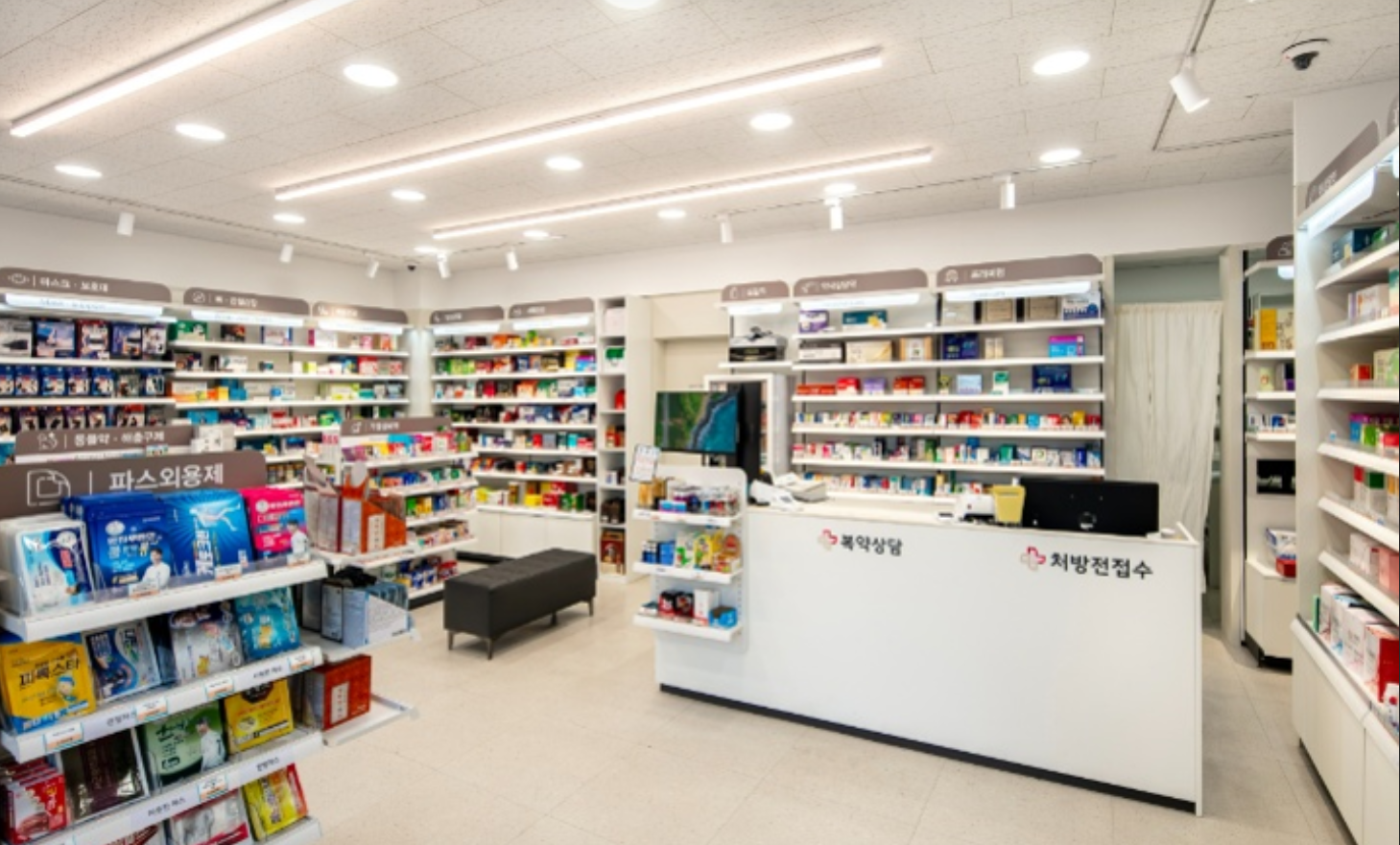
Somewhere between your Olive Young haul and your Daiso run, add a stop most first-time visitors overlook: the local pharmacy. Walk into one of the big foreigner-facing pharmacies in Myeongdong on any afternoon and you’ll see suitcases parked by the door, a display shelf near the entrance stocked entirely in English, Chinese and Japanese, and a line of visitors asking a white-coated pharmacist to recommend something for a scar, a hangover, or jet-lagged skin.
It’s become a proper trend — foreign-tourist spending at Korean pharmacies jumped more than tenfold year on year in the first half of 2026, and pharmacies have now overtaken convenience stores as the country’s top foreign-tourist shopping category. But you don’t need the numbers to enjoy it. This is a guide to doing a K-pharmacy tour of your own: what’s worth buying, exactly where to go in Seoul and Busan, and how to shop one without speaking a word of Korean.
In this guide:
- Why bother visiting a pharmacy?
- What to buy
- How to spot a pharmacy
- Where to go in Seoul
- Where to go in Busan
- How to shop like a local
- Is it worth it? An honest take
- Quick reference
- Frequently asked questions
Why bother visiting a pharmacy?
A Korean pharmacy — a real, licensed 약국 (yakguk) — isn’t the sterile prescription counter you might picture. In tourist districts it now works like a hybrid of a drugstore, a skincare shop, and a walk-in clinic, and there are a few very practical reasons to make time for one.
There’s an expert behind the counter. This is the whole point, and the thing a beauty store can’t match. Korean pharmacists are licensed medical professionals, and the tourist-area ones increasingly consult in English, Chinese or Japanese. You describe a skin concern, a sore throat, or a rough night out, and you walk away with an actual professional recommendation instead of a guess based on packaging.
It solves real travel problems. Jet lag, sunburn, blisters from a day of walking Seoul’s hills, an upset stomach from too much street food — these are the things that actually derail a trip, and a pharmacy fixes them for a few thousand won. That usefulness is why the habit tends to stick for the rest of the holiday.
The skincare is genuinely different. Korean pharmacies stock pharmacy-exclusive dermocosmetics — think PDRN (salmon-DNA) creams and sheet masks, or centella-based redness treatments — that sit somewhere between an ordinary drugstore find and a dermatology-clinic product. If you’re curious about Seoul’s dermatology clinics but don’t want to book a procedure, this is the accessible middle ground: similar active ingredients, no appointment.
The everyday medicine is cheap and effective. Korea’s over-the-counter basics — painkillers, cold remedies, muscle patches — are famously good and often noticeably cheaper than the equivalent back home. It completes the shopping circuit that Koreans now shorthand as “올영, 다이소, 무신사, 약국” (Olive Young, Daiso, Musinsa, and the pharmacy): the pharmacy fills the medicine-cabinet gap the other three don’t.
What to buy
This is the part worth screenshotting before your trip. Korean pharmacies split roughly into three baskets: cheap, effective medicine-cabinet staples; premium pharmacy-only skincare; and the scar creams that started the whole trend.
Scar & skin-repair creams — the category that started it all
- Madecassol (마데카솔) — a centella asiatica (병풀) ointment that’s been a Korean household staple for wound healing and scar prevention since 1970 — over half a century. The single most iconic item in this category, and most people’s first buy.
- Fucidin (후시딘) — an antibiotic ointment for cuts and early-stage wounds, sold alongside Madecassol as Korea’s other “national ointment.” A pharmacist will often ask what kind of wound you have before pointing you to one or the other.
- EGF (epidermal growth factor) creams — for use after acne, blemishes or minor scars have mostly healed, to fade lingering redness and pigmentation.
- Bepanthen (비판텐) — a dexpanthenol (vitamin B5) cream for general skin repair and irritation, gentle enough for daily use.
Premium pharmacy-only skincare
The “beauty destination” side of the trend: PDRN creams and ampoules, PDRN sheet masks, and brightening or redness-focused serums. These are cosmeceuticals formulated with clinic-grade active ingredients but sold without a prescription — a good pick if you want a skincare-focused buy you can’t get at Olive Young. Fair warning: they’re priced closer to skincare than to medicine, so treat them as a treat rather than an essential.
Everyday medicine-cabinet basics
- Painkillers — ibuprofen-based options (이지엔6 and similar) and Tylenol, usually cheaper than at home and worth stocking up on.
- Cold & digestive remedies — Korean formulations tourists haven’t tried before, and constant favourites in online hauls.
- Hangover remedies — a genuinely popular category given how central drinking is to a Korean night out. Ask the pharmacist rather than guessing at the packaging.
- Muscle patches (파스) — adhesive pain-relief patches for sore feet and legs after a day of walking, and a classic gift to bring home for parents.
- Health supplements — high-dose vitamins, probiotics, omega-3 and lutein come up again and again, often at lower prices than abroad.
Before you stock up: some Korean OTC medicines contain ingredients that are restricted or prescription-only elsewhere. If you plan to bring medicine home in any real quantity, check your home country’s customs rules first — the tourist-facing pharmacists below are used to this question and can flag anything likely to cause trouble at the border.
How to spot a pharmacy
Once you know the signs, pharmacies are easy to pick out — they’re on nearly every block. Look for these:
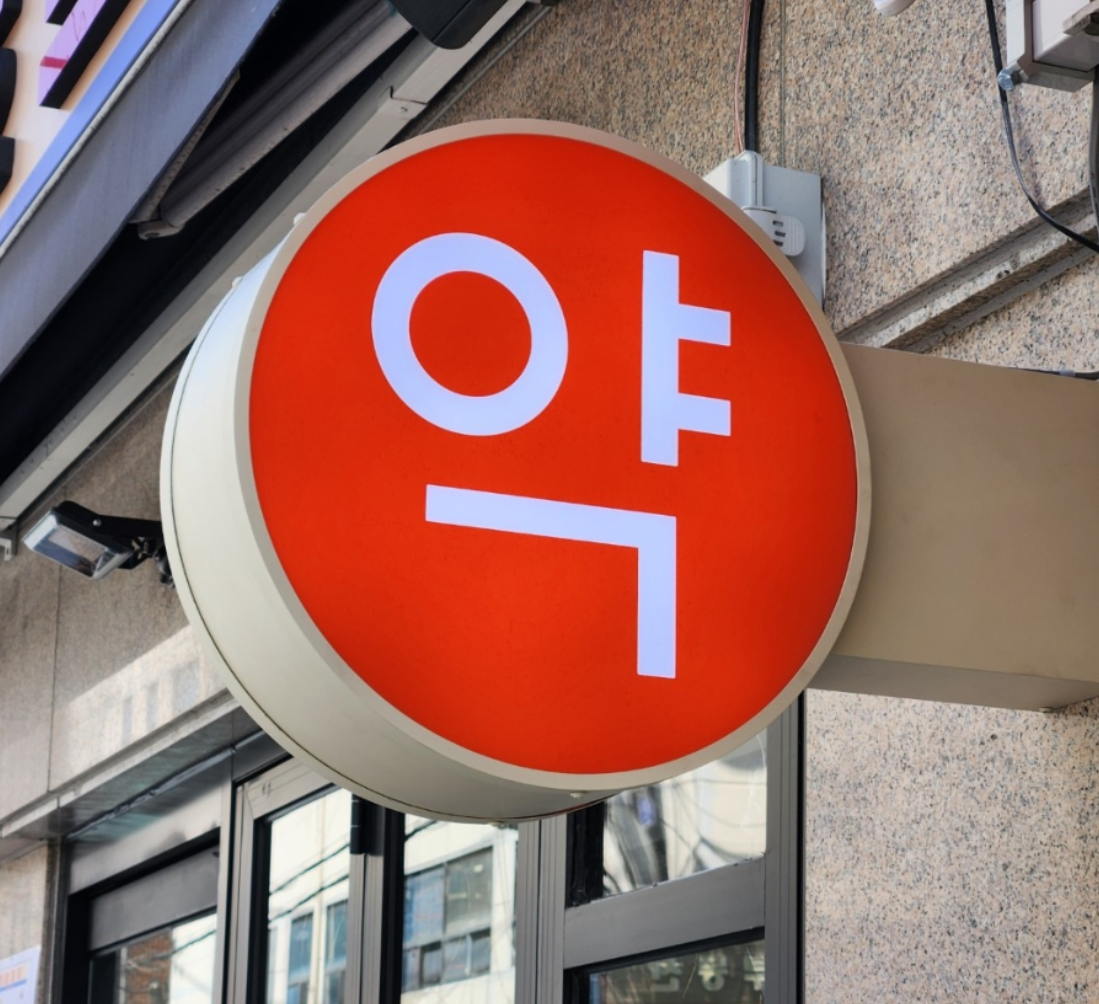
- The word 약 (yak) or 약국 (yakguk). This is the giveaway. 약 literally means “medicine,” and you’ll see it in large type on the storefront, often glowing in a lit sign. If a shop’s sign shows that single character, it’s a pharmacy.
- A cross symbol — usually green, sometimes red. Most Korean pharmacies display a cross sign, most often green (occasionally red), sometimes lit and sometimes as a small hanging board. Paired with the 약 character, it’s an unmistakable marker.
- Multilingual signs on tourist-facing stores. In Myeongdong, Hongdae and Busan’s shopping strips, the foreigner-facing pharmacies also add signs reading “Pharmacy,” “약국,” “藥局,” or “薬局” for English, Chinese and Japanese readers, plus a “popular with tourists” shelf visible from the door.
- A white-coated pharmacist inside. Unlike a beauty store, there’s always a licensed pharmacist behind a dispensing counter — the clearest sign you’re in the right place.
One thing to know: a pharmacy (약국) is not the same as a drugstore-beauty chain like Olive Young, and it’s separate from a hospital or clinic. If you only see cosmetics and no dispensing counter, you’re in a beauty shop, not a pharmacy.
Where to go in Seoul
Myeongdong is the epicentre. Around 30 pharmacies in the district now actively cater to foreign visitors, many with a “popular with tourists” shelf right at the door and trilingual signage throughout.
- Ready Young Pharmacy (레디영약국), Myeongdong — a short walk from Myeongdong Station Exit 6, and the flagship name of this trend. It runs more like a K-beauty-and-wellness store than a corner pharmacy: testers to try before you buy, English/Chinese/Japanese-speaking staff, on-site tax refund, and WOWPASS support. Late hours (roughly 10:00–00:30 daily) make it an easy after-dinner stop. A second Ready Young branch in Seongsu adds an AI-assisted skin diagnostic — a fun tie-in with the neighbourhood’s popup culture.
- Pure Pharmacy (퓨어약국), Myeongdong branch — another tourist-oriented pharmacy right by the station, regularly recommended for its accessibility and English support.
- Hongdae and Gangnam have a growing number of pharmacies fitted out for foreign shoppers too — same trilingual signage and tax-refund service — and are worth a stop if Myeongdong isn’t on your route.
If you’d rather plan ahead, the travel platform Creatrip now has a dedicated pharmacy category, with partner stores across Myeongdong, Hongdae, Gangnam and Busan that offer in-store consultations with a licensed pharmacist, multilingual support, tax refunds, and international card and WeChat Pay acceptance.
Where to go in Busan
The trend isn’t Seoul-only. Busan’s Seomyeon and Haeundae’s Gunam-ro — both major foreign-visitor shopping strips — have seen large-format pharmacies open right on the tourist walking route, mirroring what happened in Myeongdong. Haeundae-gu alone drew 637,919 foreign visitors in May 2026, and local coverage now treats a Busan pharmacy stop as an essential part of the shopping route rather than a Seoul curiosity. If your trip includes Busan, work a Seomyeon or Haeundae pharmacy into your afternoon exactly as you would in Myeongdong.
How to shop like a local
- Bring your passport. Tourist-oriented pharmacies that offer tax refunds need it at checkout, same as any tax-free purchase in Korea.
- Ask the pharmacist — don’t just browse. The professional behind the counter is the entire advantage over a beauty store. Describe what you actually need (a scar, a sunburn, a sore throat) instead of picking blind off the shelf.
- Use the foreigner-facing stores for English support, but don’t rule out an ordinary neighbourhood pharmacy if you’re off the tourist track — prices are typically lower, even if you’ll be leaning on packaging and a translation app.
- Compare before you commit on the basics. Some staples (painkillers especially) are cheaper at a convenience store — save your pharmacy budget for scar creams, premium dermocosmetics, and anything you’d want an expert opinion on.
- Buy medicine in sensible, personal-use quantities, and check import rules before buying in bulk for friends and family.
- Pair it with a beauty stop. Most tourist-facing pharmacies sit minutes from an Olive Young or Daiso, so it’s easy to fold into one shopping loop — the same logic as our Korea Mart Attack guide applies to hypermarkets.
Is it worth it? An honest take
Short version: yes, and it costs almost nothing to try. Unlike a lot of 2026’s viral shopping trends, there’s no queue, no purchase cap, and no resale market — you walk in, describe what you need, and walk out with something genuinely useful, usually for a few thousand won.
What’s genuinely good: the pharmacist consultation is real value you won’t get at a beauty store, the everyday medicine is noticeably cheaper than at home, and the scar-and-repair creams — Madecassol above all — have decades of track record behind the hype.
What to temper: the premium dermocosmetic lines are priced like skincare, so treat them as a beauty splurge rather than an essential — and if you’re stocking up on medicine to take home, spend five minutes on your destination’s import rules first, since ingredient names and regulations differ.
The pragmatic version: don’t build a whole day around it, but do treat a pharmacy stop as a normal part of your Myeongdong, Hongdae, Seongsu or Busan route — the same way you’d already plan to hit Olive Young or Daiso. For more of what’s driving Korea’s current shopping trends, see our guides to Daiso’s sold-out mania and MU:DS museum goods.
Quick reference
| What | Details |
|---|---|
| What it is | Treating a licensed Korean pharmacy (약국) as a shopping and wellness stop, alongside Olive Young, Daiso and Musinsa |
| Why go | A licensed pharmacist to ask; pharmacy-only skincare; cheap, effective OTC basics; fixes real travel problems (jet lag, sunburn, blisters) |
| Best buys — repair creams | Madecassol (마데카솔), Fucidin (후시딘), EGF creams, Bepanthen (비판텐) |
| Best buys — premium skincare | PDRN creams, ampoules and sheet masks; brightening/redness serums |
| Best buys — everyday basics | Painkillers (이지엔6, Tylenol), cold/digestive remedies, hangover remedies, muscle patches (파스), vitamins, probiotics, omega-3 |
| Where — Seoul | Myeongdong (~30 tourist-facing pharmacies), plus Hongdae, Seongsu and Gangnam |
| Named pharmacies | Ready Young Pharmacy (Myeongdong, near Exit 6, daily ~10:00–00:30; Seongsu branch with AI skin diagnostics); Pure Pharmacy, Myeongdong |
| Where — Busan | Seomyeon and Haeundae’s Gunam-ro |
| Booking help | Creatrip’s dedicated pharmacy category — partner stores in Myeongdong, Hongdae, Gangnam and Busan with licensed-pharmacist consultations and multilingual support |
| Good to know | Bring your passport for tax refunds; check home-country import rules before buying medicine in bulk |
| Related trends | Daiso’s sold-out mania, MU:DS museum goods, Korea Mart Attack guide |
Frequently asked questions
What’s the point of shopping at a pharmacy in Korea? Two things you can’t get at a beauty store: a licensed pharmacist who’ll recommend something specific for your skin, symptoms or supplements, and pharmacy-exclusive dermocosmetics (like PDRN creams and sheet masks). Add cheap, effective everyday medicine and it’s become one of the four core stops in Korea’s foreign-tourist shopping circuit, alongside Olive Young, Daiso and Musinsa.
What should I actually buy? Start with the scar-and-repair creams that made the category famous — Madecassol and Fucidin especially — then look at premium pharmacy-only skincare like PDRN creams and sheet masks if you want a skincare-focused buy. For everyday basics, painkillers, cold and digestive remedies, muscle patches, and vitamins are all cheaper and often more effective than what tourists find at home.
How is this different from shopping at Olive Young? Olive Young is a multi-brand beauty retailer — more like a curated drugstore. A Korean pharmacy is a licensed medical business with an actual pharmacist on staff, which is exactly why the trend exists: you get a professional recommendation instead of guessing from packaging, plus products Olive Young doesn’t stock.
Which pharmacies are best for tourists? Ready Young Pharmacy in Myeongdong (with a second branch in Seongsu) and Pure Pharmacy’s Myeongdong branch are the most consistently recommended — English/Chinese/Japanese support, tax refunds, and late hours. Creatrip’s pharmacy category lists more partner stores across Myeongdong, Hongdae, Gangnam and Busan.
Is it only in Seoul? No. Busan’s Seomyeon and Haeundae’s Gunam-ro have large tourist-facing pharmacies too, and local coverage now treats pharmacy shopping as an essential part of Busan’s foreign-visitor route.
Do I need to speak Korean? Not at the tourist-facing pharmacies covered here — English, Chinese and Japanese support is the norm across the Myeongdong, Hongdae, Gangnam and Busan stores. At an ordinary neighbourhood pharmacy, a translation app is a good backup.
Can I bring Korean medicine home? For personal-use quantities of common OTC items, generally yes — but rules vary by country and by ingredient. If you’re buying in bulk, check your destination’s customs and medicine-import rules before you shop, and ask the pharmacist if anything needs special handling.
The pattern underneath the K-pharmacy tour is a familiar one in Korean travel right now: a place Koreans have always used gets rediscovered by visitors and turns out to be better than the version built for tourists. A pharmacist’s advice beats a guess from packaging, a half-century-old scar ointment beats a marketing claim, and a stop that costs a few thousand won and ten minutes might just be the most useful thing you buy on the whole trip. Slot it into your Myeongdong or Haeundae route the same way you’d already plan for Olive Young or Daiso.


