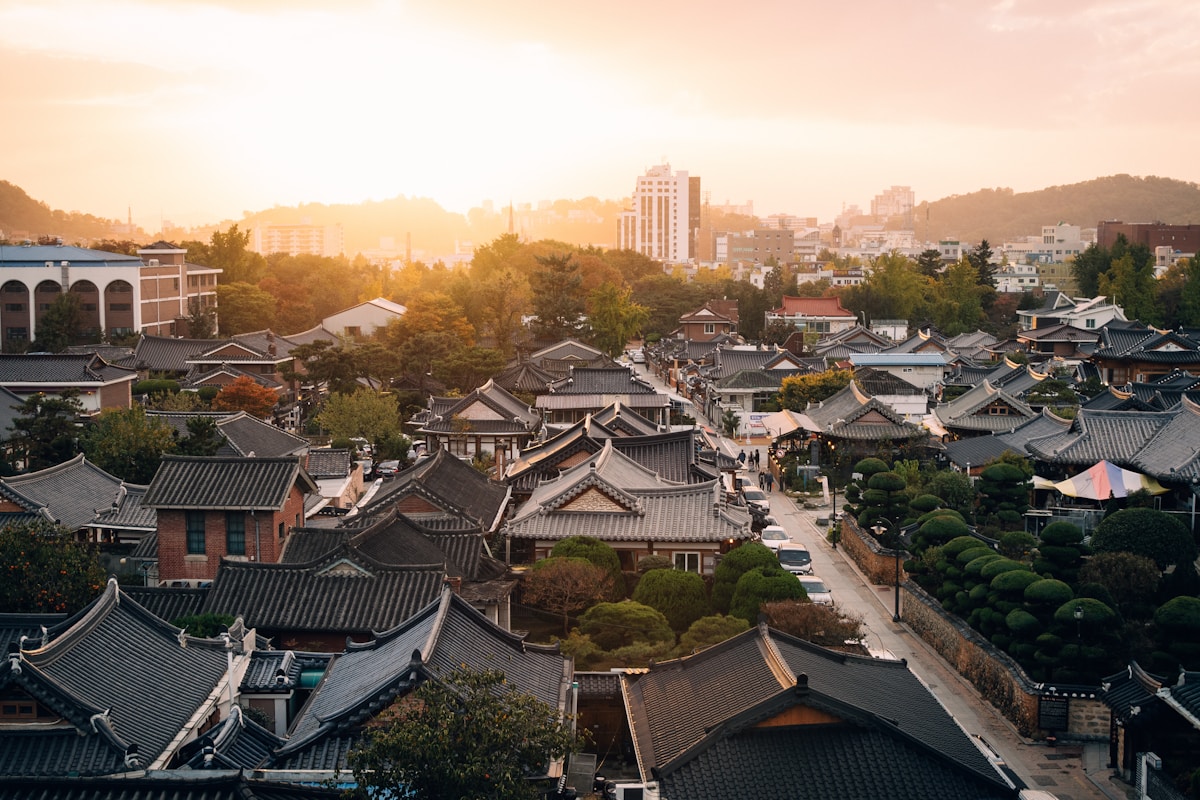
A few years ago, a trip to a Seoul palace meant one thing: rent a hanbok, walk the courtyard, take a photo by the eaves, leave within the hour. In 2026, that same palace might also have a ticket lottery you didn’t win, a terrace café serving imperial-recipe desserts under string lights, and a reading room where an AI recommends what a 200-year-old king’s study desk should be reading. Seoul’s heritage sites haven’t moved — but the way Koreans and tourists use them has changed completely, and it’s turned the country’s five grand palaces into 2026’s least likely 핫플 (hotplace).
This isn’t a slow rediscovery of history. It’s a fast-moving trend with its own sold-out lottery tickets, its own viral hashtags, and — thanks to one Netflix animated film — its own dress code.
What’s Actually Happening: From Heritage Site to 핫플
Korean culture coverage this year keeps landing on the same line: 궁궐, 가장 한국적인 ‘핫플’이 되다 — “the palace has become Korea’s most Korean hotplace.” What used to be a single-purpose heritage visit has turned into a stacked cultural platform combining performances, exhibitions, fine dining, night viewing, and even remote-work “workations” — and the palace-run programs built around all of it have started selling out as fast as any restaurant reservation or concert ticket.
The clearest sign this has gone mainstream: Korea’s heritage authorities announced a 2026 overhaul of the reservation system for popular palace programs specifically because demand had outstripped supply so badly that they raised the share of these programs booked by lottery to roughly 90% — up from 80% the year before — just to keep public participation fair. You don’t rebuild a booking system for a heritage site that isn’t, suddenly, one of the hardest reservations in the city.
Why Palaces Suddenly Became Korea’s Biggest Trend
A Netflix anime rewrote the hanbok dress code. KPop Demon Hunters, Netflix’s animated hit built around a fictional idol group fighting demons, features a boy-group of antagonists — the “Saja Boys” — dressed in black hanbok and a traditional gat (wide-brimmed horsehair hat). Since the show’s popularity took off, foreign tourists at Gyeongbokgung have started specifically requesting black hanbok and gat rentals to recreate the look, turning a fictional costume into one of the most-requested items at hanbok rental shops around the palace.
Hanbok tourism was already exploding before that. Seoul’s own tourism data shows total visitors across the city’s five grand palaces and Jongmyo Shrine climbed from around 540,000 in 2022 to over 2 million in 2025 — a 260% jump big enough that hanbok photography is now considered a default part of the Seoul itinerary rather than a niche activity. More than 70% of foreign visitors to Seoul reportedly stop at a palace during their trip.
The programs themselves are engineered to go viral. Changgyeonggung’s Yeongchunheon, Spring Library — a “palace workation” concept letting visitors read at the same desk where King Jeongjo once studied and worked — spread fast on social media purely on novelty: an independent-bookstore curation and an AI reading recommendation system, set inside a Joseon-dynasty study hall. Deoksugung’s Emperor’s Table program, recreating Emperor Gojong’s real diplomatic banquets as a food-and-history talk show, became the single most popular foreigner-facing palace program for the same reason — it photographs and posts like nothing else in the city.
Scarcity is doing a lot of the marketing. Nearly every headline program — the royal dessert tastings, the night terrace café, the workation library — runs on a lottery-entry system through Ticketlink rather than first-come booking. Losing the lottery (and then talking about it) has become its own recurring social media moment, the same FOMO loop that drives hype around sold-out restaurant reservations or concert tickets.
Visitor numbers back it up. This spring’s Royal Culture Festival, spread across Gyeongbokgung, Changdeokgung, Deoksugung, Changgyeonggung, Gyeonghuigung, and Jongmyo, drew roughly 725,000 visitors — its highest turnout since the festival began, and around 26,000 more than the previous year.
The Programs Everyone’s Trying to Book in 2026
Four programs are driving most of the trend. All of them run seasonally rather than year-round, so availability is limited to specific windows — check each palace’s official reservation site before planning around one.
| Program | Palace | What it is | Price | Booking |
|---|---|---|---|---|
| 생과방 (Saenggwabang) | Gyeongbokgung | A ~70-minute royal dessert tasting — six traditional sweets plus a royal medicinal tea, served with a storytelling theme built around a specific king’s dessert table | ₩15,000/ticket (max 2 per winner) | Ticketlink lottery, palace admission sold separately |
| 밤의 석조전 (Night at Seokjojeon) | Deoksugung | A 2nd-floor terrace café with 2-person reserved seating, imperial-style coffee and dessert with a night view, plus guided tour and a short musical performance | ₩35,000/ticket (includes admission, tour, dessert set, and the musical 그 이름, 대한) | Ticketlink lottery |
| 황제의 식탁 (Emperor’s Table) | Deoksugung (Jungmyeongjeon) | A food-and-history “talk show” recreating Emperor Gojong’s real diplomatic banquets, combining a royal-cuisine tasting with historical commentary and performance | Varies by session | Palace reservation site |
| 영춘헌, 봄의 서재 (Yeongchunheon, Spring Library) | Changgyeonggung | A seasonal “palace workation” — reading at King Jeongjo’s former study desk, an AI-assisted independent-bookstore curation, plus an incense-sachet-making activity in the Grand Greenhouse | Free (early registrants received a reading-app subscription) | Limited seasonal run |
Book through the official channels only: Ticketlink’s palace listings and the Royal Palaces and Tombs reservation portal are the only legitimate sellers — third-party resale of these tickets isn’t officially sanctioned.
For the palaces themselves outside of these special programs, the Korea Palaces Guide covers all five grand palaces, hours, and admission basics.
The Hanbok Factor: How a Netflix Anime Rewrote Palace Style
If there’s one image that sums up the current wave, it’s a foreign tourist in a black hanbok and gat, posing in front of Gyeongbokgung’s Geunjeongjeon hall — a look lifted directly from KPop Demon Hunters’ villain idol group rather than from any historical reference. Korean and international coverage alike has zeroed in on it as the clearest sign yet of how directly K-content now shapes real-world tourist behavior: a costume choice from a two-hour Netflix film translating, within months, into a specific rental request at hanbok shops clustered around the palace’s main gate.
It’s also layered on top of an already-established habit. Free or discounted palace admission for hanbok-wearing visitors has been standard policy for years, and Instagram’s steady stream of palace-in-hanbok photos had already made it close to a default Seoul activity well before the Netflix effect hit. What’s new in 2026 is the specificity — visitors aren’t just renting “a hanbok” anymore, they’re asking for the black one with the hat, from the show.
How to Actually Book a Ticket (Lottery System Explained)
Most of the headline programs follow the same basic process:
- Applications open for a short window — typically 5–7 days — through Ticketlink or the palace’s own reservation portal. One entry per account/ID is standard.
- Winners are announced days later, usually with a follow-up window of 2–3 days to complete payment before the slot releases back into the pool.
- Any unclaimed or unpaid slots open to general (first-come) booking a few days after that — this is the only realistic shot for anyone who didn’t win the lottery.
- Palace admission is often sold separately from the special program ticket — check whether your ticket includes entry or if you need to buy it independently.
- Set a calendar reminder for the application window, not the event date. These programs are seasonal and run for a few weeks at a time; missing the short lottery-entry window means waiting for the next season.
Frequently Asked Questions
Why have Korean palaces suddenly become a trending destination? A combination of factors: viral seasonal programs (royal dessert tastings, a palace “workation” reading room, a terrace night café), a Netflix-driven hanbok boom tied to KPop Demon Hunters, and a lottery-only reservation system that creates the same scarcity-driven buzz as a hard-to-book restaurant.
What is 생과방 (Saenggwabang) at Gyeongbokgung? A roughly 70-minute royal dessert experience — six traditional Korean sweets and a royal medicinal tea, themed around a specific historical king’s dessert table. It runs seasonally, costs ₩15,000 per ticket, and is booked through a Ticketlink lottery.
Why are tourists wearing black hanbok at Gyeongbokgung? It’s a direct reference to the “Saja Boys,” the villain idol group in Netflix’s animated hit KPop Demon Hunters, who wear black hanbok with a traditional gat. Foreign visitors have started specifically requesting that look from rental shops near the palace.
How do I book the Deoksugung night terrace café or Gyeongbokgung dessert program? Both run through a lottery-entry system, usually via Ticketlink. You apply during a short window, wait for the winner announcement, and pay within a follow-up window if selected. Unclaimed slots open to general booking afterward — check the palace’s official reservation portal for exact dates each season.
Is the reading “workation” program at Changgyeonggung still running? Yeongchunheon, Spring Library ran as a limited seasonal program in 2026. Palace programs like this typically return in adapted form for future seasons, so check the Royal Palaces and Tombs reservation portal or the palace’s own announcements for updated dates.
For the full rundown of all five palaces, opening hours, and admission basics, see the Korea Palaces Guide. If the KPop Demon Hunters hanbok look has you curious about other K-content tourism, check out K-Drama Set-Jetting: The 2026 Guide to Filming Locations, and pair a palace visit with the rest of a first Seoul trip using the Things to Do in Seoul 2026 guide.