Somewhere between the celadon and the gold crowns, on the first floor of a museum that costs nothing to enter, is the most competitive shopping queue in Seoul right now. Not a Pop Mart. Not a Daiso viral aisle. A museum gift shop — one where the summer’s headline item was a pair of Joseon-dynasty state seals, shrunk down into gold-and-silver keycaps that actually snap onto a mechanical keyboard, and where a set of ₩38,000 keyrings vanished so fast the museum had to restock it with a purchase limit.
The brand is MU:DS (뮷즈), and in the first half of 2026 it did ₩21.8 billion in sales — up 90% year on year, and the first time its half-year figure has cleared ₩20 billion. Foreign visitors accounted for about ₩1 billion of that, roughly double the year before. For a category that used to mean fridge magnets and postcards, that’s a genuine shift in what Koreans — and increasingly, the people visiting them — consider worth buying.
And that last part is the real reason this belongs on your Seoul list: MU:DS makes some of the best souvenirs you can take home from Korea. Every piece is tied to a specific national treasure but built as something a person actually uses — a keyring, a drinking glass, a badge, a teacup — so it lands as a real gift rather than airport filler. It packs flat, it comes with a story you can tell whoever you hand it to, and the price ladder starts around ₩5,000, which makes it easy to buy one for yourself and a small stack for friends and family back home. This guide covers what’s in the collection, which pieces travel and gift best, and exactly how to get them.
A quick note: MU:DS items sell out constantly and restock on irregular schedules, and the lineup rotates with each annual competition. Treat the specific products and prices below as a snapshot of what’s hot in August 2026, and check the online shop for that week’s actual stock.
In this guide:
- What Is MU:DS, Exactly?
- How It Started: BTS’s RM and the Pensive Bodhisattva
- The 2026 Lineup That Sold Out
- The Kkachi-Tiger Badge: Korea’s Hardest Weekly Sellout
- The Steady Sellers Worth Knowing
- Why a Museum Shop Became a Sneaker Drop
- MU:DS Goes Global
- How to Actually Buy MU:DS
- Visiting the National Museum of Korea
- Is It a Good Souvenir? An Honest Take
- Quick Reference
- Frequently Asked Questions
What Is MU:DS, Exactly?
MU:DS (뮷즈) is a compression of 뮤지엄 (museum) + 굿즈 (goods) — museum goods. It launched in January 2022 as the official merchandise brand of the National Museum of Korea, operated by the National Museum Foundation (국립박물관문화재단), and it draws on the collections of national museums across the country rather than just the flagship in Seoul.
The design premise is what separates it from ordinary museum merch — and what makes it such good gifting material. Instead of printing an artefact onto a tote bag, MU:DS takes a specific object from the collection and rebuilds it as something you’d actually use — a hat becomes an umbrella, a royal seal becomes a keyboard part, a folk painting becomes a wine stopper. The artefact supplies the form and the story; the product supplies the function. For a traveller that combination is ideal: you hand someone a magpie-and-tiger badge or a colour-changing scholar’s glass, and it comes with a bit of Korean history built in rather than a city name stamped on the side.
Much of the range comes from an annual open design competition (뮷즈 공모). In 2026, submissions closed in March, winners were announced on 4 June, and the resulting products went on sale on 16 July. That competition structure is why the lineup refreshes sharply each summer — and why the July drop has become an event Korean shoppers actively wait for.
How It Started: BTS’s RM and the Pensive Bodhisattva
MU:DS didn’t become a collector’s obsession by accident, and the single biggest accelerant was a celebrity endorsement nobody planned for. RM, the leader of BTS and a serious art collector in his own right, posted a photo of a miniature he owned of the Pensive Bodhisattva (반가사유상) — the gilt-bronze meditating figure designated National Treasure No. 83, one of the National Museum of Korea’s most treasured objects. The figurine, sold in a handful of colourways for roughly ₩65,000, was already a niche favourite among museum-goods collectors. After RM’s post it became something else: shoppers started turning up for 오픈런 (opening runs) — arriving before the shop opened, the way fans queue for a concert or a sneaker release — because online restocks were selling out fast enough that buyers reported the site buckling under demand.
That single moment reframed MU:DS in the public imagination — not as souvenirs, but as something closer to a collectible, complete with the anxiety of missing a drop and the thrill of scoring a rare colourway. Everything the brand has done since — the annual competition drops, the per-person caps, the resale market — sits on top of that shift.
The 2026 Lineup That Sold Out
The 16 July 2026 release is the one that broke through. Korean outlets ran “품절 대란” (sell-out chaos) headlines within two weeks, and KBS covered it on 30 July specifically noting how many of the buyers were foreign visitors.
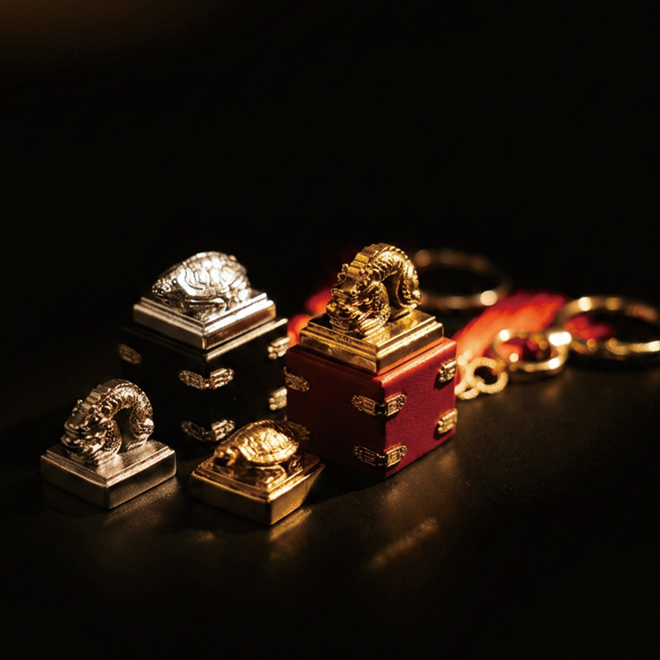
국새 키캡 키링 — the National Seal Keycap Keyring Set (₩38,000). The headline item, and the reason this drop got the attention it did. A 국새 (guksae) is a Joseon-dynasty state seal; this set reproduces two of them, the Treasure-designated 제고지보 (Jegojibo) and the 단종 복위 시호 금보 (the golden seal restoring King Danjong’s posthumous title), in metal and resin. The trick is that they’re not decorative lookalikes: they’re cut to standard keycap dimensions and will mount on an ordinary mechanical keyboard, so you can either clip them to a bag or actually type on a piece of Joseon regalia. It sold out on release, restocked on 6 August with a three-per-person cap, and when it returned again on 21 August it drew a queue of about 1,500 people and sold out within the hour, with the limit tightened to one per person.
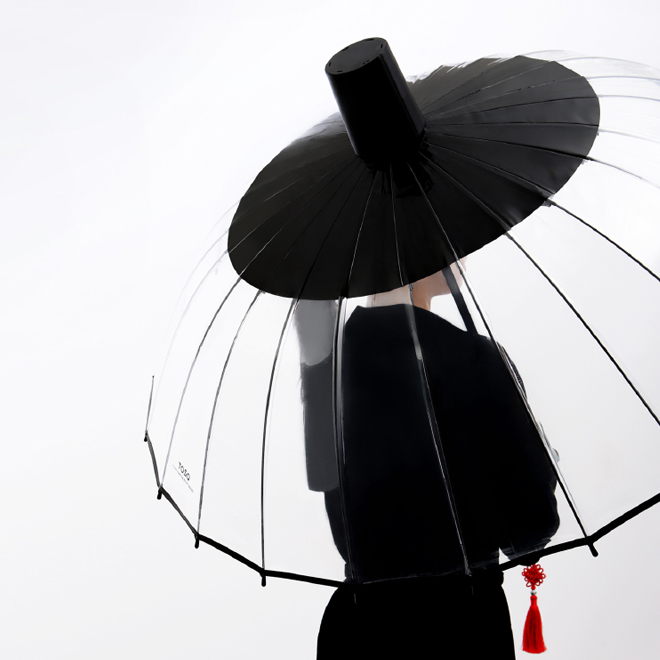
갓 우산 — the Gat Umbrella (₩43,000). The 갓 is the wide-brimmed horsehair hat of the Joseon scholar-official, and the joke writes itself: a hat is already a thing you wear on your head in the rain. Opened up, the umbrella reads unmistakably as a gat. A wall clock using the same motif launched alongside it. Of the whole 2026 lineup, this is the one that has stayed hardest to get.
금강산 색동공기 — Mount Geumgang Saekdong Gonggi (₩25,000). 공기 (gonggi) is the Korean jacks game — five small stones you toss and catch on the back of your hand, familiar to anyone who watched Squid Game. This set renders the pieces in 오방색 (obangsaek), the traditional five-direction colour scheme, plus a sixth in rainbow 색동 stripes, with Mount Geumgang as the design reference. It’s the most genuinely playable object in the collection, and it restocked on 7 August.
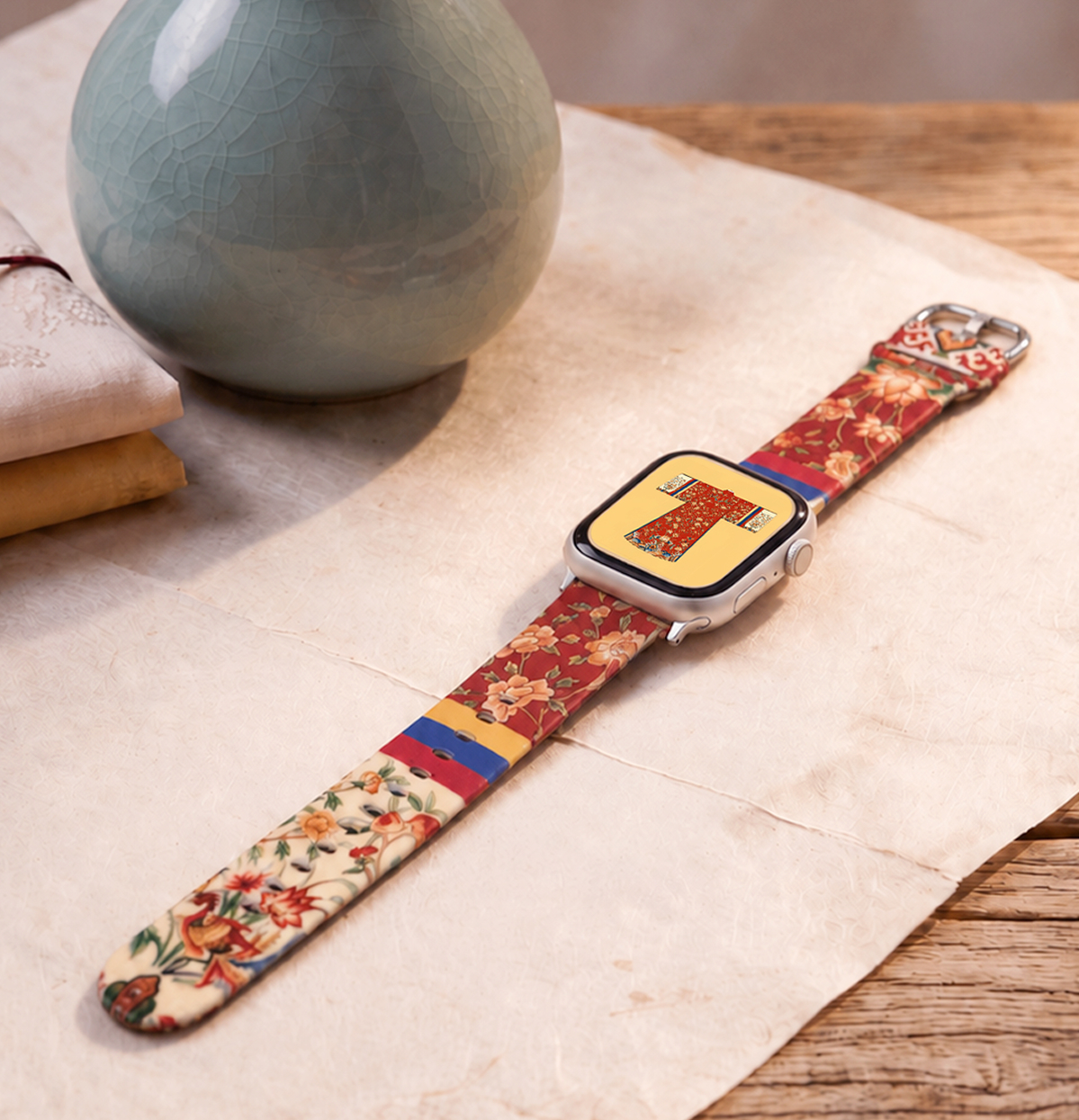
활옷 길상문 키링 (₩19,800) and the 활옷 smartwatch strap. The 활옷 (hwarot) is the embroidered ceremonial robe worn by brides in the Joseon era, dense with 길상문 — auspicious good-fortune patterns. Those embroidery motifs were lifted onto a keyring and a smartwatch strap, which is the lineup’s neatest bit of translation: the pattern was always meant to be worn, just on rather different clothing.
호작도 와인마개 — the Magpie-and-Tiger Wine Stopper. 호작도 (hojakdo) is one of Korean folk painting’s most recognisable subjects — a slightly comic, cross-eyed tiger under a pine tree with a magpie chattering above it, traditionally hung to ward off misfortune. It also sold out.
The Kkachi-Tiger Badge: Korea’s Hardest Weekly Sellout
If the competition lineup is what makes headlines each July, the 까치 호랑이 배지 — the Kkachi-Tiger enamel badge (₩14,900) — is the item that keeps MU:DS in the news every single week. The design comes from the same 호작도 (hojakdo) folk painting as the wine stopper: a tiger paired with a magpie, a motif long associated with protection and good fortune.
At under ₩15,000 it should be the most disposable thing MU:DS sells. Instead it may be the single hardest to get:
- The shop restocks roughly 1,000 units a week, and they typically sell out the same day they land.
- Online sales were suspended entirely in January 2026 — the badge is now sold in-store only, a deliberate move by the Foundation to keep access fair after bot-driven online buying made it nearly impossible for walk-in visitors to get one.
- On the resale platform KREAM, the same badge regularly trades for ₩33,000 or more — over double retail.
- In July 2025 alone, sales of the pin reportedly reached about ₩560 million — more than 80 times its combined sales for the whole first half of that year.
That July 2025 surge got an unlikely pop-culture assist: Netflix’s animated hit KPop Demon Hunters, whose fans noticed a resemblance between the badge’s tiger-and-magpie pairing and the film’s own tiger-and-magpie duo, Derpy and Sussie — turning a piece of folk art into something the film’s fans wanted to hunt down too. It’s the clearest single example of the whole MU:DS phenomenon: a cheap, centuries-old museum motif swept up into the collectible economy.
The Steady Sellers Worth Knowing
If the competition lineup is gone by the time you visit — likely — the permanent range is where most of MU:DS’s actual revenue comes from, and several items are easier to get. For most travellers this is actually the part to focus on: these are the pieces that are reliably in stock, pack easily, and make the best gifts to bring home — genuine souvenirs you can buy in multiples for friends and family without gambling on a sold-out drop.
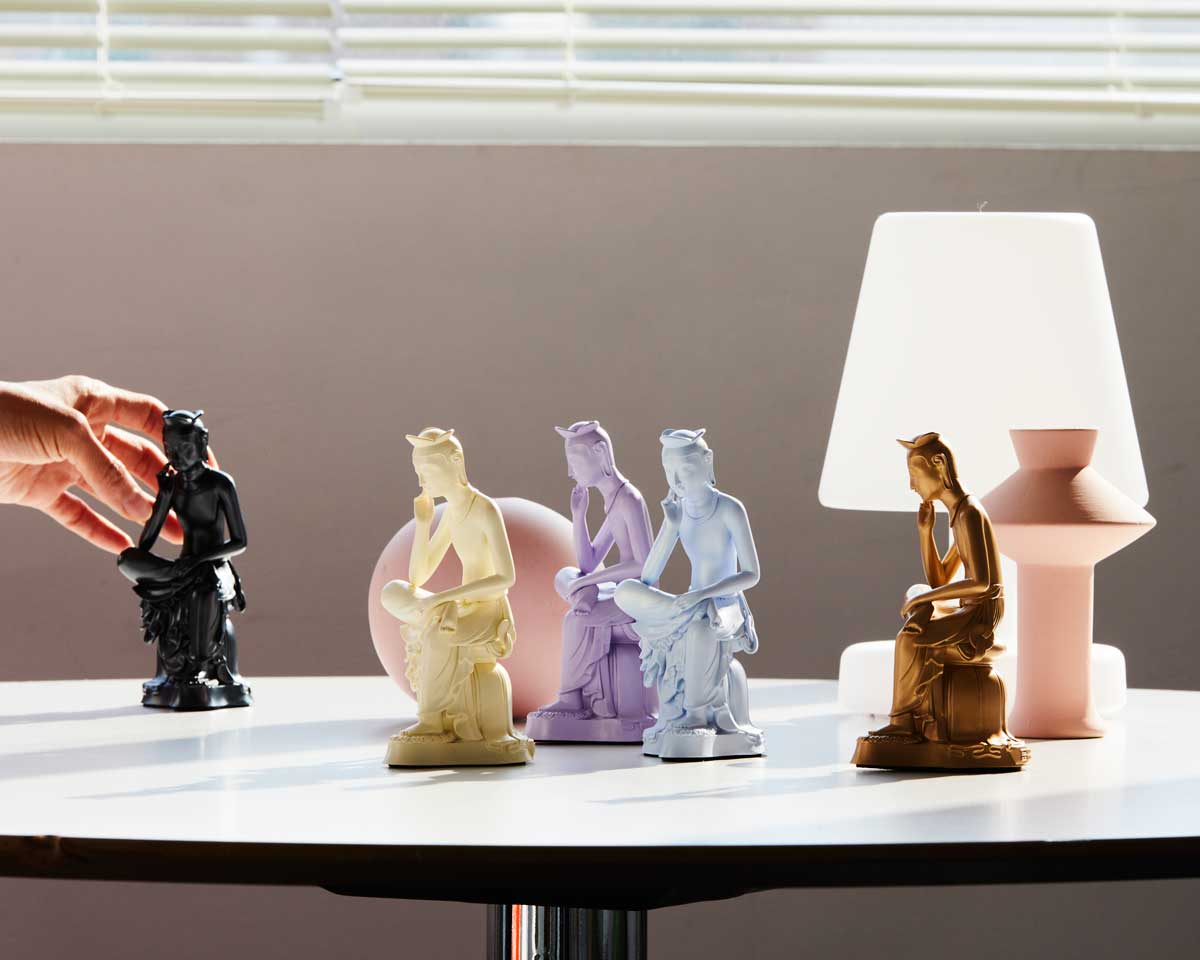
- 반가사유상 미니어처 — the Pensive Bodhisattva miniature (around ₩65,000). The single best-selling MU:DS product, and the one that arguably started the craze (see above). It’s a scale replica of National Treasure No. 83, the gilt-bronze seated Bodhisattva with one leg crossed and fingertips resting against the cheek — arguably the most beloved object in the entire museum, displayed alongside its sibling (National Treasure No. 78) in a dedicated dark room called the Room of Quiet Contemplation (사유의 방). It sold about 12,000 units in the first half of 2026 alone. Seeing the original and then buying the miniature is a genuinely coherent thing to do in one visit.
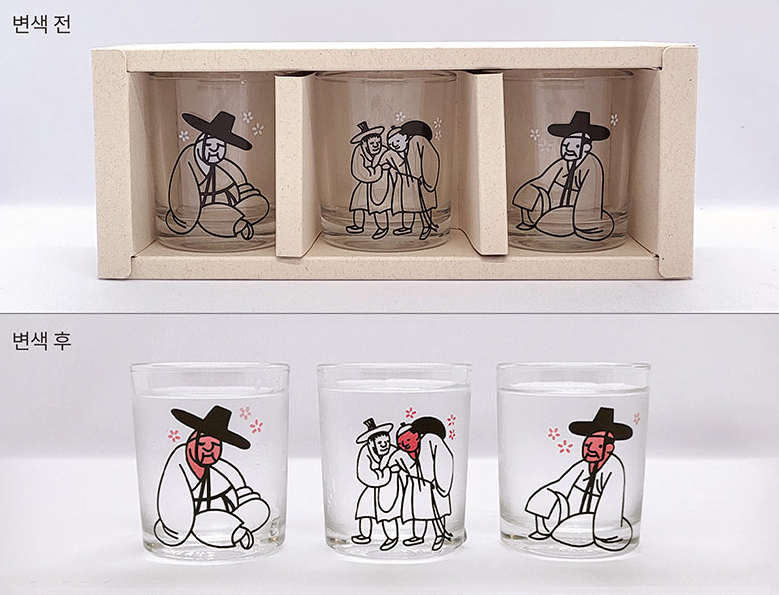
- 취객 선비 변색 잔 — the “Drunken Scholar” colour-changing glass set. Scholars are printed on the glass; pour a cold drink and their faces flush red. A reliable crowd-pleaser and one of the brand’s long-running hits — and one of the single best gifts in the range, since the colour-change trick does the explaining for you the moment someone pours a drink.
- 청자 찻잔 세트 — the celadon teacup set. Modelled on Goryeo-dynasty celadon, the glaze that anchors the museum’s ceramics galleries. A long-running bestseller and the easiest way to take home the collection’s signature blue-green.
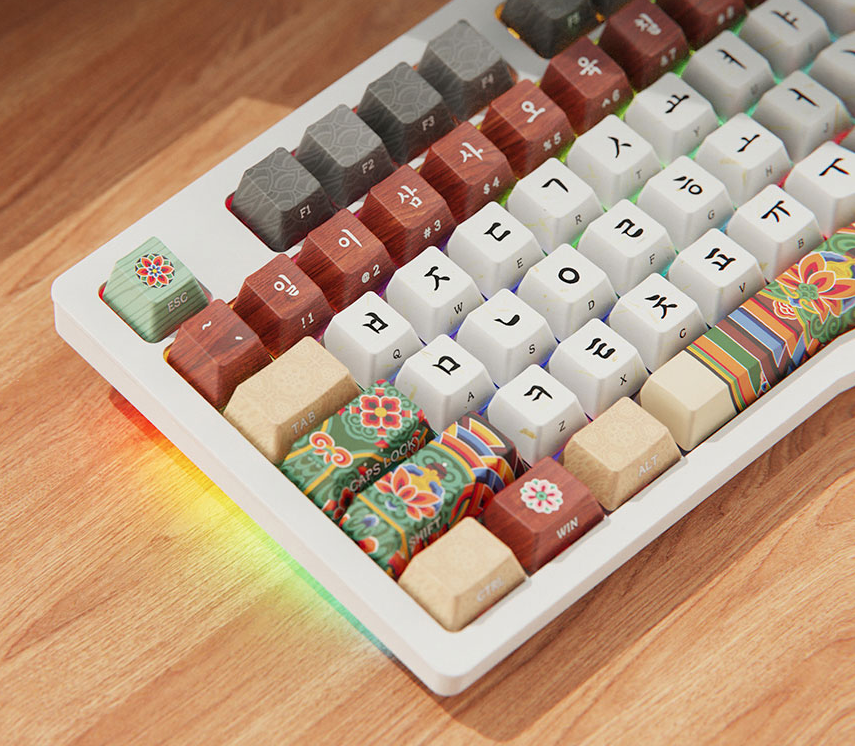
- 단청 키보드 — the Dancheong keyboard. A full keyboard in 단청, the multicoloured painted patterning found on temple and palace eaves. Reported among the period’s most popular items, and the obvious companion purchase to the seal keycaps.
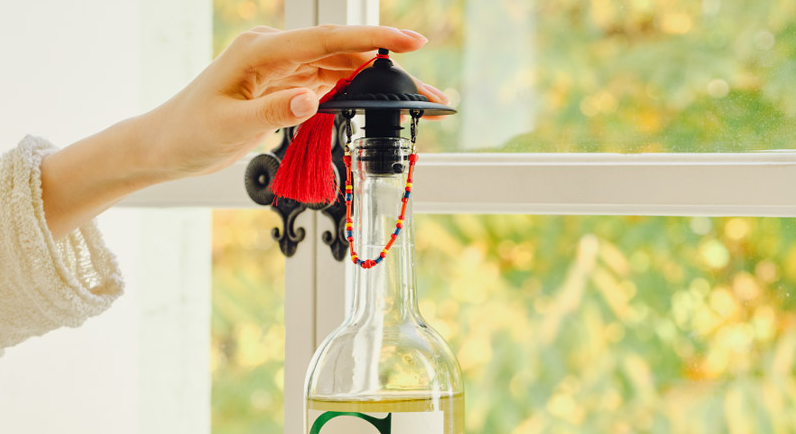
- 전립 와인마개 — the Jeonrip hat wine stopper. Admiral Yi Sun-sin’s military hat as a bottle stopper.
Prices across the range run from roughly ₩5,000 for small badges, magnets and postcards up to ₩65,000 for the Pensive Bodhisattva miniature, with most of the interesting mid-range objects landing between ₩20,000 and ₩45,000. That low end is the traveller’s friend: badges, magnets and postcards are cheap enough to buy by the handful, pack into a corner of a suitcase, and hand out as small, distinctly Korean gifts to a whole office or family without much thought.
Why a Museum Shop Became a Sneaker Drop
The numbers are real, not hype. The growth curve has gone vertical over five years: MU:DS did roughly ₩3.7 billion in 2020, ₩21.28 billion across all of 2024, and about ₩41.3 billion in 2025 — more than double the year before. Then in the first half of 2026 alone it cleared ₩21.8 billion, more than all of 2024 combined in half the time, and up 90% year on year. That’s a step change, not a good quarter. Sales to foreign visitors doubling to around ₩1 billion in the same period says the audience is broadening past domestic collectors.
It rides the keyring-and-keycap wave. 2026 has been the year of small clicky things clipped to bags in Korea — keycap keyrings, clickers, charms of every description. The national seal keycap set landed squarely in the middle of that, which is exactly why that item, out of the whole lineup, was the one that made the news. It’s the same viral mechanic that drove the Lucky Turtle charm and Pokémon transit cards — a cheap, photogenic object you can attach to something you already carry.
Scarcity is structural, not manufactured. Many winning designs come from independent designers and very small producers, so initial runs are limited by real manufacturing capacity rather than by a marketing decision. That’s why restocks take weeks and arrive with per-person caps — and why the open-run dynamic Koreans know from Daiso and Pop Mart has attached itself to a national institution.
It solves the souvenir problem. The standard complaint about Korean souvenirs is that they’re either generic (a keychain that could be from anywhere) or impractical (a decorative object with nowhere to go). MU:DS items are specific to Korean collections and usable, which is a narrow target most museum shops miss — and it’s exactly what makes them travel home so well. A friend actually uses the glass or clips on the keyring, and every one of them opens with the same line: this is from a 1,400-year-old statue in the national museum. For a gift you’re carrying across an ocean, that’s hard to beat.
The museum itself is free. Nothing gates the shop. You don’t buy a ticket to reach it, which removes the friction that normally keeps museum retail a niche category.
MU:DS Goes Global
The National Museum Foundation has started treating MU:DS as an exportable piece of K-culture rather than a domestic gift-shop line. From 7 May to 7 July 2026 it ran a “MU:DS: K-Culture Unboxed” pop-up at the Korean Cultural Center in Los Angeles, including a recreation of the museum’s Room of Quiet Contemplation reimagined for an LA audience, alongside brand-collaboration pieces. More overseas activations are reportedly planned — including a showroom at the Korean Cultural Center in Sweden later in 2026 — as the Foundation works to build MU:DS into a globally recognised brand rather than a Korea-only souvenir line. For a traveller, the practical upshot is that the international muds.kr site and these pop-ups are slowly making the range reachable without a trip to Seoul — though, for now, the flagship shop is still where the stock actually is.
How to Actually Buy MU:DS
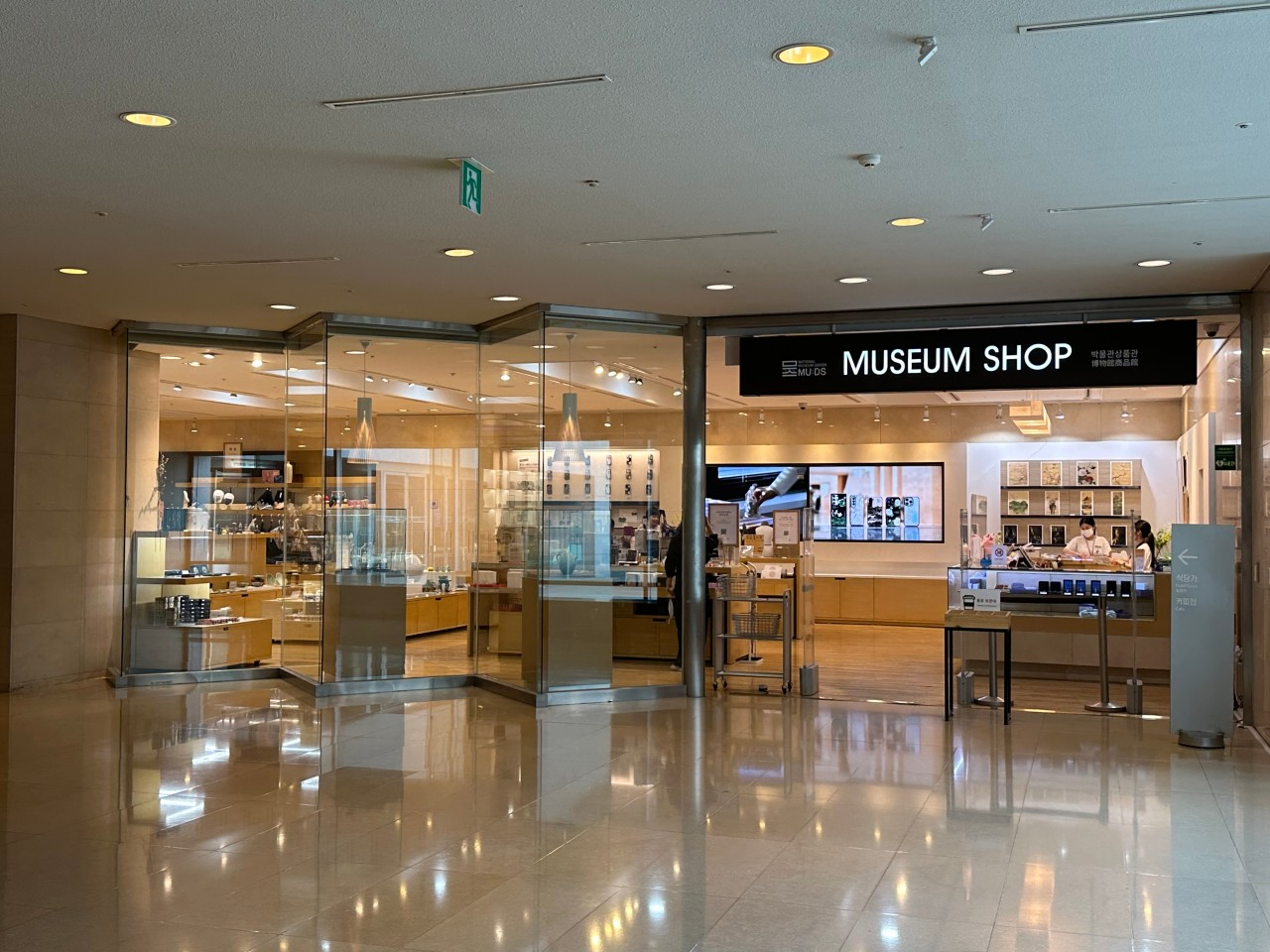
In person, at the museum. The main shop is on the first floor of the Permanent Exhibition Hall, near the great hall — the easiest one to find and the largest. There’s also a MU:DS brand showcase on the third floor (9:30–17:30, closed 12:00–13:00) that functions more as a display space for the brand’s design story. The first-floor shop follows museum hours, which means it stays open until 21:00 on Wednesdays and Saturdays — the quietest and most pleasant time to browse.
Other national museums. Because MU:DS spans the national museum network, branches at other national museums carry portions of the range. Selection is narrower, but competition-lineup items occasionally linger at regional shops after the Seoul flagship has sold out — a genuinely underrated tactic.
Online, from Korea. The official shop is museumshop.or.kr, with a parallel Naver Smart Store and a Kakao Gift storefront. Sold-out pages offer a 재입고 알림 (restock alert) — worth setting if you’re travelling later in the year, though the notification arrives in Korean.
Online, from abroad. The Foundation has opened an international MU:DS site at muds.kr, which is the route to take if you want to order without a Korean address or phone number. Stock and pricing won’t always mirror the domestic shop.
Practical tactics if you want the hard items:
- Go on a weekday morning, right at 9:30. Restocked units hit the floor before the afternoon crowd arrives.
- Check the shop first, not last. The instinct is to browse the shop on your way out. With a lineup this thin on stock, reverse it — see what’s available, then go look at the originals in the galleries.
- Don’t count on the competition lineup. By late in a release cycle, the July items are frequently gone. Go in wanting something from the permanent range and treat a seal keycap set as a bonus.
- Ask staff about restock dates. Restocks are scheduled rather than random, and staff generally know the next date.
Visiting the National Museum of Korea
The shop is inside one of Asia’s largest museums, so this is not a trip you make purely for retail — nor should it be.
Getting there. National Museum of Korea (국립중앙박물관), 137 Seobinggo-ro, Yongsan-gu. Take Ichon Station (이촌역) on Line 4 or the Gyeongui–Jungang Line, and leave via Exit 2. From there a covered walkway called the 박물관 나들길 runs directly to the museum’s west gate — open 07:00–23:00, and a real mercy in summer heat or rain.
Hours (as of 2026). Monday, Tuesday, Thursday, Friday and Sunday, 09:30–17:30 (last admission 17:00). Wednesday and Saturday, 09:30–21:00 (last admission 20:30).
Admission. The permanent exhibition is free. Special exhibitions in the separate halls are ticketed.
What to see while you’re there. The Room of Quiet Contemplation (사유의 방) holds the two Pensive Bodhisattva statues in a darkened, near-silent room, and is the single most affecting space in the building — see it before you buy the miniature, not after. The Goryeo celadon and gold crown collections are the other obvious anchors. If you’re building a broader museum itinerary, our Best Museums in Seoul guide covers how this one fits alongside the rest, and the Korea Palaces Guide pairs naturally with it for a history-focused day.
Wednesday and Saturday evenings are the move: the galleries empty out considerably after 18:00, the shop is still open, and the museum’s reflecting pool and the Seoul Tower view behind it are at their best at dusk.
Is It a Good Souvenir? An Honest Take
Short version: yes — for most travellers it’s one of the best souvenir-and-gift stops in Seoul. But it’s worth being straight about the trade-offs.
What’s genuinely good: the objects are specific to Korean collections rather than generic “Korea” merchandise, most of them do a job — an umbrella, a keyring, a drinking glass — and the price ladder is wide enough that ₩10,000 gets you something real. As gifts they carry an explanation, which the average airport souvenir does not, and they cover every recipient: a ₩5,000 badge for a colleague, a ₩25,000 glass set for a dinner-party friend, the ₩65,000 miniature for someone who’ll genuinely treasure it.
What’s not: the headline items are hard to get, and if your trip is short you may simply miss them. Some pieces are more design object than daily driver — a gat umbrella is charming and also a large, awkward thing to fly home with. And a few of the most-photographed items are priced well above what the materials suggest, because you’re partly paying for the design and the limited run.
Best picks to bring home: for friends and family, the safest, most giftable, most packable buys are the colour-changing scholar glasses, the celadon teacup set, the magpie-and-tiger badge, and the Pensive Bodhisattva miniature — all from the permanent range, all reliably in stock, and none of them awkward in a suitcase. Skip the umbrella and the large ceramics as gifts unless you’re checking a bag with room to spare.
The pragmatic version: budget one visit, go in expecting the permanent range rather than the competition lineup, and buy the thing that made you (or the person you’re shopping for) smile rather than the thing that’s sold out. If you strike out entirely and just want good Korean shopping, Changsin-dong’s stationery and toy market is the volume play, and Korea’s gacha shops scratch a similar collectible itch for a fraction of the price.
Quick Reference
| What | Details |
|---|---|
| What it is | MU:DS (뮷즈) — 뮤지엄 + 굿즈 — the official goods brand of the National Museum of Korea, launched January 2022 |
| Run by | National Museum Foundation (국립박물관문화재단), drawing on 16 national museum collections nationwide |
| Sales trajectory | ₩3.7bn (2020) → ₩21.28bn (2024) → ~₩41.3bn (2025) → ₩21.8bn in H1 2026 alone, +90% YoY. Foreign-visitor sales ≈₩1bn, roughly double YoY |
| 2026 lineup | Released 16 July from the annual design competition (winners announced 4 June) |
| Headline item | National Seal keycap keyring set, ₩38,000 — working mechanical keycaps of two Joseon state seals; 21 Aug restock drew ~1,500 people, sold out within the hour, cap cut to 1 per person |
| Also in the drop | Gat umbrella ₩43,000 (+ wall clock); Mt. Geumgang saekdong gonggi ₩25,000 (restocked 7 Aug); hwarot keyring ₩19,800 + smartwatch strap; magpie-and-tiger wine stopper |
| Hardest weekly sellout | Kkachi-Tiger enamel badge, ₩14,900 — ~1,000 units/week, in-store only since Jan 2026; resells above ₩33,000 on KREAM |
| Where it started | Pensive Bodhisattva miniature (National Treasure No. 83, ~₩65,000), boosted by BTS’s RM |
| Best seller overall | Pensive Bodhisattva miniature (National Treasure No. 83), ~₩65,000 — ~12,000 sold in H1 2026 |
| International presence | “MU:DS: K-Culture Unboxed” pop-up, Korean Cultural Center Los Angeles (May–July 2026); Sweden showroom planned |
| Price range | ~₩5,000 for badges and magnets up to ₩65,000; most notable items ₩20,000–₩45,000 |
| Where (in person) | Permanent Exhibition Hall 1F shop; MU:DS brand showcase on 3F (9:30–17:30, closed 12:00–13:00) |
| Where (online) | museumshop.or.kr, Naver Smart Store, Kakao Gift; international orders via muds.kr |
| Getting there | Ichon Stn (Line 4 / Gyeongui–Jungang), Exit 2, then the covered 박물관 나들길 walkway (07:00–23:00) |
| Museum hours | Mon/Tue/Thu/Fri/Sun 09:30–17:30; Wed/Sat 09:30–21:00. Permanent exhibition free |
| Best time to shop | Weekday 9:30 opening for restocks; Wed/Sat evenings for an empty, unhurried browse |
| Related trends | See also the Lucky Turtle charm, Daiso’s sold-out mania, and gacha shops |
Frequently Asked Questions
What does MU:DS mean? It’s a contraction of 뮤지엄 (museum) and 굿즈 (goods), styled MU:DS and written 뮷즈 in Korean. It’s the official merchandise brand of the National Museum of Korea, launched in January 2022 and operated by the National Museum Foundation.
What is the national seal keycap keyring? A ₩38,000 set that reproduces two Joseon-dynasty state seals (국새) — the Treasure-designated 제고지보 and the golden seal restoring King Danjong’s title — in metal and resin, finished in gold and silver. They’re cut to standard mechanical keyboard dimensions, so they work as real keycaps as well as bag charms. Released 16 July 2026, it has sold out on every drop; a 21 August restock drew about 1,500 people and sold out within the hour, with the purchase limit cut to one per person.
Why did a museum gift shop become this popular? Two things converged. A post from BTS leader RM showing his Pensive Bodhisattva miniature turned museum goods into a genuine collector’s category, and a run of 2026 drops — the annual competition lineup plus the Kkachi-Tiger badge — sell out fast enough to create real scarcity and a resale market. Add Korea’s wider “goods” culture, and a 1,000-year-old celadon glaze or a royal seal now gets the same treatment as a K-pop photocard.
What is the Kkachi-Tiger badge, and can I buy it online? It’s a ₩14,900 enamel pin based on the tiger-and-magpie folk painting (호작도), and it’s arguably the single hardest MU:DS item to get — the shop restocks around 1,000 a week and they sell out the same day. As of January 2026 it’s sold in-store only; online sales were suspended to curb bot buying, so there’s no way to buy it online right now. On resale platforms like KREAM it regularly trades above ₩33,000.
Can I buy MU:DS products from outside Korea? Yes, for much of the range. The National Museum Foundation runs an international site at muds.kr for overseas orders, and has begun running pop-ups abroad (Los Angeles in mid-2026, Sweden planned). Within Korea, the main channels are museumshop.or.kr, a Naver Smart Store, and Kakao Gift. Stock differs between the domestic and international shops, and the in-store-only Kkachi-Tiger badge can’t be shipped at all.
Which MU:DS items make the best souvenirs and gifts to bring home? For friends and family, stick to the permanent range — it’s reliably in stock and easy to pack. The most giftable buys are the colour-changing “Drunken Scholar” glasses (₩25,000), the celadon teacup set, the magpie-and-tiger badge (₩14,900), and the Pensive Bodhisattva miniature (~₩65,000) for someone special. Small badges, magnets and postcards from around ₩5,000 are ideal for buying in bulk. Every piece is tied to a real artefact, so each one comes with a story rather than just a place name — which is what makes them stand out from ordinary souvenirs. Skip the gat umbrella and larger ceramics as gifts unless you have suitcase room to spare.
Do I need a ticket to reach the shop? No. The National Museum of Korea’s permanent exhibition is free to enter, and the shops are inside that free area. Only special exhibitions in the separate halls are ticketed.
What if the item I want is sold out? Common — it’s the defining feature of this trend. Set a 재입고 알림 (restock alert) on the product page, ask shop staff for the next scheduled restock date, or check the shops at other national museums, which sometimes still hold stock after the Seoul flagship sells through. Otherwise, the permanent range — the Pensive Bodhisattva miniature, the colour-changing scholar glasses, the magpie-and-tiger badge — is consistently available.
Is this the same kind of trend as Labubu or the Daiso crazes? The mechanics rhyme — limited runs, purchase caps, resale interest, short-form video amplification — but the object is different. Where Labubu and Daiso’s viral items are mass-produced novelties, MU:DS pieces come from an annual design competition and are tied to specific artefacts in a national collection, which is why they hold their appeal as gifts rather better.
The interesting thing about the MU:DS boom isn’t the queueing — Korea queues for plenty of things. It’s what is being queued for: a state seal, a scholar’s hat, a bride’s embroidery, all rebuilt as objects people want on their desks. A museum shop turning over ₩21.8 billion in six months suggests Korean heritage has found a genuinely commercial second life, and a visitor gets the best of it almost by accident, since the building around the shop is free. For a traveller, that’s the quiet takeaway underneath all the sell-out drama: this is simply one of the best places in Seoul to buy souvenirs that mean something — for yourself, and for the friends and family you’ll be handing them to back home. Go on a Wednesday evening, see the Pensive Bodhisattva first, and shop afterwards. For more of what’s currently driving Korea’s collectible economy, see the Lucky Turtle charm trend, Korea’s gacha shop craze, and Daiso’s sold-out mania.