There’s a word circulating on Korean Threads and Instagram right now that has no real English equivalent: 물멍 (mul-meong). It means, roughly, “water-blanking” — sitting in front of a body of water and letting your mind go completely empty. No phone, no conversation, no goal. Just you, a window, and the Han River doing its thing.
It sounds like nothing, because it is nothing. That’s the entire point — and it’s why, in a summer dominated by short-form video and information overload, 물멍 has become one of Korea’s most talked-about small rebellions.
What Is 물멍, Exactly?
물멍 is a compound of 물 (mul, “water”) and 멍 — short for 멍때리기 (meong-ttaerigi), the Korean term for zoning out or staring into space with a blank mind. It’s part of a whole family of “-멍” trends: 불멍 (bul-meong, staring at fire — the original, born from the Korean camping boom) and 풀멍 (pul-meong, staring at grass or greenery) came first. 물멍 is the version built specifically around Seoul’s biggest natural asset: the Han River.
The idea is simple. You find a window seat, a riverside bench, or a terrace facing the water, and you stare at it — specifically at 윤슬 (yunseul), the Korean word for the way sunlight scatters and shimmers across a rippling surface. There’s no real activity involved. You’re not journaling, not meditating with an app, not even necessarily taking photos (though plenty end up on a camera roll anyway). You’re just letting the water hold your attention until your brain quiets down.
Korea has even turned the concept into a competitive sport — literally. Since 2014, Seoul has hosted an annual 멍때리기 대회 (zoning-out competition) on the Han River, where contestants compete to do absolutely nothing for 90 minutes without falling asleep, laughing, or checking a phone; judges patrol with heart-rate monitors to make sure no one is faking it. In 2026 the event was rebranded as the 한강 잠퍼자기 대회 (“Han River nap competition”) and held on May 2nd at Yeouido Hangang Park, drawing entries on the strength of personal essays about why competitors needed the rest. The underlying idea — that doing nothing is worth defending, even competing for — is the same cultural current that 물멍 rides today.
Why 물멍 Is Everywhere on Korean Social Media Right Now
A few things are converging to make this the moment for 물멍:
Burnout from the algorithm itself. Korean social commentary this year has been full of talk about digital fatigue — the exhausting churn of trend cycles, reels, and reaction content. 물멍 is the explicit opposite of a short-form video: it’s slow, plotless, and impossible to speed up. Posting “물멍 하러 왔습니다” (came here to water-blank) under a still photo of the river has become a small act of resistance against the feed that demands constant stimulation.
It’s free and it’s everywhere. Unlike most viral Korean trends, which tend to revolve around a specific product or limited-run menu item, 물멍 needs nothing but a view. The Han River runs through the entire city, which means almost any Seoul resident is within reach of it. That accessibility is a large part of why the idea has spread so widely.
It photographs beautifully — accidentally. A phone propped against a café window, the river catching late-afternoon light, a cup of coffee going cold in the foreground: it’s an aesthetic that requires no effort to look intentional. The irony of a “doing nothing” trend producing some of the most popular café photography of the year is not lost on anyone posting it.
It pairs naturally with Korea’s existing Han River culture. Picnics, the Han River run club boom, and 물멍 are really three expressions of the same underlying shift — Seoul residents treating the river as the city’s default place to decompress, at every pace from a 10K to total stillness.
Best Han River Cafés for 물멍 in Seoul
The common feature across all of these spots: a window or terrace seat positioned so the river fills your entire field of view, with minimal interruption from roads or railings. Go in the late afternoon for the best 윤슬, or just before sunset if you want the water lit gold.
Bean Brothers Coffee House Seoul (빈브라더스 커피하우스 서울) — Sangsu-dong
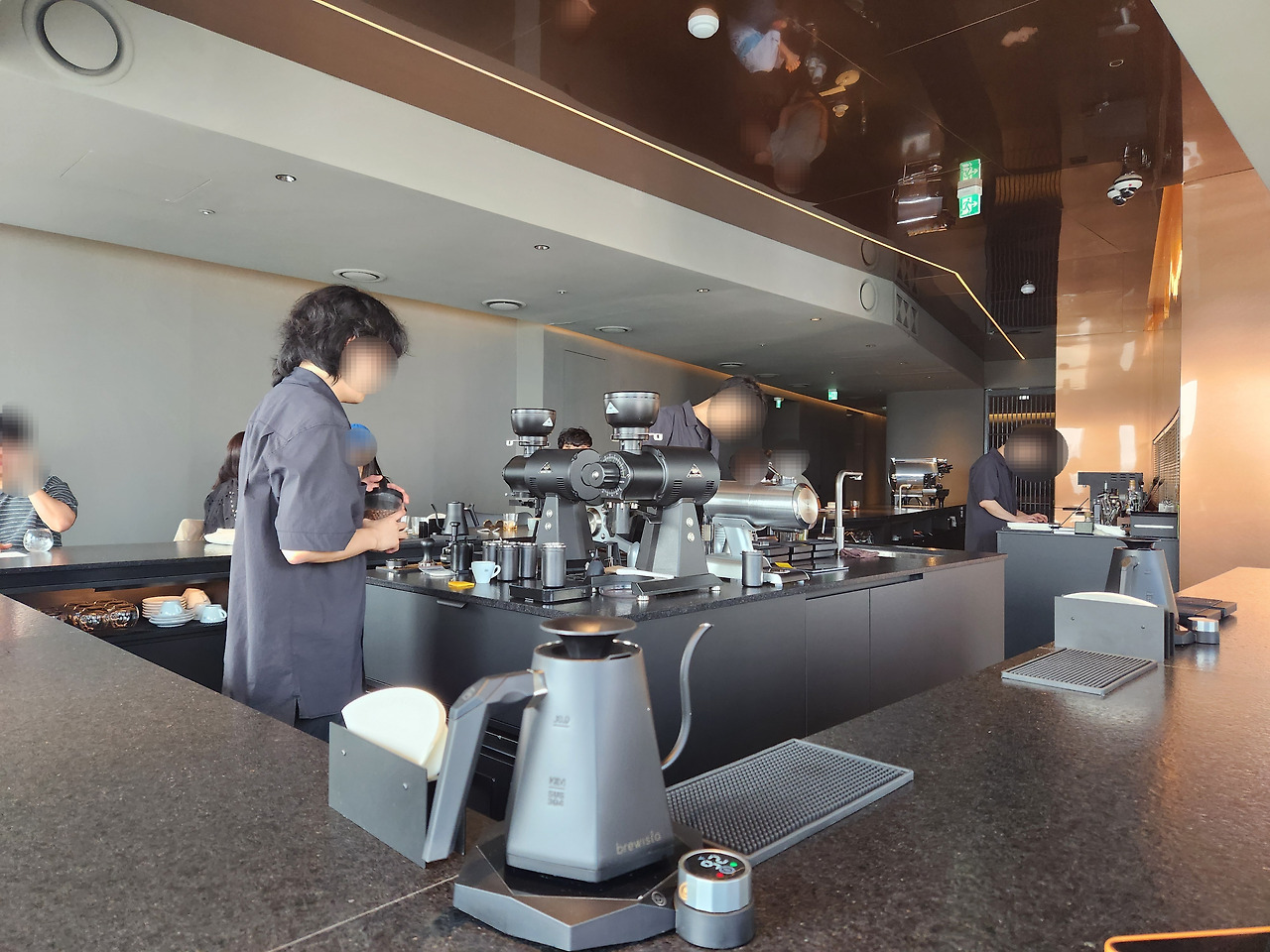
A roastery-café spread across the 6th and 7th floors of a building in Sangsu-dong, with floor-to-ceiling windows facing Yeouido and Bamseom (밤섬) across the water. The 7th-floor table seating is open to anyone; the 6th-floor bar seats are reservation-based and the better pick if you want an uninterrupted view for an hour or more.
| Detail | Info |
|---|---|
| Address | 2 Tojeong-ro 9-gil, Mapo-gu, Seoul, 6th–7th floor (서울 마포구 토정로9길 2, 6·7층) |
| Hours | Tue–Sun 10:00–22:00, closed Mondays |
| Phone | 0507-1322-2012 |
| Nearest subway | Sangsu Station (상수역) Line 6, approx. 5 min walk |
| Best for | Panoramic river views, serious coffee |
Chaegro (채그로) — Mapo-gu

A nine-floor book café and cultural complex a short walk from Mapo Station, with the 8th and 9th floors built around floor-to-ceiling windows facing the river toward Yeouido. Seats aren’t reservable, so go on the earlier side if you want a window spot — but even the tables set back from the glass keep a clear sightline to the water.
| Detail | Info |
|---|---|
| Address | 31 Mapo-daero 4da-gil, Mapo-gu, Seoul (서울 마포구 마포대로4다길 31) |
| Hours | Daily 09:30–21:30 (LO 21:15) |
| Phone | 02-711-2188 |
| Nearest subway | Mapo Station (마포역) Line 5, approx. 10 min walk |
| Best for | All-day river views, working or reading for hours without pressure to move |
Urban Plant Hangang Bridge (어반플랜트 한강대교점) — Yongsan-gu

A garden-themed café built directly onto the north end of Hangang Bridge, near Nodeul Island. Greenery wraps the interior, but the real draw is the river itself, visible on multiple sides — it’s one of the few Seoul cafés that genuinely feels like it’s floating above the water rather than just facing it. A second branch sits at the south end of Hannam Bridge in Gangnam-gu.
| Detail | Info |
|---|---|
| Address | 496 Yangnyeong-ro, Yongsan-gu, Seoul (서울 용산구 양녕로 496, 한강대교 북단) |
| Hours | Daily 10:00–22:00 |
| Best for | Garden-meets-river atmosphere, easy access from central Seoul |
Nine Block View Paldang (나인블럭 뷰 팔당점) — Namyangju, Gyeonggi-do

A short drive outside the city, where the Han River widens into Paldang Lake. This is the option for anyone who wants 물멍 without any city skyline in the frame at all — just water, hills, and sky. The café sits closer to the water than most riverside spots in Seoul itself, with window seats running directly along the bank.
| Detail | Info |
|---|---|
| Address | 56 Dasan-ro, Wabu-eup, Namyangju-si, Gyeonggi-do (경기 남양주시 와부읍 다산로 56) |
| Hours | Daily 09:00–22:00 (LO 21:30) |
| Best for | A full afternoon out of the city, free parking, the widest open water view |
| Getting there | Best by car (about 40–50 min from central Seoul); a taxi or rental car is more practical than public transit for this one |
How to Do 물멍 Properly
There’s no real technique, but a few habits separate a good 물멍 session from just scrolling your phone near a window:
- Put the phone face-down — or at least stop refreshing it. The entire premise collapses if you’re doing 물멍 with one eye on your feed. Take your photo, then put it away.
- Pick your light. Midday glare flattens the water; the hour or two before sunset brings out 윤슬 properly, and turns the whole river gold.
- Order something slow. Cold brew or a pour-over gives you a reason to stay an hour without a refill — the unhurried pacing is part of the ritual.
- Don’t fight the boredom. The first ten minutes of doing nothing can feel restless. That’s normal, and it’s the part the trend is actually about — most people report the mental quiet kicks in after that.
Frequently Asked Questions
What does 물멍 (mul-meong) mean? 물멍 combines 물 (“water”) and 멍 (short for 멍때리기, “zoning out”). It describes the act of staring blankly at water — usually the Han River — to let your mind rest. It’s a sibling trend to 불멍 (staring at fire) and 풀멍 (staring at greenery).
Is there an actual competition for doing nothing in Korea? Yes. Seoul has held an annual zoning-out competition (멍때리기 대회, more recently 잠퍼자기 대회) on the Han River since 2014, where participants try to maintain a blank, relaxed state for 90 minutes without sleeping, laughing, or using their phone. The 2026 edition was held on May 2nd at Yeouido Hangang Park.
Where is the best place in Seoul to experience 물멍? Any café or park bench with an unobstructed, close view of the Han River works. Bean Brothers Coffee House in Sangsu-dong, Chaegro in Mapo-gu, and Urban Plant at Hangang Bridge are among the most popular café options; for a quieter, more open-water version, Nine Block View Paldang in Namyangju is worth the short drive out of the city.
Do I need to buy anything to do 물멍 at the Han River? No — most of the riverside parks (Yeouido, Banpo, Ichon, Nanji) have free public seating directly on the water. Cafés simply offer a more comfortable, weatherproof version of the same experience, usually for the price of a coffee.
What’s the best time of day for 물멍? Late afternoon into early evening, when the sun sits low enough to catch the ripples on the water (윤슬) without the harsh glare of midday. Many visitors time their visit to end around sunset.
For more ways to spend time on the water, see the Han River Run Club guide. If cafés are more your speed than the river itself, check out Seoul’s café culture and the Mangwon-dong café guide for more aesthetic spots nearby.