Walk into a CU, GS25, or 7-Eleven in Korea this summer and ask for a Pokémon card, and there’s a decent chance the staff will just point at an empty display hook and shrug. Since late July, a ₩5,000 blind-pack transit card has triggered the kind of nationwide sell-out chaos usually reserved for K-beauty dupes or a Labubu drop — except this time the “collectible” also happens to be a working subway and bus card, and people are queuing at convenience stores across the country hoping the day’s delivery includes the one character they don’t already have.
This is Korea’s 포켓몬 교통카드 품절 대란 (Pokémon transit card shortage frenzy), and as of early August 2026 it’s still going. Here’s exactly what it is, where it’s sold, what it’s reselling for, and how to actually track one down.
In this guide:
- What Is the Pokémon 30th Anniversary Transit Card?
- Where to Buy It: CU, GS25, 7-Eleven, and Emart24
- Why It Keeps Selling Out
- The Resale Market: What Each Character Is Going For
- Is It an Actual, Usable Transit Card?
- How to Actually Get One
- Quick Reference
- Frequently Asked Questions
What Is the Pokémon 30th Anniversary Transit Card?
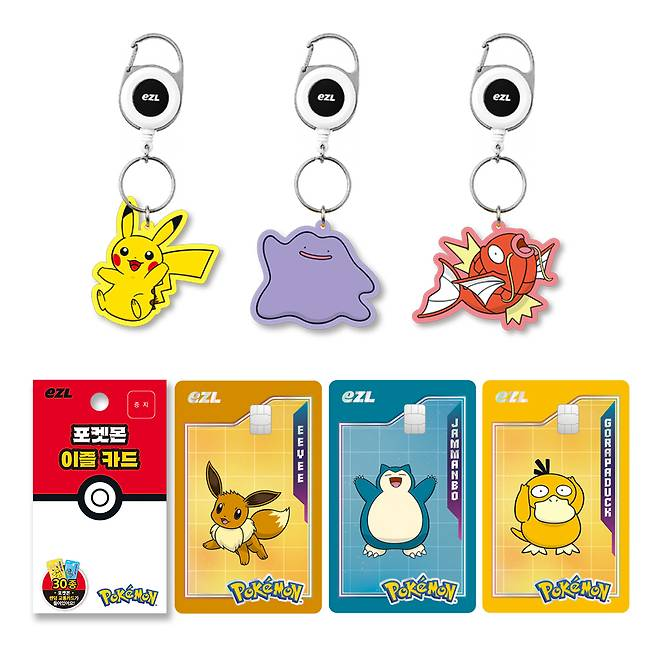
To mark Pokémon’s 30th anniversary, transit-card operator 이즐 (EZL) — the Cashbee-network card brand sold across Korea’s major convenience stores — partnered with The Pokémon Company to release a set of 30 collectible prepaid transit cards, each printed with a different Pokémon character. The lineup leans on generation-spanning favorites Korean fans grew up with: Pikachu, Mew, Mewtwo, Rayquaza, Ditto (메타몽), Dragonite (망나뇽), Lugia, Charizard (리자몽), Gengar (팬텀), Snorlax (잠만보), Eevee (이브이), Bulbasaur (이상해씨), Gyarados (갸라도스), Magikarp (잉어킹), Rowlet (나몰빼미), Glaceon (글레이시아), Dedenne, and more.
Each card is sold for ₩5,000 in sealed, opaque packaging — you can’t tell which of the 30 characters you’re getting until you open it, which is exactly the blind-box mechanic that’s already powered Korea’s gacha shop boom and its ongoing Labubu craze. Sales began nationwide on July 22, 2026, and the cards sold out fast enough that “완판” (sold out) has been trending alongside the product name ever since.
Where to Buy It: CU, GS25, 7-Eleven, and Emart24
The card launched simultaneously across Korea’s four biggest convenience store chains:
| Chain | Status as of early August 2026 | Notes |
|---|---|---|
| CU | Sold out, restocked, selling out again | First to launch; initial 10,000-unit batch sold out within 4 days. A second batch of 7,500 units landed July 30 and moved quickly too. |
| 7-Eleven | Sold out | Introductory stock fully cleared; in discussions with the manufacturer for additional supply. |
| GS25 | Sold out | Similar situation to 7-Eleven — negotiating a restock with the card manufacturer. |
| Emart24 | Sold out | Pre-order allocation sold out before general sale even started; several metro-area distribution centers paused store orders once stock ran out. |
There’s no nationwide restock calendar published yet — each chain is restocking store-by-store and region-by-region as new batches come in, which is exactly why this has turned into a scavenger hunt rather than a simple purchase.
Why It Keeps Selling Out
A few things are compounding at once here:
- It’s genuinely useful, not just a collectible. Unlike a keyring or a plush, this is a real, rechargeable transit card people were already going to buy anyway — so casual commuters are scooping them up alongside collectors, which multiplies demand well beyond the usual gacha crowd.
- The blind-pack mechanic drives repeat purchases. Because you can’t choose your character, completing even a partial set means buying multiples — the same dynamic that keeps Pop Mart and gacha-shop lines long.
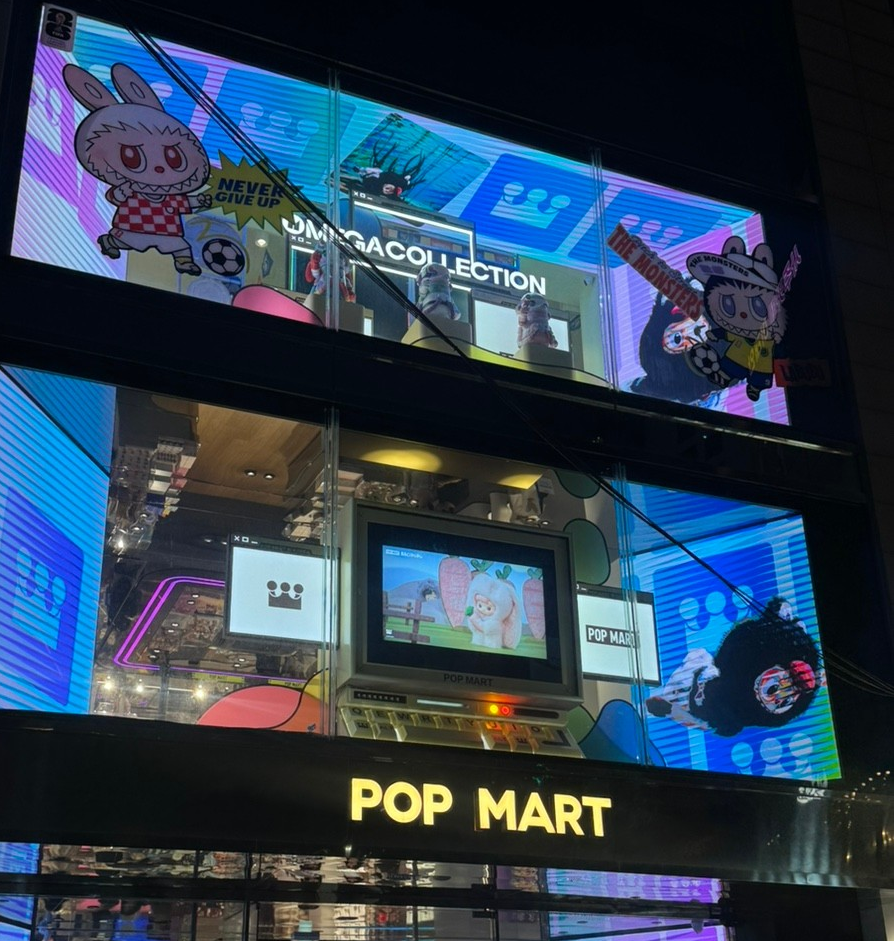
- 30th-anniversary timing. Pokémon’s anniversary has driven a wave of nostalgia-marketing collaborations across Korea this year, and this is the most accessible, lowest-price entry point into it — ₩5,000 buys something that a Labubu or a Pop Mart blind box, at ₩8,000–32,000, doesn’t match on price.
- Short-form video amplification. “편의점 순례” (convenience-store pilgrimage) unboxing clips — people visiting store after store hunting for a specific character — have been circulating widely on Instagram Reels and YouTube Shorts, pulling in buyers who’d never have noticed a transit-card refresh otherwise.
The Resale Market: What Each Character Is Going For
As with any blind-pack collectible, a resale hierarchy formed almost immediately on secondhand platforms like Bunjang and Danggeun Market. Reported listing prices (against a ₩5,000 retail price) cluster into rough tiers:
| Tier | Characters | Reported resale price |
|---|---|---|
| Top tier | Pikachu | ~₩25,000 |
| High tier | Mew, Mewtwo, Rayquaza, Ditto (메타몽) | ~₩20,000 |
| Mid tier | Lugia, Dragonite (망나뇽), Charizard (리자몽), Dedenne, Gengar (팬텀), and other popular picks | ~₩15,000 |
| Lower tier | Snorlax (잠만보), Bulbasaur (이상해씨), Gyarados (갸라도스), Magikarp (잉어킹), Rowlet (나몰빼미), Glaceon (글레이시아), and other common pulls | ~₩7,000–10,000 |
Collectors chasing a complete 30-card set have listed full runs for as much as ₩500,000 — a hundred times the ₩5,000 single-card price. Treat all of these numbers as a snapshot: resale prices on blind-pack collectibles move fast in both directions once official restocks catch up with demand, exactly as happened with Labubu’s own resale crash earlier this year.
Is It an Actual, Usable Transit Card?
Yes — this isn’t a novelty card glued to a subway pass. EZL cards run on the same nationwide network as Cashbee and are fully interoperable with T-money: you can tap in and out on subways, buses, and taxis anywhere in Korea that accepts T-money, and any balance you load can also be spent at general card-accepting retailers (EZL is positioned as a combined transit-and-payment card, similar to how T-money doubles as a payment method at Olive Young and convenience stores).
For travelers, that’s the appeal beyond the collectible angle: it’s a real, functional way to get around Seoul that happens to have a Pikachu or a Mewtwo printed on it. Foreign visitors without a Korean bank-linked balance can still recharge EZL cards with cash at convenience stores the same way they would a standard T-money card, and prepaid options aimed specifically at tourists (like Galaxia Money Tree’s Trip Money Card) are also compatible with the EZL network.
How to Actually Get One
- Check morning delivery times. Convenience stores typically restock in the morning; arriving right after a known delivery window beats an afternoon walk-in.
- Call ahead or check store apps. CU, GS25, 7-Eleven, and Emart24 all have store-locator or inventory-check features in their apps — a phone call to a specific branch is often faster than physically visiting several.
- Don’t limit yourself to one chain. Because each of the four chains restocks independently, checking all four near you meaningfully improves your odds versus fixating on one.
- Decide up front whether you want a specific character or just “a” card. If you just want a working transit card with any Pokémon on it, your odds are much better than if you’re hunting for Pikachu specifically — in which case resale platforms are the realistic path.
- Expect this to calm down. Every Korean blind-pack craze in 2026 so far — Daiso’s ₩5,000 items, Labubu, gacha capsules — has followed the same arc: a chaotic sell-out phase followed by steadier restocks and resale prices sliding back toward retail within weeks to months. If you’re not desperate for a specific character, waiting a month is a completely reasonable strategy.
Quick Reference
| What | Details |
|---|---|
| Price | ₩5,000 per card, random |
| Number of designs | 30 different Pokémon characters |
| Launch date | July 22, 2026 |
| Where sold | CU, GS25, 7-Eleven, Emart24 (nationwide) |
| Function | Fully usable transit card — EZL/Cashbee network, interoperable with T-money |
| Typical resale price | ₩7,000–25,000 per card depending on character; up to ~₩500,000 for a complete 30-card set |
| Best strategy | Check all four convenience store chains near you, ideally right after a morning restock |
Frequently Asked Questions
What is the Pokémon transit card in Korea? A limited-edition set of 30 collectible EZL-brand prepaid transit cards, released for Pokémon’s 30th anniversary, each printed with a different character and sold blind (you don’t know which one you’re getting) for ₩5,000 at Korean convenience stores.
Where can I buy the Pokémon transit card? CU, GS25, 7-Eleven, and Emart24 all carried the launch, though all four chains have sold out and are restocking irregularly as of early August 2026. There’s no single nationwide restock schedule — check multiple chains and stores near you.
Can I actually use it to ride the subway or bus? Yes. It runs on the EZL/Cashbee network and is interoperable with T-money nationwide, so it works for subways, buses, and taxis just like a standard transit card, and any loaded balance can also be spent at participating retailers.
How much are the cards reselling for? Reported resale prices range from roughly ₩7,000 for common characters up to ₩20,000–25,000 for the most sought-after ones like Pikachu, Mew, and Mewtwo. Complete 30-card sets have been listed for as much as ₩500,000.
Can tourists visiting Korea buy or use one? Yes — any traveler can buy one at a convenience store (while stock lasts) and recharge it with cash the same way as a regular T-money card, making it a functional souvenir as well as a collectible.
Will it sell out forever, or should I wait? Based on how every other blind-pack craze in Korea has played out this year — Daiso, Labubu, gacha shops — expect an initial chaotic phase followed by steadier restocks and resale prices easing back toward retail over the following weeks to months. If you don’t need a specific character right now, waiting is a reasonable bet.
Whether you’re after a specific Pikachu card for the shelf or just want a Charizard riding shotgun in your wallet on the subway, the Pokémon transit card is currently the hardest ₩5,000 purchase in Korea. For more of what’s driving the country’s collector obsessions this year, see the gacha shop craze, Daiso’s sold-out mania, and Labubu’s boom-and-bust year.