There is a moment in every Korea trip — usually around day two — when someone in your group says: we should go to E-Mart. And then you spend three hours there, spend more money than you intended, and leave with a bag of things you didn’t know existed two hours ago. That experience now has a name, a cultural framework, and a dedicated entry in Skyscanner’s global travel trends report for 2026.
마트 어택 (mart attack, matu eotek) is the practice of treating a Korean hypermarket as a travel destination in its own right — not a quick stop for water and snacks, but a deliberate, extended raid on the kind of retail environment that simply doesn’t exist at the same scale or quality anywhere else. According to Skyscanner’s 2026 trend data, 56% of visitors to Korea now make a hypermarket visit a planned activity, and the Korea Tourism Organization has identified mart tourism as one of the defining behaviours of inbound travellers this year.
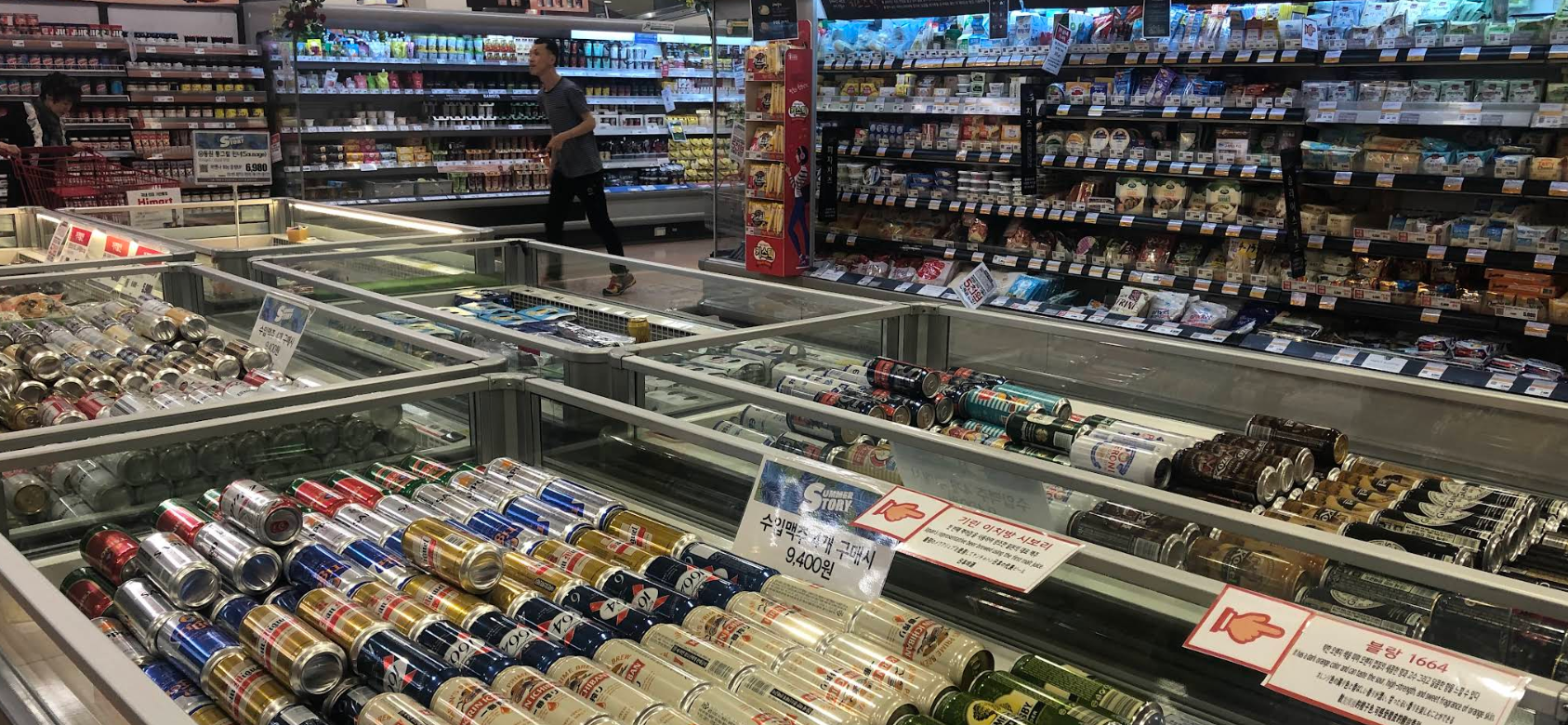
The reason isn’t hard to understand. Korean hypermarkets are not ordinary supermarkets. They are multi-storey, climate-controlled worlds where you can buy banchan prepared this morning, a full skincare routine, premium makgeolli, 40 varieties of instant noodle, seasonal produce, and a rotisserie chicken — all in the same building, at prices that make airport and tourist-district shopping feel like a scam.
Quick Reference: Korea Mart Attack Essentials
| Mart | Best For | Top Branch |
|---|---|---|
| E-Mart | Widest range, seasonal produce, skincare | Yongsan |
| Lotte Mart | Alcohol selection, branded food, L.POINT discounts | ZETTAPLEX Seoul Station |
| Homeplus | Fresh banchan, regional products, local feel | Yeongdeungpo |
| Best time to visit | Weekday mornings 10:00–12:00 | — |
| Airport run option | Lotte Mart ZETTAPLEX Seoul Station (AREX connection) | — |
| VAT refund | Available on purchases over ₩30,000 | — |
The Three Korean Hypermarkets: Which Mart to Visit
Korea’s hypermarket landscape is dominated by three chains. Each has a distinct personality, and knowing the difference saves time.
E-Mart (이마트) — Korea’s Largest Hypermarket Chain
The largest supermarket chain in Korea and the one most visitors end up in first. E-Mart is a Samsung subsidiary — the green logo, bright lighting, and rigorous stocking system reflect that pedigree. The fresh produce sections rotate genuinely with the season (the 제철코어 crowd shops here), the ready-to-eat banchan counter is reliable, and the store layout, once you understand it, is logical.
E-Mart’s two private labels are worth knowing before you arrive. PEACOCK (피코크) is the premium line — restaurant-quality sauces, meal kits, and prepared foods packaged for home use, priced well below equivalent quality at a restaurant. No Brand (노브랜드) is the budget line — the plain white packaging conceals products that are often equivalent in quality to the branded version at a fraction of the cost. The No Brand chips, in particular, have developed a genuine cult following.
The Emart Traders format (the warehouse club equivalent, modelled loosely on Costco) exists at a handful of locations for bulk buying.
Best branch for visitors: E-Mart Yongsan — central location near Yongsan-gu, straightforward subway access, full product range across multiple floors.
Lotte Mart (롯데마트) — Best Korean Mart for Alcohol and Branded Food
Part of the enormous Lotte conglomerate that also owns Lotte World, Lotte Department Store, and a substantial share of Korean retail. Lotte Mart tends to have a stronger selection of branded food products and is particularly well-stocked on alcohol — the wine section at larger branches is genuinely impressive, and the Korean alcohol aisle (soju, makgeolli, beer) is usually larger than at E-Mart equivalents.
The L.POINT card (free to sign up, in-store or via app) gives immediate discounts and points on most purchases. Worth registering before you start shopping.
The ZETTAPLEX format is Lotte Mart’s flagship designation — larger stores with expanded product ranges and the widest product selection in the chain.
Best branch for visitors: Lotte Mart ZETTAPLEX Seoul Station — directly connected to Seoul Station, one of the city’s most central transport hubs (subway Lines 1 and 4, AREX Airport Railroad, Gyeongui-Jungang Line). Accessible from virtually anywhere in Seoul without a transfer, and the logical last stop before boarding the AREX to Incheon Airport.
Homeplus (홈플러스) — Best Korean Mart for Banchan and Regional Products
Originally a Tesco joint venture, now fully Korean-owned. Homeplus stores tend to be slightly less polished than E-Mart but often have better fresh food counters and a more local-feeling atmosphere — the prepared foods section at Homeplus, particularly the banchan and hot food, is frequently cited by regulars as the best of the three chains. The store brand products are solid and usually the cheapest of the three.
Homeplus is also where you’ll find the most consistent stock of regional Korean products — items from Jeolla, Gyeongnam, and Gangwon provinces that don’t always make it into the more centralised E-Mart selection.
Best branch for visitors: Homeplus Yeongdeungpo — one of the largest branches in Seoul, accessible from Yeongdeungpo-gu Office Station (Line 5). Large enough to have the full product range without being overwhelming.
What to Buy at Korean Hypermarkets: The Mart Attack Shopping List
Instant Noodles and Ramyun (라면)
This is the section most people spend the longest time in, and for good reason: the Korean instant noodle market is one of the most developed in the world, and the products available here are substantially different from what gets exported.
- Samyang Buldak (삼양 불닭) — the fire chicken series, which now spans around 15 flavours. The Quattro Cheese and Cream Carbonara versions are particularly sought after and not reliably available outside Korea.
- Nongshim Shin Ramen (신라면) — the classic. The black (신라면 블랙) version is richer and worth picking up.
- Chapagetti + Neoguri (짜파구리) — the combination made famous by Parasite. Both in one bag is the standard purchase.
- Paldo Bibimmyeon (팔도 비빔면) — cold mixed noodles, a summer staple that peaks April through August. The seasonal availability makes it a smart buy right now.
- Ottogi Jin Ramen (진라면) — milder than Shin, and the preferred option for those who find Shin too spicy.
Snacks
- Honey Butter Chips (허니버터칩) — Haitai’s sweetened chip that sparked a national shortage when it launched and remains genuinely addictive.
- Binggrae Banana Milk (바나나우유) — the iconic curved bottle. Buy it here rather than at a convenience store; the larger bottles at the mart are significantly better value.
- Pepero (빼빼로) — the chocolate-coated stick biscuit made by Lotte. The mart carries gift box sets and limited flavours unavailable at convenience stores.
- Crown Seaweed Crackers (오징어집) — squid-shaped corn puffs with a subtle seafood flavour that confounds most people who eat them. Highly portable and genuinely excellent.
- No Brand Potato Chips — E-Mart’s own-brand crisps regularly rank in Korean consumer taste tests above the branded equivalents.
Korean Pantry
This is where the mart runs ahead of everything else for people who cook or who want to bring back something more useful than snacks.
- Gochujang (고추장) — CJ Haechandle is the standard brand; Sunchang brands are the premium option. Airport prices are significantly higher.
- Doenjang (된장) — fermented soybean paste, the base of most Korean soups. Sempio and Daesang brands are reliable.
- Sesame oil and perilla oil (들기름) — genuine Korean sesame and perilla oils are a significant step up from imported versions available abroad.
- Roasted seaweed snack packs (김) — Dongwon’s Gil Kim and CJ’s Bibigo seaweed snack packs are far cheaper here than in any overseas Korean grocery.
- PEACOCK meal sauces — E-Mart’s premium line includes ready-to-use dakgalbi, galbi jjim, and jjigae sauces that replicate restaurant-quality results at home.
Drinks and Alcohol
- Fruit soju — the full range of flavoured sojus (bora grape, blueberry, grapefruit, strawberry, peach, watermelon) is only reliably available in Korea. They do not export well and are significantly cheaper at the mart than at restaurants.
- Craft makgeolli — the refrigerated makgeolli section stocks regional craft labels you won’t find at convenience stores: Inje Ssal Makgeolli (인제쌀막걸리), Wolhyang (월향), and seasonal small-batch labels.
- Sikhye (식혜) — the sweet fermented rice drink, sold in large cartons in the refrigerated aisle. It’s a confusing flavour the first time and then immediately craveable.
- Barley tea (보리차) — Korean barley tea bags are cheap, widely available, and make a substantial difference to cooking and everyday drinking. The roasted varieties at the mart are better than the export versions.
Skincare and Beauty
Korean hypermarkets stock a full range of mass-market skincare at prices that are genuinely lower than buying the same products overseas or at dedicated beauty stores. The key brands to look for:
- CosRx — the snail mucin essence, low-pH cleanser, and AHA/BHA toner are significantly cheaper here than at Sephora or international stockists.
- Mediheal sheet masks — sold individually and in multi-pack boxes. The N.M.F Aquaring and Teatree masks are the reliable standbys.
- Missha Time Revolution — the blue bottle essence and the All Around Safe Block sunscreen.
- Round Lab — the Birch Juice moisturiser and 1025 Dokdo toner, both of which have developed strong international followings.
- Sunscreens — Korean physical and chemical sunscreens are formulated differently from Western versions: lighter, more wearable, with a better finish. Biore UV Aqua Rich (the watery essence version), Cosrx Aloe Soothing Sun Cream, and Banila Co Clean It Zero SPF products are all worth buying at mart prices.
- Hair care — Mise-en-scene Pearl Shining Hair treatment, Masil 8 Second Salon Hair Mask, La’dor protein ampoules.
How to Do a Korean Mart Attack Properly
Timing. Weekday mornings (10:00–12:00) are the least crowded. Saturday afternoons are the worst. The first hour after opening on weekday mornings — the 오픈런 (open run) window — is when fresh produce and prepared foods are at their best-stocked.
Bring a reusable bag. Plastic bags are not free at Korean supermarkets and the ones available at checkout are small and flimsy. Any large bag or wheeled trolley bag makes the experience significantly easier.
Tax refund. Korea operates a VAT refund scheme for foreign tourists. Purchases over ₩30,000 at a single store qualify — keep your receipts, and look for the tax refund counter or kiosk at larger branches. Airports have dedicated refund windows if you haven’t done it in-store.
Apps. Download the E-Mart app or Lotte Mart L.POINT app before visiting. Both offer in-store coupons, weekly deals, and digital membership discounts that are not available at the till without them.
Self-checkout. All three chains have self-checkout lanes that accept both cash and card. Many now have English language options — look for the flag toggle on the screen. For large hauls, staffed lanes tend to move faster.
The fresh food counter. Every major mart has a banchan counter where prepared side dishes are sold by weight. This is one of the best-value meals in Korea — buy 200–300g of three or four things, a container of rice from the hot foods section, and you have a complete and excellent meal for under ₩10,000.
The Airport Run: Last-Minute Mart Attack Before Flying Home
The final evolution of 마트 어택 is the pre-departure sprint: a last visit to the mart near your departure airport in the final hours before your flight to stock up on anything you missed, top up snacks for the journey, and buy the things you talked yourself out of earlier in the trip.
The most practical choice for Incheon departures is Lotte Mart ZETTAPLEX Seoul Station — directly connected to Seoul Station, which is the terminus of the AREX Airport Railroad. The AREX Express takes 43 minutes from Terminal 1 and 51 minutes from Terminal 2 to Seoul Station, making this a natural stop to build into the journey out to Incheon rather than a separate detour. You arrive at Seoul Station, go downstairs to the mart, shop, then walk back up and board the AREX.
The store is one of the largest Lotte Mart branches in the city and carries the full product range, including a well-stocked alcohol section, beauty aisle, and fresh food counter.
The timing only works if you’ve built in enough margin — allow at least 45–60 minutes in-store, plus 43–51 minutes on the AREX, plus check-in and security time. Most experienced mart-attackers check in their luggage at the Seoul Station AREX city check-in counter first (available for most airlines, closes 3 hours before departure), shop unburdened, then board the train directly to the terminal.
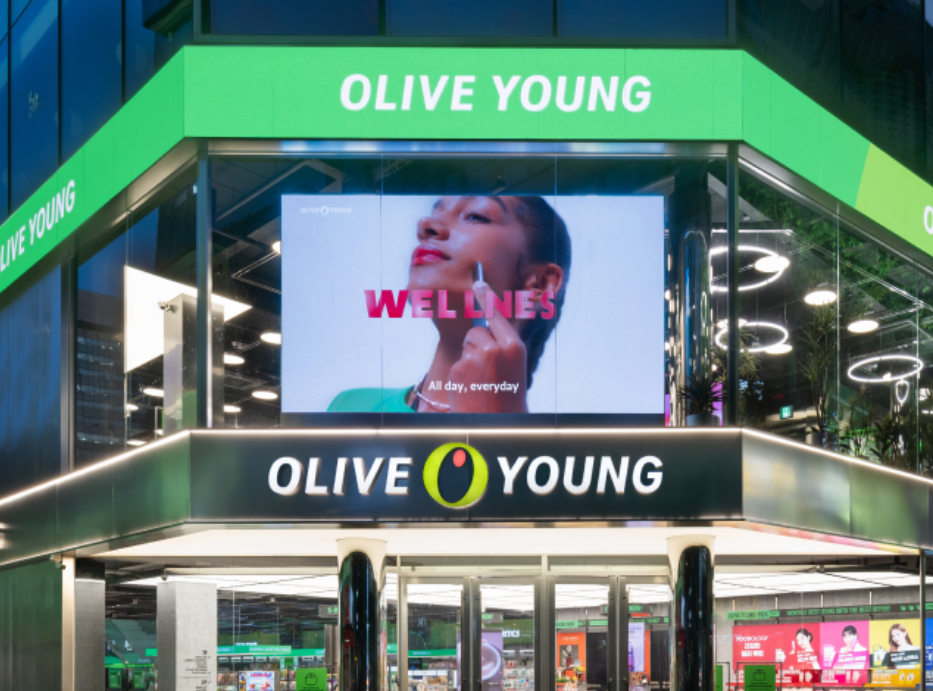
For more on eating and shopping in Seoul, see the Korean Street Food Guide and Korea’s Traditional Markets Guide. If you’re planning what to stock up on for K-beauty products specifically, the Seoul K-beauty shopping guide covers mart skincare brands and what to look for at Olive Young.
Frequently Asked Questions
What is 마트 어택 (mart attack) in Korea? 마트 어택 (mart attack) is the practice of treating a Korean hypermarket — E-Mart, Lotte Mart, or Homeplus — as a deliberate travel destination rather than a convenience stop. According to Skyscanner’s 2026 travel trends data, 56% of visitors to Korea now make a hypermarket visit a planned activity. The appeal is the combination of unbeatable prices, locally produced food and snacks, K-beauty products, and a shopping experience that doesn’t exist at the same scale elsewhere.
Which Korean mart is best for visitors: E-Mart, Lotte Mart, or Homeplus? All three have merit. E-Mart is the most logical first choice — widest range, the PEACOCK and No Brand private labels, and reliable stock of everything on a standard mart attack list. Lotte Mart ZETTAPLEX Seoul Station wins on convenience (direct subway connection, AREX airport link). Homeplus typically has the best banchan and prepared food counter. Many visitors do two: E-Mart for the main haul, Lotte Mart Seoul Station for the airport run.
What should I buy at a Korean hypermarket in 2026? Top picks: instant ramyun (Buldak fire chicken, Chapagetti + Neoguri combo, Paldo Bibimmyeon), Korean pantry staples (gochujang, doenjang, sesame oil, roasted seaweed packs), fruit soju (full flavour range unavailable overseas), craft makgeolli from the refrigerated aisle, and K-beauty products (CosRx, Mediheal sheet masks, Round Lab, Korean sunscreens). PEACOCK meal sauces are worth adding for home cooking.
Can I get a VAT refund at Korean hypermarkets? Yes. Purchases over ₩30,000 at a single store qualify for Korea’s tourist VAT refund scheme. Keep your receipts and look for the tax refund counter or kiosk at larger branches. Incheon Airport has dedicated refund windows if you haven’t completed it in-store. Show your passport as proof of foreign visitor status.
What is the best time to visit a Korean mart to avoid crowds? Weekday mornings from 10:00 to 12:00 are the least crowded and when fresh produce and prepared foods are best-stocked. The 오픈런 (open run) first hour is ideal for grabbing seasonal items. Saturday afternoons are the worst for crowds. Avoid the first week of months that overlap with Olive Young Big Bang sales (March, June, September, December) as those bring heavy foot traffic to shopping districts overall.
Is the Lotte Mart Seoul Station good for a pre-flight airport run? Yes — it is the best option for Incheon Airport departures. The ZETTAPLEX branch is directly connected to Seoul Station, which is the terminus of the AREX Airport Railroad (43 minutes to Terminal 1, 51 minutes to Terminal 2). The city check-in counter at Seoul Station allows most airlines to check luggage up to 3 hours before departure, so you can shop unburdened and board the AREX directly. Allow at least 45–60 minutes in-store.